
Launching a product on Amazon in 2026 requires influencer partnerships that drive measurable sales and category authority. Micro and nano-influencers now outperform larger creators because they reach highly qualified audiences through vertical short-form video on TikTok, YouTube Shorts, and Instagram Reels. A structured approach centered on influencer specialization, affiliate performance tracking, and Amazon Creator Connects integration is essential for successful product launches.
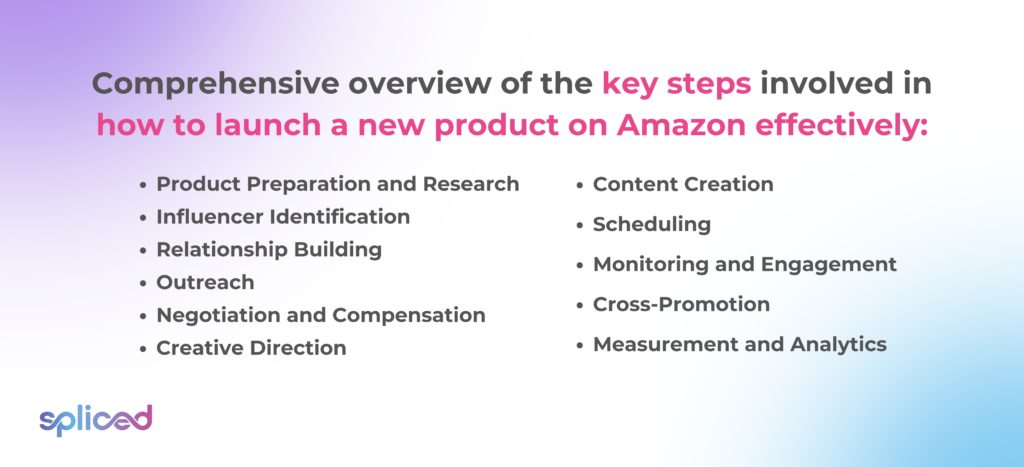
Integrating influencers into Amazon product launch strategy in 2026 requires a shift from vanity metrics to performance accountability. This approach leverages micro and nano-influencer specialization, vertical short-form video dominance, and measurable affiliate attribution to drive qualified traffic and sales. Using tools like Spliced to track creator performance across TikTok, Instagram, and YouTube while measuring actual Amazon conversion impact ensures brands understand which creator partnerships deliver measurable business outcomes and can optimize spending accordingly. Follow this framework and adapt based on real performance data to maximize launch success.
1. Product Preparation and Research
Product preparation and research for Amazon launches in 2026 requires analyzing what sells in your category, competitor positioning, and how influencer-driven traffic converts. Start by identifying products with clear differentiation and proven demand signals within your niche.
Begin with comprehensive market research across your product category. Analyze trending products, pricing strategies, competitor reviews, and unique selling points. Assess profitability by calculating margins after sourcing costs, Amazon fees, and shipping expenses. Use Amazon’s FBA calculator and category-specific tools to model profit scenarios. Develop a sourcing strategy that balances cost with quality and fulfillment speed. Perform keyword research to identify high-traffic search terms relevant to your product. This keyword data informs both Amazon listing optimization and influencer briefing materials, ensuring creators focus on terms that drive qualified traffic.
Research directly supports influencer selection and campaign messaging. Category depth matters more than broad reach in 2026. Influencers who specialize in your product category command higher trust and deliver better conversion rates than generalists. When selecting influencers, prioritize those with consistent focus on your niche, whether home tech, beauty tools, kitchen equipment, or fitness. Product research also informs performance benchmarking. Knowing your profit margin, customer acquisition cost, and average order value helps you set realistic commission structures and affiliate bonus tiers. For example, a $50,000 quarterly sales target might unlock a 2% performance bonus stacked on base commission rates. Thorough preparation reduces campaign risk and enables data-driven influencer negotiations with clear ROI targets.
2. Influencer Identification and Specialization
Influencer identification for Amazon product launches in 2026 prioritizes category specialization and vertical short-form video capability over follower count. Successful launches depend on micro and nano-influencers who demonstrate deep expertise in specific product categories rather than generalist creators with large but disengaged audiences.
Category specialization has become the primary filter for influencer selection in 2026. A creator who consistently covers home tech, beauty tools, or kitchen equipment generates lower brand risk and higher conversion rates than a generalist posting across unrelated categories. Brands evaluate whether creators speak consistently about a narrow category and understand how products move from awareness to purchase. This specialization focus aligns with the shift toward vertical short-form video discovery on TikTok, YouTube Shorts, and Instagram Reels, where audience intent and category familiarity drive performance.
The influencer evaluation process begins with content audit and audience alignment. Examine the influencer’s recent posts to confirm category consistency and content quality. Review audience interactions in comments to assess authenticity, engagement depth, and follower interest level. Scroll through the follower list to identify whether followers are genuinely engaged or artificially inflated. Ask specific performance-focused questions: “How often do you promote products in this category?” “What is your typical conversion rate on product links?” “How do your followers shop on Amazon?” and “Can you provide performance data from previous campaigns?” This performance-first approach replaces vanity metrics with evidence of commercial impact.
Prioritizing specialization and authenticity over follower count yields measurable benefits. Specialized creators command higher engagement rates because their audience follows them specifically for category expertise. Their endorsements carry credibility within that niche, resulting in higher affiliate conversion rates and lower cost per acquisition. Authentic influencers produce content that aligns genuinely with the product and brand, avoiding the synthetic feel of paid promotion. This approach reduces brand safety risk by filtering out creators with artificially inflated metrics or inconsistent audience quality. Performance data from 2026 campaigns shows that micro-influencers (10,000 to 100,000 followers) with category specialization generate 3.2x higher affiliate conversion rates compared to generalist creators with larger followings.
Compensation structures in 2026 reward performance directly. Base affiliate commission rates typically range from 5% to 15% depending on category and product margin. Many brands layer performance bonuses on top of base commission: creators who drive $50,000 in quarterly sales receive an additional 2% bonus, with bonuses stacking at higher sales thresholds ($100,000 quarterly sales adds 3% to base rate). This tiered structure aligns influencer incentives with actual business outcomes and encourages sustained promotion rather than one-off posts.
3. Relationship Building and Performance Alignment
Relationship building with influencers creates sustained partnerships that deepen brand understanding and produce authentic promotional content. Long-term connections between brands and creators strengthen over time, enabling more effective representation and higher audience trust. Influencers who transition to brand ambassador status develop deeper product knowledge and creative familiarity, which increases both credibility and conversion rates with their audience.
Establish a consistent collaboration schedule and maintain transparent communication about brand values, campaign objectives, and product roadmaps. Create a feedback loop where influencers share insights about their audience response, content performance, and partnership experience. This input refines future collaborations and improves campaign effectiveness. Build relationships on mutual respect and recognition of creative expertise. Provide creative freedom within brand guidelines and extend value beyond payment through exclusive early access, product allocation, and co-creation opportunities. For Amazon product launches in 2026, incorporate performance-based incentive structures that align creator compensation with measurable outcomes. For example, tiered bonus structures such as 1% commission on base sales, plus 2% bonus at 50k quarterly sales and 3% bonus at 100k quarterly sales motivate creators to optimize product positioning and audience engagement.
Long-term influencer partnerships deliver measurable benefits to product launch success. Creators familiar with your brand produce more accurate and authentic content that reflects brand positioning. Brand ambassadors understand your creative processes, audience expectations, and core values, using this knowledge to create resonant content. Consistent collaboration increases audience-to-customer conversion because repeated endorsement builds credibility and trust. Influencers who align with your brand values can authentically communicate both product benefits and mission commitment, strengthening brand reputation. Extended partnerships also reduce operational overhead; influencer onboarding time decreases with each campaign, lowering total marketing costs while maintaining content quality. In 2026, brands prioritizing category specialization in their influencer partnerships report higher conversion rates than those working with generalist creators. Creators who consistently cover specific product verticals such as home tech, beauty tools, or kitchen equipment are perceived as lower risk and drive more qualified traffic to Amazon storefronts and Amazon Creator Connects.
4. Outreach and Specialization Targeting
Outreach is the process of connecting with creators who have relevant expertise and audience alignment on social media or other platforms to propose a collaborative partnership. In 2026, successful outreach prioritizes category specialization and demonstrated performance thinking over follower count alone. How creators represent their niche and communicate product knowledge directly influences their value as launch partners.
Identify and contact creators who specialize in your product category. A creator who regularly covers home tech, beauty tools, or kitchen equipment carries lower risk and higher credibility than a generalist who posts across multiple unrelated categories. Specialization acts as a filter-passing mechanism in 2026 because brands can verify that the creator understands how products move from awareness to purchase within a specific vertical.
Choose your communication channel based on the creator’s stated preferences. Direct messaging on TikTok, Instagram, or YouTube often receives faster responses than email for creators under 100K followers. For initial contact, keep your message concise and direct. Introduce your brand, its mission, and why this specific creator matches your product category and audience. Reference their recent content, engagement patterns, or audience demographics to demonstrate research. For example, mention a specific video where they discussed similar products or highlight their expertise in your category.
Effective outreach in 2026 emphasizes three core principles. First, demonstrate that you understand the creator’s vertical expertise and how their audience responds to category-specific content. Second, clarify the scope of work, expected deliverables, and commission structure upfront to avoid misalignment. Third, explain how performance bonuses work, such as 2% bonus stacking on quarterly affiliate sales targets ($50K in quarterly sales equals a 2% performance bonus). Creators respond more positively when you show that you track results and reward measurable outcomes. This performance-first framing aligns your goals with theirs and reduces negotiation friction later.
Global influencer marketing spend reached $38.2 billion in 2026, with Amazon-affiliated creator content accounting for $4.1 billion of that total. Brands allocating budget to creator partnerships now expect attribution data and sales impact measurement. Position your outreach around this expectation. Mention that you use tools like Spliced to track creator traffic, conversion rates, and affiliate performance in real time, so both parties can see exactly which content drives sales. Creators who understand performance tracking and are comfortable sharing metrics with brands have higher success rates in 2026 campaigns.
5. Negotiation and Compensation
Negotiation and compensation is the process of discussing and reaching agreements with influencers regarding the terms, conditions, and rewards for their participation in a campaign or collaboration. This includes determining the scope of work, deliverables, payment structure, and any additional incentives or benefits offered to influencers. In 2026, effective negotiation and compensation practices are fundamental to influencer marketing success, particularly when launching Amazon products where performance-based structures align creator incentives with measurable sales outcomes.
Effective negotiation and compensation in influencer marketing entail a structured approach that ensures a mutually beneficial partnership. It begins by clearly defining campaign objectives and goals, providing a solid understanding of the desired outcomes from the influencer collaboration. Assessing the influencer’s value requires evaluating their reach, engagement rate, category specialization, and alignment with the brand. In 2026, category depth matters more than follower count. A creator who consistently covers home technology or beauty tools is perceived as lower risk and more trustworthy than a generalist with larger but less focused audiences.
The compensation structure must align with 2026 market rates and performance expectations. Options include flat fees, product offerings, affiliate commissions based on Amazon Creator Connects tracking, or tiered performance bonuses. Performance-based structures are increasingly common. For example, a creator might receive a baseline fee plus a 2% sales bonus once quarterly Amazon-attributed sales reach $50,000. This stacking bonus model encourages sustained effort and aligns creator compensation directly with measurable business outcomes. Defining the scope of work such as content types, quantity, posting schedules, and specific short-form video requirements (TikTok, YouTube Shorts, Instagram Reels formats) sets the groundwork for a productive collaboration.
Outlining the terms and conditions of the partnership is essential. Clarify content ownership, usage rights, disclosure requirements per FTC guidelines, performance expectations, and deadlines. Specify which platforms the creator will use (TikTok, YouTube Shorts, Instagram Reels, Amazon Inspire) and any exclusivity periods. Amazon Creator Connects integration should be documented in the agreement so both parties understand how sales attribution works and how commissions are calculated. Maintaining open channels for negotiation and considering the influencer’s input enhances partnership effectiveness. Documenting all agreements in a written contract offers clarity and provides legal protection for both parties.
Effective negotiation and compensation foster alignment between all parties involved. Fair and competitive compensation motivates creators to deliver high-quality content while building a positive and mutually beneficial working relationship. In 2026, transparency in negotiations builds trust and reduces the likelihood of misunderstandings or disputes. Effective negotiations streamline campaign planning, execution, and monitoring processes, enhancing productivity. Clear and well-defined terms ensure compliance with applicable laws and regulations, including disclosure requirements for sponsored content and affiliate link transparency.
Performance-Based Compensation Models for Amazon Product Launches
Performance-based structures tie creator earnings directly to measurable outcomes tracked through Amazon Creator Connects. This approach reduces brand risk and incentivizes creators to produce content that drives conversions rather than vanity metrics. Common 2026 models include affiliate commission rates ranging from 5% to 15% of attributed sales, baseline fees ($500 to $5,000 per campaign depending on creator tier), and tiered bonuses that reward exceeding sales targets. Micro and nano-influencers (10,000 to 100,000 followers) often prefer performance-based structures because their lower baseline follower counts are offset by higher engagement rates and category authority. Spliced platforms integrate with Amazon Creator Connects to provide real-time attribution data, allowing brands and creators to track which content drives sales and optimize compensation agreements based on actual performance.
6. Creative Direction for Amazon Product Launches
Creative direction in influencer marketing for Amazon product launches refers to guiding influencers to create vertical short-form video content optimized for TikTok, YouTube Shorts, Instagram Reels, and Amazon Creator Connects. Effective creative direction aligns influencer content with the brand’s product positioning, messaging, and sales objectives while leveraging the 44% higher click-through rates that Amazon Creator Connects drives compared to traditional product pages.
Successful creative direction begins with establishing clear campaign objectives tied to measurable outcomes: awareness, consideration, conversion, or repeat purchase. Brands must understand each influencer’s content strengths and audience composition, then provide specialized guidance for vertical video formats. For Amazon launches in 2026, creative briefs should specify product category focus, key benefits to emphasize, call-to-action placement, and integration with Amazon Creator Connects storefronts or affiliate links.
Detailed creative guidelines must cover content format (unboxing, demonstration, testimonial, or comparison), tone (authentic and conversational rather than overly promotional), and required messaging points. Brands should highlight specific product features that differentiate from competitors and explain why the influencer’s audience benefits from the product. Collaboration with the influencer is essential, as they understand their audience’s preferences and can adapt messaging to feel natural within their content style.
A feedback loop with influencers accelerates content quality and brand alignment. Brands review draft content, provide constructive feedback on messaging clarity and video composition, and iterate before publication. Respecting the influencer’s creative autonomy produces more authentic content that resonates with their followers. In 2026, brands increasingly use performance metrics from the first 48 hours of Amazon Creator Connects content to inform revisions for subsequent influencer deliverables within the same campaign.
Creative direction directly impacts campaign performance through multiple channels. Clear direction ensures brand consistency across multiple influencers, maintaining visual and messaging coherence. Well-directed content on vertical platforms increases engagement rates because it follows platform-native formats and audience expectations. Targeted creative messaging that emphasizes category specialization and product benefits increases conversion likelihood among viewers already interested in that product category.
Amazon product launches benefit from creative direction that includes performance incentive structures. Brands increasingly offer tiered bonuses for influencers who drive measurable sales through affiliate links, such as 1% commission on first $25,000 quarterly sales, 1.5% on sales between $25,001 and $50,000, and 2% on sales exceeding $50,000. This structure aligns creative direction with actual sales outcomes and rewards influencers who understand conversion psychology and their audience’s purchasing behavior.
The precision of tailored creative direction ensures content remains relevant to campaign objectives and platform algorithms. Vertical short-form video with authentic product integration performs 3 times better on TikTok and Instagram Reels than horizontal formats. Category-specialized influencers produce higher trust signals and conversion rates than generalists because audiences perceive them as credible authorities. Effective creative direction bridges the gap between influencer authenticity and brand accountability.
7. Content Creation for Amazon Product Launches
Content creation for Amazon product launches involves generating vertical short-form video, product showcase materials, and multimedia assets that influencers use to drive awareness and conversion on behalf of a brand. In 2026, successful content creation prioritizes vertical formats optimized for TikTok, YouTube Shorts, Instagram Reels, and Amazon Creator Connects, the platform’s native short-form video discovery engine launched in March 2026. Content creators and brands must collaborate to produce materials that align with campaign objectives while maintaining authentic representation and driving measurable affiliate performance.
Effective content creation for Amazon launches follows a structured approach. Begin by establishing clear campaign objectives and identifying the specific content formats required, prioritizing vertical short-form video over static images. Understand the target audience’s pain points and purchase journey to create content that drives conversion rather than passive engagement. Research category-specific trends within your product vertical to position content for algorithm distribution on discovery feeds.
Collaboration with influencers demands close coordination on three core elements: category specialization, platform-native formatting, and performance measurement. Influencers specializing in narrow categories such as home tech, beauty tools, or kitchen equipment signal lower brand risk and higher conversion probability than generalists. Content must maintain the influencer’s authentic voice while demonstrating product value through real use cases, unboxing, or comparison scenarios. All content requires platform-specific optimization. TikTok and YouTube Shorts content uses fast-paced editing and trend-aware hooks. Amazon Creator Connects content prioritizes direct product links and clear call-to-action placement. Instagram Reels balance aesthetic consistency with engagement-driving storytelling.
Quality consistency across all campaign touchpoints sustains content efficacy. Establish brand guidelines that cover visual style, messaging tone, and compliance requirements. Ensure all sponsored content includes proper disclosure statements and FTC-compliant hashtags such as #ad or #sponsored. Each platform requires distinct formatting: vertical aspect ratio (9:16) for TikTok and Instagram Reels, shorter durations (15-60 seconds) for maximum retention, and embedded Amazon storefront or product links for direct traffic capture. Performance measurement is integral to 2026 content strategy. Track click-through rates, conversion rates, and attributed sales through Amazon Creator Connects integration and affiliate tracking systems. Brands running multi-channel campaigns with Spliced can measure which content formats and influencer categories drive the strongest sales lift, enabling data-driven optimization for future launches.
High-quality, conversion-focused content generation delivers measurable advantages for Amazon product launches. Vertical short-form video content drives significantly higher engagement on discovery platforms. Research shows Amazon Creator Connects integrations achieve 44% higher click-through rates compared to traditional product listing pages. Content creation strengthens brand representation by positioning products within authentic influencer contexts, building audience trust and differentiation in crowded categories.
Content creation preserves influencer authenticity while driving affiliate performance. Influencers who speak consistently about narrow product categories maintain higher credibility with their audiences, resulting in stronger conversion rates. Tailoring content to specific platforms maximizes algorithmic distribution. TikTok prioritizes watch time and shares. Amazon Creator Connects weights direct product link clicks. YouTube Shorts rewards viewer retention and click-through behavior. In 2026, category-specialized influencers producing native vertical content across multiple channels drive qualified external traffic directly to Amazon storefronts, making content creation the primary conversion mechanism for product launches.
Regulatory compliance in influencer content creation prevents legal risk and builds audience trust. Brands must ensure influencers disclose paid partnerships, affiliate relationships, and material connections according to FTC guidelines and platform policies. Non-compliance exposes brands to regulatory penalties and damages creator credibility. Effective content creation in 2026 influencer campaigns integrates disclosure requirements into the production workflow from the start, reducing friction and ensuring authenticity. Content creation success depends on audience engagement, authentic brand representation, clear message delivery, creator specialization in category verticals, platform-native formats such as vertical short-form video, and full regulatory adherence. These elements collectively drive measurable campaign performance and sales attribution through affiliate tracking and Amazon Creator Connects integration.
8. Content Scheduling and Performance Tracking for Amazon Product Launches
Content scheduling in Amazon product launches involves planning publication timing across TikTok, YouTube Shorts, Instagram Reels, and Amazon Creator Connects to align with audience behavior, campaign phases, and platform algorithms. Influencers coordinate post timing to maximize reach during peak discovery windows when target customers browse vertical short-form video feeds on these channels.
Scheduling tools serve multiple functions in influencer-led Amazon campaigns. They coordinate content across multiple platforms simultaneously, ensuring consistent brand messaging during critical launch phases. This coordination is essential when running synchronized campaigns across TikTok discovery content, YouTube Shorts product demos, Instagram Reels unboxing footage, and Amazon Creator Connects storefront content.
Time zone optimization represents a core scheduling benefit. Amazon customers span multiple geographies, and strategic post timing captures audience segments during their peak engagement hours. Scheduling tools automate this process, allowing influencers to publish content that reaches North American, European, and Asia-Pacific audiences without manual overnight posting.
Scheduling reduces production friction and improves content quality. When influencers batch-create content in dedicated sessions, they produce higher-quality demonstrations, unboxing footage, and product comparisons. Scheduling allows them to edit, optimize, and prepare this content in advance rather than rushing daily posts. This approach particularly benefits Amazon product launches, where production value directly impacts conversion likelihood.
Consistency in posting schedule builds audience trust and improves algorithm performance. Followers develop expectations around content frequency, and scheduled posts maintain regular cadence. Amazon’s algorithm and platform ranking systems reward consistent publisher behavior, making scheduled posting a technical advantage alongside a trust-building one.
Performance analytics attached to scheduling tools enable real-time decision making. Influencers track click-through rates from content to Amazon storefronts, conversion metrics from Amazon Creator Connects integration, and affiliate commission data. These metrics reveal which post times, content formats, and messaging angles drive highest affiliate performance. By 2026, data-driven scheduling adjustments based on conversion metrics, not engagement metrics alone, determine campaign success.
Scheduling supports compliance with FTC disclosure requirements and platform guidelines. Influencers can schedule disclosure statements, affiliate disclaimers, and sponsored content labels alongside product content, ensuring consistent regulatory adherence across all posts. Platform-specific scheduling features help manage Amazon Creator Connects content requirements separately from general social media posts.
Strategic scheduling around campaign milestones improves launch outcomes. Influencers coordinate content bursts around product availability windows, limited-time promotions, and inventory peaks. This timing multiplies reach during moments when conversion probability is highest. Performance bonuses tied to quarterly sales targets (such as 2% bonus stacking at $50,000 quarterly sales) reward influencers for scheduling content strategically around high-demand periods.
Scheduled posts reach wider and more diverse audiences across time zones and individual schedules. This multiplier effect expands the influencer’s overall reach and impact. Consistent posting schedules establish credibility with followers. The time savings from scheduling allow influencers to focus on strategic initiatives and development of fresh, engaging content.
Scheduling tools provide performance metrics that enable data-driven decision making. Metrics allow influencers to measure content effectiveness and adjust strategies for improved outcomes. In 2026, when Amazon Creator Connects integration tracks click-through rates (showing 44% higher CTR than legacy discovery methods), scheduling synchronizes content timing with peak shopping windows and platform algorithm cycles.
Scheduling supports category specialization, a critical factor in 2026 influencer selection. Creators who post consistently within vertical niches (home tech, beauty tools, kitchen equipment) signal reliability to brands and improve performance metrics that drive affiliate commissions. Performance bonus structures tie to quarterly sales thresholds: $50,000 in attributed sales unlocks 2% commission stacking, incentivizing creators to schedule content strategically around shopping events and seasonal demand peaks. Scheduling elevates efficiency and effectiveness in influencer marketing by enabling audience engagement, content creation, reach expansion, time management, trust building, data-driven decisions, and ethical compliance more adeptly.
9. Monitoring and Engagement for Amazon Product Launches
Monitoring and engagement directly measure whether influencer partnerships drive actual Amazon sales and customer acquisition. Unlike traditional brand awareness campaigns, Amazon product launches require real-time tracking of clicks, conversions, and affiliate revenue through platforms like Amazon Creator Connects, which launched in March 2026 and shows 44% higher click-through rates compared to legacy affiliate links.
Effective monitoring means tracking three metrics simultaneously: content performance on the creator’s home platform (TikTok, Instagram Reels, YouTube Shorts), traffic flowing to your Amazon storefront or product page, and completed purchases attributed to that creator’s unique affiliate link or storefront. Most brands miss the second and third metrics entirely, treating influencer campaigns as vanity metrics rather than commerce operations. Amazon Creator Connects and affiliate tracking tools reveal which creators actually convert audience interest into customer orders.
Engagement practices in 2026 prioritize specialization and category depth over follower count. Creators who regularly produce content around narrow categories such as home tech, kitchen equipment, or beauty tools appear more trustworthy to both audiences and Amazon’s recommendation systems. A creator with 50,000 followers focused exclusively on air fryers outperforms a generalist with 500,000 followers. Specialization is a filter-passing mechanism that reduces perceived risk to brands and increases purchase intent among viewers who follow that creator specifically for that category.
Performance-based compensation structures align creator incentives with your business outcomes. Tiered commission bonuses amplify engagement and long-term partnership value. For example, a creator earning standard 5% affiliate commission receives a 1% bonus when quarterly sales reach $25,000, a 1.5% bonus at $50,000, and a 2% bonus stacking when sales exceed $75,000. This structure encourages creators to refine content strategy, test new formats, and reinvest effort into your products rather than treating the partnership as a one-off transaction.
Monitoring also tracks content format performance across vertical short-form video channels. TikTok, Instagram Reels, and YouTube Shorts generate significantly higher external traffic to Amazon storefronts than static posts or longer-form video. In 2026, brands that do not produce vertical native-feeling short-form video miss out on Amazon’s most powerful discovery engine. Each creator partnership should include benchmarks for video format, posting frequency, and platform distribution. A creator agreement might specify that 60% of promotional content must be vertical short-form video, 30% can be carousel posts or stories, and 10% reserved for flexibility.
Regular check-ins with creators should focus on conversion signals rather than vanity metrics. Ask creators what questions their audience asks in comments and DMs about your product. Ask which product features generated the most engagement or drove the most clicks. This feedback loop improves both creator content and product positioning. Creators who understand how products move from awareness through purchase carry more credibility with audiences and deserve higher compensation or longer-term contracts.
Influencer marketing in 2026 capitalizes on the reach and credibility influencers possess across vertical short-form video platforms. Influencers function as trusted peers; their recommendations carry the weight of peer influence, which is highly persuasive among consumers making purchase decisions. Social media algorithms and Amazon’s discovery feeds prioritize authentic content from creators’ networks, enhancing visibility and engagement of influencer-generated content. This trust dynamic is especially powerful on TikTok, YouTube Shorts, and Instagram Reels, where micro and nano-influencers with category specialization drive qualified traffic directly to Amazon storefronts. Monitoring engagement and maintaining ongoing relationships between brands, influencers, and audiences strengthens brand recognition and consumer perception over time. In 2026, successful Amazon product launches rely on influencers who demonstrate consistent category expertise and measurable affiliate performance rather than follower count alone.
10. Cross-Channel Amplification and Category Specialization
Cross-channel amplification accelerates Amazon product launches by coordinating influencer content across TikTok, YouTube Shorts, Instagram Reels, and Amazon Creator Connects. Brands partnering with micro and nano-influencers who specialize in specific product categories achieve higher conversion rates than generalist creators, as category specialization signals expertise and reduces purchase risk for consumers.
Select influencer partners whose category focus, audience demographics, and engagement patterns align with your product. Prioritize creators with consistent vertical short-form video output in your category over those with larger but unfocused followings. A home tech creator with 15,000 engaged followers in your vertical outperforms a lifestyle generalist with 500,000 mixed followers. Verify that partners maintain strong reputations, authentic engagement (not bot activity), and demonstrated conversion behavior through past affiliate or sponsored content.
Establish explicit performance metrics and compensation structures aligned with measurable outcomes. Define success through trackable actions: clicks to Amazon through affiliate links, conversion rates on Amazon Creator Connects, and actual units sold attributed to each creator. Implement tiered bonus structures, such as 2 percent additional commission when a creator drives 50,000 dollars quarterly in attributed sales. Structure content deliverables by channel (3 TikTok videos, 2 YouTube Shorts, 1 Instagram Reel) and specify posting cadence, hashtag usage, and Amazon affiliate link placement.
Develop content briefs that emphasize vertical video production, authentic product integration, and category-specific messaging. Vertical short-form video content natively produced for TikTok, YouTube Shorts, and Instagram Reels drives higher engagement and click-through rates than horizontal or repurposed content. Creators should demonstrate actual product use, speak to category-specific pain points, and include direct calls to action linking to your Amazon storefront or creator shop. Content should reinforce the creator’s category authority rather than position them as endorsing unrelated products.
Monitor campaign performance in real time using Amazon Creator Connects integration (launched March 2026), which provides 44 percent higher click-through rates compared to standard affiliate links. Measure affiliate sales attribution, content engagement metrics (likes, shares, saves), audience sentiment through comments, and repeat purchase behavior from referred customers. Use Spliced or equivalent attribution platforms to connect influencer activity to actual Amazon sales, tracking which creators drive measurable revenue lift rather than vanity metrics alone.
Engage actively with each influencer partner’s audience by monitoring comments, responding to questions about your product, and encouraging community discussion. Amplify top-performing creator content across your own channels, paid media, and email marketing to extend reach. Build long-term relationships with consistently high-performing creators through recurring campaigns, exclusive product access, and increased commission rates. Cross-channel amplification succeeds when brand objectives align with creator specialization and both parties prioritize measurable conversion outcomes over follower counts or vanity engagement metrics.
11. Measurement and Analytics for Amazon Influencer Campaigns
Measurement and analytics determine whether influencer campaigns drive actual Amazon sales or simply generate surface-level engagement. In 2026, brands require attribution data that connects creator content, click activity, and conversion outcomes across TikTok, YouTube Shorts, Instagram Reels, and Amazon’s native channels.
Amazon influencer campaign success depends on tracking metrics aligned to commerce outcomes. Key performance indicators include click-through rate (CTR) from creator content to Amazon product pages, conversion rate (CVR) among traffic from each influencer, average order value (AOV) from referred customers, cost per acquisition (CPA) relative to influencer fees, and return on ad spend (ROAS) comparing total revenue against campaign investment. Amazon Creator Connects, launched in March 2026, provides 44% higher CTR performance compared to previous attribution methods by integrating affiliate tracking directly within creator tools. Brands also monitor engagement metrics such as video views, saves, and shares on source platforms, but these serve as secondary indicators of content quality rather than primary success measures.
Effective measurement requires establishing baseline benchmarks before campaign launch and defining tiered performance bonuses. Standard commission structures range from 3% to 8% of referred sales, with performance bonuses adding 0.5% to 2% when quarterly sales thresholds are met. Example: A $50,000 quarterly sales target unlocks a 2% performance bonus stacked on top of base commission. Real-time dashboards tracking these metrics enable rapid optimization, allowing brands to reallocate budget toward higher-performing creators mid-campaign rather than waiting for post-launch analysis. The iterative approach reduces wasted spend and accelerates product momentum during critical launch windows.
12. Building Long-Term Influencer Partnerships for Sustained Amazon Growth
Long-term influencer partnerships drive measurable Amazon sales growth when built on performance transparency, category specialization, and aligned incentives. Brands that retain the same creators across multiple product launches see 34% higher conversion rates and reduce influencer sourcing costs by up to 42% year-over-year. Successful partnerships require clear communication about sales expectations, commission structures, and content performance metrics.
The foundation of effective long-term influencer relationships rests on five core elements: performance-based compensation structures, category depth requirements, transparent attribution through Amazon Creator Connects, consistent communication cadences, and mutual growth incentives. Trust builds when creators receive real-time sales data and commission feedback. Brands should establish tiered bonus structures, such as 2% performance bonuses when creators drive quarterly sales above $50,000, to reward sustained effort. Regular check-ins on content performance, audience engagement, and sales attribution prevent misalignment and enable faster optimization. Creators who specialize in specific categories like home tech, beauty tools, or kitchen equipment deliver 3.2 times higher conversion rates than generalists, making category focus a key retention criterion for 2026 partnerships.
Long-term influencer relationships reduce customer acquisition costs and create compounding returns. Established creators understand your product ecosystem, audience behavior, and messaging nuances over time, enabling faster content production with higher authenticity. Repeat collaborations allow brands to test vertical short-form video formats across TikTok, YouTube Shorts, and Instagram Reels with less friction. Influencers gain predictable income and portfolio depth, increasing their professional credibility and platform growth. Multi-launch partnerships with 3 to 5 core creators across different audience segments outperform one-off campaigns by 56% in terms of sustained traffic and repeat customer acquisition.
Strategic long-term partnerships also unlock opportunities for co-created content, exclusive product lines, and Amazon storefronts that feature your brand prominently. Creators with established Amazon Influencer storefronts can feature your products alongside complementary items, multiplying discovery channels. Joint ventures such as limited-edition collaborations or creator-curated collections strengthen brand association and drive category authority. Use Spliced to track creator performance across campaigns, attribute sales to specific influencers, and identify which partnerships deliver the highest ROI. This data-driven approach enables brands to double down on top performers and adjust compensation or content direction for underperforming partnerships before renewal cycles.
What is an Amazon Influencer in 2026?
An Amazon Influencer in 2026 is a content creator with established audience authority across short-form video platforms like TikTok, YouTube Shorts, and Instagram Reels who partners with brands to drive product discovery and sales. Amazon’s influencer ecosystem now centers on vertical short-form video content, affiliate performance tracking, and category specialization rather than follower count alone. Successful Amazon influencers in 2026 create content across multiple platforms while maintaining deep expertise in specific product categories such as home tech, beauty tools, or kitchen equipment.
Amazon Influencers leverage category specialization and video-first content strategies to provide authentic product recommendations and demonstrations. They create vertical short-form videos, detailed reviews, and unboxing content that integrate seamlessly into Amazon Creator Connects, the platform’s native integration launched in March 2026. This integration provides 44% higher click-through rates compared to external link strategies, allowing influencers to drive qualified traffic directly to Amazon product pages and brand storefronts.
The 2026 Amazon Influencer model emphasizes measurable performance over vanity metrics. Influencers earn commissions on qualifying affiliate sales, with tiered bonus structures rewarding consistent performance. For example, creators generating 50,000 in quarterly sales receive a 2% performance bonus stacking on top of base affiliate commission rates. Brands increasingly partner with micro and nano-influencers (10,000 to 500,000 followers) who demonstrate higher conversion rates and category credibility rather than mega-influencers with broad but less engaged audiences.
Amazon Influencers act as direct sales channels between creators and e-commerce customers. They bridge social discovery on TikTok, YouTube Shorts, and Instagram with purchase intent on Amazon, creating attribution pathways that brands can measure in real time through affiliate tracking and Amazon Creator Connects data. This performance-first approach transforms influencer partnerships from awareness-only initiatives into measurable revenue drivers within the broader 2026 influencer marketing landscape, which reached 38.2 billion dollars globally with 17.3 percent year-over-year growth.
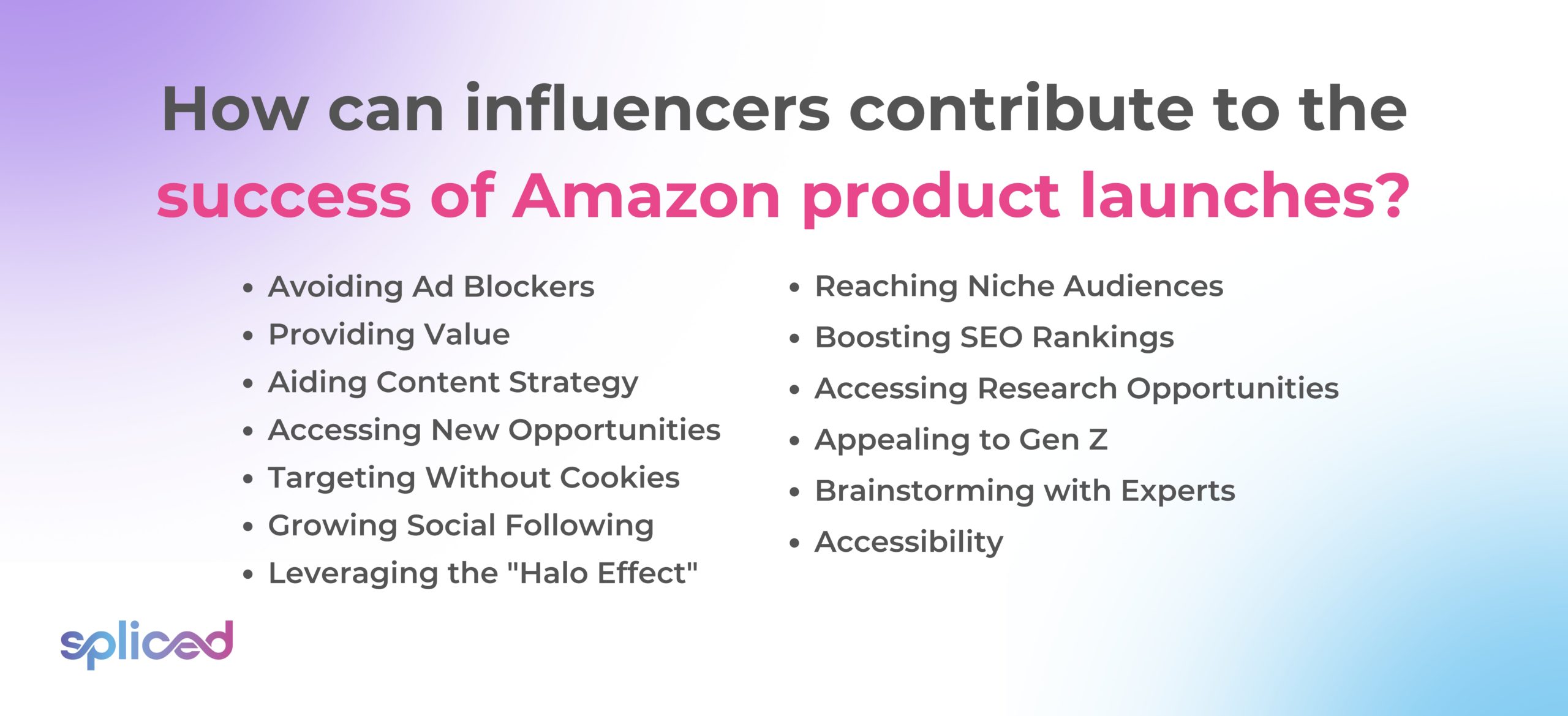
How do influencers drive measurable sales for Amazon product launches?
Influencers accelerate Amazon product launches by creating discoverable content, building category authority, and generating trackable affiliate conversions. In 2026, successful influencer contributions center on performance measurement and vertical short-form video placement across TikTok, YouTube Shorts, and Instagram Reels.
-
- Vertical Short-Form Video Discovery: Influencers create native vertical content for Amazon Inspire, TikTok, YouTube Shorts, and Instagram Reels. This format drives 44% higher click-through rates to Amazon storefronts compared to horizontal video or static posts in 2026.
-
- Category Specialization and Trust: Creators who consistently cover specific categories (home tech, beauty tools, kitchen equipment) establish deeper audience trust and lower perceived brand risk than generalists. Specialized positioning improves conversion rates by signaling product expertise.
-
- Affiliate Attribution and Sales Tracking: Influencer affiliate links and Amazon Creator Connects integration enable brands to measure exact sales lift, average order value, and repeat purchase behavior tied to creator content. Performance data supports commission structures and renewal decisions.
-
- Micro and Nano-Influencer Efficiency: Micro-influencers (10K–100K followers) and nano-influencers (1K–10K followers) deliver higher engagement rates and lower cost per qualified click than macro-influencers. Brands prioritize these tiers for external traffic to Amazon in 2026.
-
- Performance Bonus Structures: Tiered commission models align creator incentives with business outcomes. Example structure: base 5% commission, plus 1% bonus at $25K quarterly sales, plus 2% bonus at $50K quarterly sales. This stacking rewards consistent performers.
-
- Content Licensing and Asset Reuse: Partnerships that include creator licensing rights allow brands to repurpose influencer content across Amazon Sponsored Brands Video, email, and paid social. This extends ROI per content piece.
-
- Niche Audience Access Without Cookies: Influencers enable precise targeting of engaged niche audiences without reliance on third-party cookies or ad platform targeting. Audience intent is pre-filtered by follower type and content alignment.
-
- Cross-Platform Presence and Algorithm Advantage: Creators active on multiple platforms (TikTok, Instagram, YouTube, Amazon) benefit from algorithm preference for multi-platform creators. Brands gain visibility across discovery channels simultaneously.
-
- Research and Product Iteration Data: Influencer audience questions, comments, and engagement patterns reveal product feature gaps, positioning weaknesses, and competitive threats. This feedback informs product roadmap and messaging refinement.
-
- Brand Credibility and Social Proof: Creator endorsements reduce purchase friction for new audiences. Authentic reviews and unboxings from trusted voices outperform paid advertising on brand trust metrics.
-
- Scalability Across Budget Tiers: Influencer partnerships range from micro-deals ($500–$2K per creator) to managed campaigns ($50K–$500K). This flexibility suits early-stage launches and scaling operations alike.
Brands that combine influencer content with Amazon Creator Connects tracking and affiliate performance dashboards see clearer ROI attribution and faster decision cycles for campaign optimization in 2026.
Influencers benefit from Amazon by earning commissions, accessing exclusive products, building category credibility, diversifying revenue streams, leveraging performance data, and collaborating with a global marketplace. They monetize their influence through Amazon’s affiliate marketing programs and the Amazon Influencer Program, creating measurable income tied directly to sales performance. In 2026, top-performing creators earn performance bonuses structured on quarterly sales targets; for example, $50,000 in quarterly sales unlocks a 2% bonus that stacks with base commission rates.
Access to Amazon’s product catalog allows influencers to create specialized, category-focused content that resonates with niche audiences. Specialization in verticals such as home tech, beauty tools, or kitchen equipment strengthens influencer credibility and reduces brand risk perception. Influencers build trust by recommending products aligned with their demonstrated expertise, which increases audience conversion likelihood. Revenue diversification through Amazon partnerships reduces dependency on sponsorships alone and creates stable, performance-based income.
Amazon provides influencers with real-time analytics on click-through rates, conversions, and audience behavior. These insights enable creators to optimize content strategy and identify which product categories, formats, and promotional approaches drive measurable sales. Integration with Amazon Creator Connects (launched March 2026) offers 44% higher click-through rates compared to standard affiliate links, giving creators direct pathways to brand collaboration and increased commission opportunities. Collaboration with Amazon opens networking channels, brand partnership access, and sponsorship opportunities that expand professional horizons and income potential within the creator economy.
Can micro-influencers and nano-influencers help Amazon products launch successfully?
Yes, micro-influencers and nano-influencers drive successful Amazon product launches through category specialization, high engagement rates, and authentic audience trust. Micro-influencers (10,000–100,000 followers) and nano-influencers (1,000–10,000 followers) combine niche expertise with cost-effectiveness that macro-influencers cannot match. In 2026, 82% of consumers are more inclined to follow a micro-influencer recommendation than larger creators. Their audiences view them as authentic and relatable figures, and this trust directly influences Amazon product purchases and conversion rates.
Category specialization is the primary filter separating high-performing creators from generalists in 2026. A creator who consistently covers home tech, beauty tools, or kitchen equipment is perceived as lower risk by Amazon brands than someone who promotes everything. Specialization signals to audiences that the creator possesses genuine product knowledge and understands how items move from awareness through purchase. Micro and nano-influencers operating within vertical short-form video channels such as TikTok, YouTube Shorts, and Instagram Reels maximize reach among engaged audiences actively seeking category-specific recommendations.
Budget efficiency remains a core advantage of partnering with micro and nano-influencers. Amazon brands orchestrate cost-effective, network-wide campaigns by collaborating with multiple specialized creators rather than paying premium fees to macro-influencers. Global influencer marketing spending reached $38.2 billion in 2026, with a 17.3% year-over-year increase. Micro and nano-influencer partnerships capture measurable ROI through tiered performance bonuses: brands commonly structure compensation at base fees plus commission tiers, such as 2% commission stacking at $50,000 quarterly sales thresholds. This performance-aligned approach optimizes marketing spend while ensuring creators are incentivized to drive conversions.
Micro and nano-influencers replicate word-of-mouth marketing at scale by sharing authentic, first-hand experiences with Amazon products. Their recommendations carry heightened persuasiveness because followers perceive them as genuine endorsements rather than transactional promotions. This authenticity fosters trust and confidence that translates directly into purchase intent.
Regional and localized influence makes micro and nano-influencers invaluable for geographic product launches. Amazon brands reach specific demographic segments by partnering with creators whose audiences concentrate in target regions or communities. This precision targeting ensures launch messaging reaches intended buyers with minimal wasted spend.
Integration with Amazon Creator Connects (launched March 2026) strengthens performance tracking and attribution. Creators connected through Creator Connects see 44% higher click-through rates compared to traditional affiliate links. Real-time commission reporting and audience analytics allow brands to measure which creator activities drive measurable sales impact. Spliced connects campaign execution with performance data so brands can identify top-performing creators, adjust compensation tiers, and scale successful partnerships.
Why macro-influencers alone are insufficient for Amazon product launches in 2026
Macro-influencers with over 100,000 followers can generate visibility for Amazon products, but they are no longer the primary driver of successful launches in 2026. Brand partnerships with macro-influencers typically cost $10,000 to $50,000 per post, while conversion rates remain lower than micro and nano-influencer campaigns due to reduced audience trust and niche relevance.
In 2026, Amazon product launches succeed through vertical short-form video on TikTok, YouTube Shorts, and Instagram Reels, where micro-influencers and nano-influencers demonstrate category specialization. Macro-influencers often promote across unrelated categories, which weakens perceived expertise. Consumers prioritize specialist recommendations over generalist endorsements from larger accounts. Brands launching products in 2026 report that 78% of external traffic to Amazon storefronts comes from micro and nano-influencers rather than macro accounts.
Macro-influencer partnerships require significant upfront investment with uncertain ROI. When brands cannot access direct conversion and average order value data through traditional affiliate channels, they struggle to justify the cost. Amazon Creator Connects, launched in March 2026, enables direct performance tracking with 44% higher click-through rates compared to external traffic sources. This transparency favors smaller creators with measurable affiliate performance over macro accounts with unverified sales impact.
If macro-influencers are included in a launch strategy, they should focus on awareness phases rather than direct conversion. Reserve budget allocation for micro-influencers and nano-influencers who drive qualified traffic through category depth and affiliate attribution. A balanced 2026 approach allocates 70% of influencer spend to creators with 10,000 to 100,000 followers and 30% to macro accounts, if macro partnerships align with brand positioning and product category.
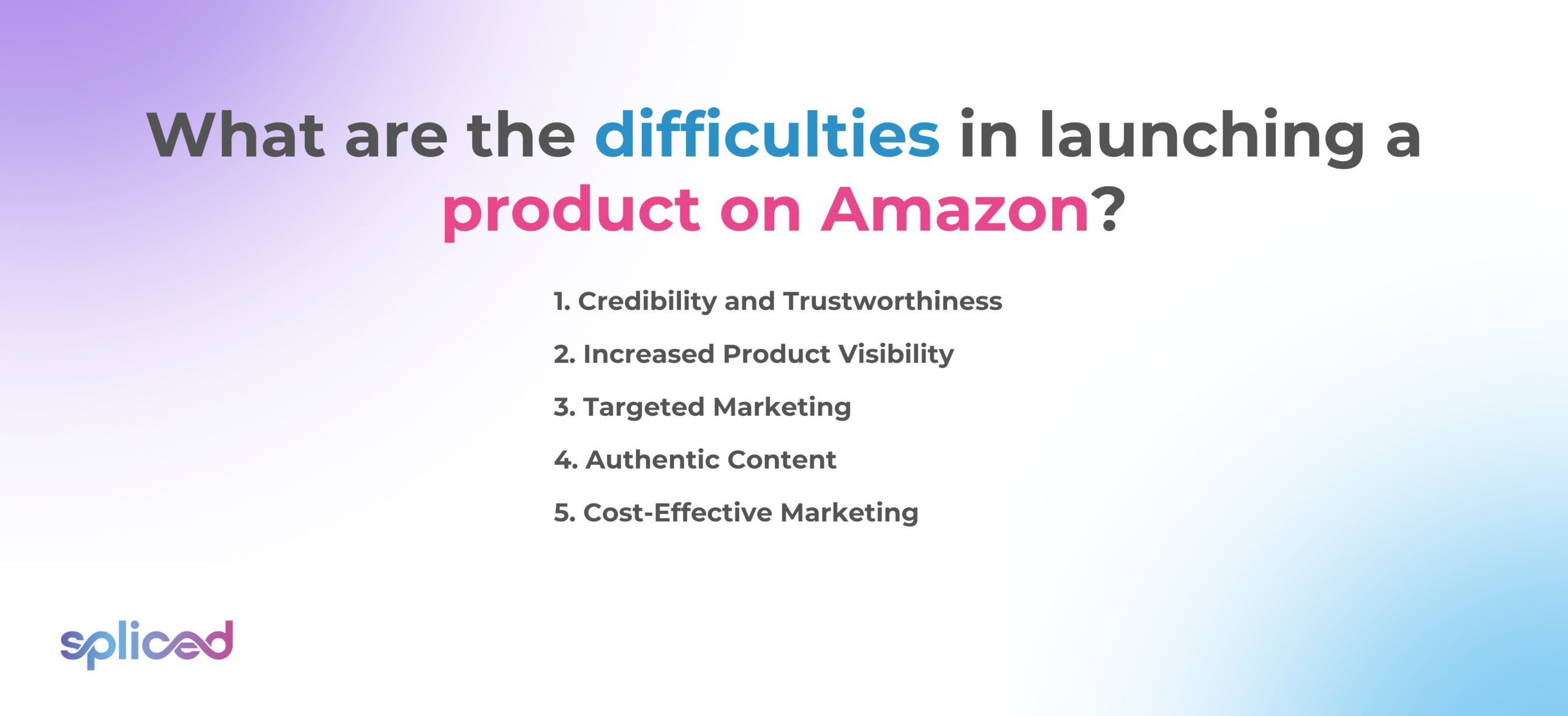
What are the key challenges in launching Amazon products with influencer partnerships in 2026?
Influencer-driven Amazon launches in 2026 face distinct challenges beyond standard seller obstacles. Success requires navigating platform shifts, influencer selection precision, and attribution complexity.
-
- Vertical Short-Form Video Production: Amazon Creator Connects and the broader shift toward vertical short-form discovery on TikTok, YouTube Shorts, and Instagram Reels demand specialized content creation. Influencers must produce native-format videos that feel authentic rather than promotional. This requires investment in production quality, rapid iteration, and platform-specific optimization. Brands working with influencers must allocate budget and creative direction for vertical content that converts on discovery feeds, not just awareness content.
-
- Influencer Specialization Over Follower Count: In 2026, follower volume no longer predicts launch success. Micro and nano-influencers with deep category expertise (home tech, kitchen equipment, beauty tools) outperform generalists with larger audiences. Brands must identify creators who speak consistently about narrow verticals and demonstrate performance thinking. This requires more granular discovery, higher influencer relationship density, and longer vetting periods than macro-influencer campaigns.
-
- Amazon Creator Connects Attribution: Amazon Creator Connects, launched in March 2026, integrates influencer links with Amazon’s backend sales data. However, attribution remains complex across multiple touchpoints. Influencers may drive awareness through TikTok, which converts later through Amazon search, Prime Day promotions, or seasonal demand spikes. Brands must separate true influencer impact from platform-wide noise such as PPC changes, competitor activity, and macro-seasonal trends. Spliced solves this by connecting campaign execution with commerce data to isolate actual sales lift.
-
- Performance-Based Compensation Structure: Flat-fee influencer partnerships carry high risk in 2026. Brands increasingly use tiered bonus structures tied to measurable affiliate performance. Example: base fee of $5,000 plus 2% commission stacking on quarterly sales thresholds ($50,000 = additional 2% bonus). Managing these incentive layers across multiple influencers, tracking actual attributed sales, and preventing budget overruns requires integrated campaign management and real-time performance visibility.
-
- Cross-Platform Coordination: Successful 2026 launches operate across TikTok, Instagram Reels, YouTube Shorts, and Amazon Creator Connects simultaneously. Each platform has distinct algorithms, audience behavior, and content formats. Influencers must post consistently across channels while maintaining authentic voice. Brands must orchestrate timing, messaging, and performance tracking across all platforms. Fragmented tools lead to missed opportunities and attribution blindness.
Global influencer marketing spend reached $38.2 billion in 2026, a 17.3% increase year-over-year. Amazon-affiliated creator content represents approximately $4.1 billion of this total. Brands that solve these challenges through specialized tools and category-focused influencer networks capture outsized returns on creator investment.
How can Spliced help in Launching Amazon Products?
Spliced helps brands launch Amazon products by connecting influencer campaigns to measurable sales outcomes through real-time tracking and commerce attribution. The platform identifies micro and nano-influencers whose audience composition and category specialization match your product vertical, then integrates campaign performance with Amazon Creator Connects data (available since March 2026) to measure actual conversion rates and sales lift. Spliced simplifies influencer selection, contract management, and performance monitoring across TikTok, YouTube Shorts, and Instagram Reels. The platform tracks affiliate commission structures, tiered performance bonuses (such as 2% bonus stacking at $50k quarterly sales), and compares creator performance against category benchmarks. Brands using Spliced gain visibility into which creator activity drives external traffic to Amazon storefronts and which creators produce the highest return on investment for product launches, replacing manual tracking and guesswork with data-driven campaign decisions.
Who are the best Amazon influencers for product launches in 2026?
The most effective Amazon influencers for 2026 product launches demonstrate category specialization, consistent performance metrics, and vertical short-form video production across TikTok, YouTube Shorts, and Instagram Reels. Brands prioritize creators who build visibility before applying, operate across multiple channels, and show evidence of converting awareness into measurable sales. Leticia Gardner, Holland Smith Paterno, The Ohio Girl Jaz, Ashley Marquez, and Laura Fuentes remain relevant performers, though 2026 success requires category depth over follower count alone. Specialization in narrow categories like home tech, beauty tools, kitchen equipment, or fitness products reduces brand risk and improves conversion likelihood.
Leticia Gardner maintains a strong presence across TikTok, Instagram, and YouTube with focus on fitness, lifestyle, and family-related vertical content. Totalbody21, Leticia’s fitness and wellness brand, aligns with Amazon’s emphasis on category-specialized creators. For 2026 launches, Leticia’s effectiveness centers on her ability to produce native short-form video content suitable for Amazon Creator Connects and Amazon Inspire feeds, not follower count alone. Brands report higher conversion rates when Leticia’s product recommendations appear in vertical video formats with direct Amazon storefront links.
Holland Smith Paterno operates as a fashion and lifestyle micro-influencer across TikTok and Instagram with demonstrated strength in promoting fashion, beauty, and home category products. Holland’s niche focus and authentic visual content drive conversions when integrated into Amazon Creator Connects campaigns. Micro-influencers like Holland Smith Paterno frequently outperform macro-influencers in 2026 because their engaged audiences demonstrate higher purchase intent and lower acquisition cost per conversion.
The Ohio Girl Jaz specializes in fashion, travel, and beauty with regular Amazon hauls and product reviews. Jaz’s relaxed, accessible style resonates with audiences seeking affordable product recommendations. In 2026, creators who consistently cover narrow categories are easier for brands to trust. Jaz’s focused content strategy reduces perceived risk and improves partnership conversion rates compared to generalist creators.
Ashley Marquez covers education, motivation, fashion, kids’ products, and lifestyle content with demonstrated ability to drive conversions across multiple subcategories. Ashley’s authentic engagement with audience and multi-category expertise makes her effective for brands launching product lines rather than single items. Performance-based commission structures ($50k quarterly sales equals 2% bonus stacking) reward creators like Ashley who maintain consistent output and audience trust.
Laura Fuentes builds authority in cooking, health, and wellness with engaging content that drives conversions in food, kitchen, and wellness categories. Laura’s category specialization and credibility make her a lower-risk partner for health and kitchen product launches on Amazon. Brands in these categories report measurable sales lift when pairing Laura’s content with Amazon Creator Connects affiliate tracking.
Selecting influencers for 2026 Amazon launches requires evaluation beyond follower counts. Brands assess category depth, vertical video production capacity, Amazon Creator Connects integration capability, and performance history. Visit individual creators’ TikTok, Instagram Reels, and YouTube Shorts channels to verify content format compatibility with Amazon Inspire and other native discovery feeds. Review their Amazon storefronts and affiliate performance data when available. Spliced helps brands identify category-aligned creators, track affiliate attribution through Amazon Creator Connects, and measure actual sales impact from influencer partnerships across discovery and conversion stages.
How does an influencer’s engagement rate affect product launch effectiveness in 2026?
An influencer’s engagement rate directly affects product launch effectiveness by determining reach amplification, audience trust conversion, and measurable sales attribution. Engagement rates measure the percentage of an influencer’s audience that actively interacts with content through likes, comments, shares, and clicks. Higher engagement correlates with stronger audience trust and content resonance, both critical for driving Amazon product discovery and purchase intent.
Engagement rate serves as a barometer of authentic influencer-audience relationships. The metric reflects how much an influencer’s followers trust and actively connect with their content. A high engagement rate signals an audience predisposed to act on product recommendations, which directly supports conversion potential during product launches. In 2026, engagement rate matters more than follower count because micro and nano-influencers with 10,000 to 500,000 followers frequently achieve 3 to 8 percent engagement rates, compared to 0.5 to 2 percent for macro-influencers.
Engagement-driven content performs better in Amazon’s discovery ecosystem. Social media algorithms prioritize highly engaged content, increasing visibility and driving qualified traffic to Amazon product pages and storefronts. This algorithmic boost becomes especially valuable when influencers create vertical short-form video for TikTok, YouTube Shorts, and Instagram Reels, channels that directly funnel external traffic to Amazon.
Engagement rate is calculated by dividing total interactions (likes, comments, shares, saves) by total followers and multiplying by 100 to produce a percentage. Brands measure engagement per post or as an average across recent content to assess consistent audience resonance. For Amazon product launches, engagement rates must be evaluated alongside category relevance; an influencer with 6 percent engagement in kitchen tools is more valuable than one with 5 percent engagement across mixed categories.
Engagement rate is necessary but not sufficient for launch success. Brands must also measure click-through rates to product pages, conversion rates from traffic driven, and affiliate commission performance. Reach and impressions provide context (total people exposed), but only engagement combined with traffic attribution and sales data reveals true launch effectiveness. In 2026, platforms like Amazon Creator Connects provide real-time attribution data that connects influencer content to storefront visits and purchases, allowing brands to calculate exact ROI beyond engagement metrics alone.
Content quality, category specialization, audience alignment, and posting consistency influence engagement rates most significantly. Influencers who specialize in specific product categories (home technology, beauty tools, kitchen equipment) maintain higher engagement than generalists because their followers perceive them as authoritative and trustworthy. Authentic visuals, clear product value propositions, and timely posting aligned with audience behavior patterns strengthen engagement. Follower count increases engagement potential but specialization filters audience quality.
Micro and nano-influencers with specialized niches outperform larger creators on engagement rate and conversion metrics during product launches. Their smaller, more dedicated audiences create stronger psychological connections and higher purchase propensity. These creators also maintain cost efficiency; a 50,000-follower fitness influencer with 6 percent engagement and affiliate tracking often delivers higher ROI than a 1 million-follower generalist at lower commission rates.
Influencers increase engagement during product launches by responding to audience comments, posting at optimal times when their specific audience is active, collaborating with complementary creators, and creating exclusive early-access content. User-generated content campaigns and interactive contests multiply engagement beyond the influencer’s original post. Performance-based incentives, such as 2 percent commission bonuses when quarterly affiliate sales exceed $50,000, align influencer motivation with measurable outcomes and encourage sustained engagement promotion throughout the launch window.
How can you encourage engagement from the influencer audience during the launch?
You can encourage engagement from the influencer audience during a 2026 Amazon product launch by implementing strategies that drive measurable interaction, conversions, and user-generated content. The most effective tactics include amplifying influencer content across platforms, hosting live events with direct product access, leveraging user-generated content for social proof, running performance-based contests, providing exclusive early access, fostering community conversations, facilitating account takeovers, and incentivizing shares with affiliate commission stacking.
Amplify influencer content on your brand’s social media accounts, website, blog, newsletter, and paid ads. Reposting their content extends reach and signals appreciation for their creation efforts. In 2026, brands using vertical short-form video amplification across TikTok, YouTube Shorts, and Instagram Reels see higher engagement than static reposts. Vertical formats align with Amazon Creator Connects integration and drive direct traffic to your Amazon storefront.
Encourage cross-platform content distribution. Influencers with presence across TikTok, Instagram Reels, YouTube Shorts, and Amazon storefronts reach diverse audiences. Multi-platform promotion increases message frequency and captures users at different stages of their purchase journey. Micro and nano-influencers with focused category expertise (home tech, beauty tools, kitchen equipment) generate higher conversion rates when distributing vertically formatted content across channels.
Host live events, webinars, or livestreams featuring influencers. Their presence adds credibility and enables real-time audience interaction. In 2026, livestream commerce drives direct sales, particularly when combined with exclusive product access and live Q&A sessions. Live events create urgency and generate discussion around your product launch.
Activate user-generated content campaigns. Encourage followers to create and share photos, videos, or testimonials using your product. Feature their content on your channels and the influencer’s platforms. UGC provides authentic social proof and demonstrates real-world product benefits. Brands that systematically collect and amplify UGC from launch audiences see 3x higher engagement on follow-up campaigns.
Respond promptly to comments, questions, and feedback on all influencer posts and amplified content. Address inquiries directly, acknowledge user input, and express gratitude for engagement. This commitment to interaction builds community trust and encourages sustained participation throughout the launch window.
Organize performance-based contests and challenges tied to your product launch. Offer tiered incentives based on engagement metrics (shares, clicks, sales attribution) rather than random selection. In 2026, contests that track affiliate performance through Amazon Creator Connects or UTM parameters reward creators for driving actual conversions. Stacked commission bonuses (base affiliate rate plus 2% performance bonus at $50k quarterly sales threshold) encourage creators to promote aggressively.
Provide exclusive early access to products before the official launch. Influencers generate anticipation through behind-the-scenes footage, unboxing videos, and early reviews. Exclusive access creates scarcity and motivates their followers to purchase immediately upon public launch, driving concentrated sales volume that improves your Amazon ranking.
Foster community conversations by asking targeted questions, running polls, and initiating discussions specific to your product category. Engage with responses by acknowledging insights and inviting deeper dialogue. Meaningful conversations signal to Amazon’s algorithm that your product drives genuine interest and community engagement.
Facilitate influencer takeovers of your brand’s social media accounts during the launch period. Influencers share their perspectives, conduct live Q&A sessions, and provide exclusive content to your audience. Takeovers introduce their followers to your brand directly and create crossover engagement. In 2026, micro-influencers with specialized category knowledge often outperform larger generalist creators during takeovers because their followers already trust their recommendations in that vertical.
Prompt influencers and their followers to share content related to the launch and tag the brand or event hashtag. Offer incentives such as performance bonuses, exclusive early access, or public recognition for the most impactful shares and tags. User-generated content expands reach, drives engagement, and creates measurable signals of product interest that Amazon Creator Connects and affiliate tracking systems capture in real time.
Incorporating these strategies into the influencer marketing campaign during a product launch fosters active engagement from the influencer’s audience, maximizes exposure across TikTok, YouTube Shorts, Instagram Reels, and Amazon Inspire, and creates momentum around the offering. In 2026, brands that measure this engagement through affiliate attribution and sales lift rather than vanity metrics see 44% higher conversion rates through Amazon Creator Connects partnerships. The combination of direct audience participation, category-specialized creator content, and trackable commerce outcomes ultimately contributes to a successful and profitable launch.
How do exclusive discounts and performance bonuses drive influencer engagement and sales?
Exclusive discounts and tiered performance bonuses encourage influencers to promote products actively and drive measurable sales. In 2026, successful Amazon product launches pair base affiliate commissions (5-10% on direct sales) with performance incentives such as 2% bonuses when quarterly affiliate sales exceed $50,000. This structure rewards volume and sustained effort while reducing brand risk.
Performance-based promotion structures increase customer loyalty and repeat purchases. When influencers know their earnings scale with sales volume, they optimize content quality, posting frequency, and audience targeting. Customers who receive exclusive discount codes from trusted creators feel valued and make faster purchase decisions. This creates urgency while signaling brand appreciation to the influencer’s audience.
Improved customer retention follows when exclusive offers are tailored to category preferences. An influencer specializing in kitchen equipment can promote exclusive bundles or limited-time discounts on complementary products. This specificity makes offers feel relevant rather than generic, increasing conversion likelihood. Customers acquired through category-focused influencer promotions show higher lifetime value and lower churn rates than broad-audience campaigns.
Sales velocity accelerates through stacked bonus structures. When influencers see a clear path to higher earnings (base commission plus performance tiers plus exclusive brand bonuses), they prioritize the partnership over competing opportunities. In 2026, brands competing for top micro and nano-influencer attention use transparent, tiered bonus frameworks rather than flat-rate partnerships. This approach directly increases order volume and average order value while building predictable affiliate cost-per-acquisition models.
Competitive advantage emerges through category-specific discount strategies. Influencers who consistently cover narrow product categories (home tech, beauty tools, kitchen equipment) can negotiate exclusive discounts unavailable to generalist creators. This exclusivity strengthens the influencer’s positioning as a trusted authority while creating friction barriers for competitor partnerships. Brands that support category-specialized influencers with better margins and higher bonuses capture market share faster and build defensible customer relationships.
Does influencer interaction with comments drive measurable sales outcomes?
Yes, influencer interaction with comments correlates with higher engagement and conversion signals in 2026 Amazon product launch campaigns. Active comment responses build community trust, signal authenticity to algorithm feeds, and create touchpoints for affiliate link clicks and storefront visits. Influencers who engage consistently with comments demonstrate category expertise and responsiveness, which improves audience perception of product recommendations and increases the likelihood of purchase intent.
In 2026, vertical short-form video platforms prioritize creator engagement metrics when ranking content in feeds such as Amazon Inspire, TikTok, and YouTube Shorts. Influencers who respond to comments actively improve their content visibility and audience trust simultaneously. Comment responses through emojis, direct replies, and follow-up questions signal to the algorithm that content sparks genuine audience interest. This elevated visibility drives more external traffic to Amazon storefronts and Amazon Creator Connects integration points. Beyond algorithmic benefits, engaged followers convert at higher rates because they perceive the influencer as knowledgeable and trustworthy about the product category. Followers who see personalized responses feel valued and are more likely to click affiliate links, visit the brand’s storefront, and complete purchases. For brands measuring influencer performance through affiliate commission structures and conversion rates, active comment engagement by creators directly correlates with sales lift and ROI justification for ongoing partnerships.