
Influencer marketplaces are online platforms that connect brands with social media influencers and content creators for coordinated marketing campaigns, product promotions, and content development. These platforms function as intermediaries, enabling influencers and brands to collaborate on performance-driven initiatives aligned with measurable business outcomes.
The primary objective of influencer marketplaces is to streamline creator discovery, vetting, and campaign execution. Marketplaces provide centralized access to creator databases, audience analytics, and performance tracking tools. In 2026, influencer marketplaces increasingly emphasize commerce integration and attribution measurement, allowing brands to connect creator activity directly to sales outcomes on platforms like Amazon and TikTok Shop.
Influencer marketplaces deliver tangible operational advantages: efficient creator discovery across niches and follower sizes, transparent audience demographics and engagement metrics, streamlined contract and payment management, and scalable campaign workflows. Brands achieve faster iteration cycles and reduced customer acquisition costs by targeting nano and micro-influencers, who deliver higher conversion rates and ROI compared to macro-influencers. The average influencer marketing campaign in 2026 generates $6.50 return per $1 spent, with 85% of marketers actively using influencer platforms for campaign planning and execution.
Influencer marketplaces face significant challenges in 2026. Creator costs have increased substantially, competition for top-tier influencers remains intense, and platform algorithm volatility creates unpredictable content performance. Authenticity risks persist through fake follower inflation and paid engagement tactics that distort influencer credibility. Attribution measurement remains complex because creator-driven demand spans multiple touchpoints and platforms before conversion occurs. Brands struggle to isolate the true ROI of influencer activity from organic search, paid advertising, and seasonal demand fluctuations. Marketplace fees, creator rate increases, and rising customer acquisition costs across all channels compress profit margins on influencer-led campaigns.
What is an influencer marketplace?
An influencer marketplace is a digital platform that connects brands with social media influencers, content creators, and individuals with substantial online followings. These platforms streamline influencer marketing by providing brands with searchable databases of creators across genres and social platforms, enabling efficient discovery, vetting, and performance-based collaboration. In 2026, influencer marketplaces function as performance measurement tools as much as discovery platforms, linking creator activity to measurable business outcomes including direct sales, conversions, and revenue attribution.
Influencer marketplaces leverage creator endorsements and audience connection in digital commerce. The platforms offer brands integrated tools for creator discovery, audience analysis, campaign automation, real-time analytics, and sales attribution. This expanded toolkit reflects the shift from awareness-focused influencer marketing toward performance-driven, ROI-accountable creator partnerships.
Brands access a spectrum of creator types through influencer marketplaces, including nano-influencers with 1,000 to 10,000 followers, micro-influencers with 10,000 to 100,000 followers, mid-tier creators, and macro-influencers. Nano and micro-influencers now drive higher conversion rates and deliver better ROI than larger creators, making niche audience targeting a core marketplace advantage. Marketplaces enable precise matching between creator audience demographics, engagement authenticity, and advertiser target customer profiles.
Data transparency differentiates modern influencer marketplaces. Brands access demographic breakdowns, engagement rates, audience authenticity scores, historical performance metrics, and platform-specific conversion data. AI-powered analytics forecast creator performance and predict which partnerships will convert. This data-driven selection reduces campaign waste and increases the probability of successful partnerships.
Influencer marketplaces present measurable challenges despite efficiency gains. High competition for prominent creators inflates creator costs and marketplace fees. Many platforms charge commission systems or management fees that reduce campaign budgets. Creator authenticity remains a core risk; financially motivated influencers generate low-engagement, unauthentic content that damages brand credibility. Attribution friction persists because marketplace platforms often lack integration with commerce channels like Amazon or TikTok Shop, making it difficult to isolate which creator activity drove actual sales versus awareness-only engagement.
What is the purpose of Influencer Marketplace?
An influencer marketplace serves as a digital platform connecting brands with creators to execute performance-driven campaigns, not just awareness-focused collaborations. In 2026, influencer marketplaces function as intermediaries that help brands discover creators, measure campaign performance, track attribution, and drive direct sales outcomes. This shift reflects the industry’s movement toward treating influencer marketing as a performance budget category rather than a pure advertising expense.
The core purposes of influencer marketplaces include efficient creator discovery, performance measurement, and ROI attribution. Brands use curated databases to identify creators based on niche, audience size, platform, and engagement metrics instead of conducting manual searches. This structured approach reduces discovery time and increases the likelihood of finding creators whose audience demographics align with the brand’s target market. Marketplaces categorize creators by specialization and audience composition, enabling brands to match campaign objectives with the right creator profile.
Performance tracking and commerce integration have become essential marketplace functions in 2026. Leading platforms now connect campaign data with sales outcomes across Amazon, TikTok Shop, and direct commerce channels. Brands can measure which creator content drives conversions, track sales lift during campaign periods, and calculate actual ROI per creator partnership. This attribution capability distinguishes modern marketplaces from older platforms that tracked only engagement metrics.
Audience alignment remains a critical purpose. Brands identify creators whose follower demographics closely match their target customers. Marketplaces provide detailed audience breakdowns including age, location, interests, and purchase behavior. This alignment ensures creator content resonates with the intended audience and maximizes campaign impact. Nano-influencers and micro-influencers with highly engaged niche communities often deliver stronger alignment and higher conversion rates than macro-influencers with broader but less targeted followings.
Influencer marketplaces streamline collaboration workflows. Platforms enable direct communication between brands and creators, simplifying campaign negotiation, creative direction discussions, and payment processing. Automated features including real-time analytics dashboards, performance reporting, and creator payouts reduce administrative friction. This efficiency allows brands to run multiple concurrent campaigns across different creator segments while maintaining clear alignment on goals and deliverables.
Creator diversity within marketplaces serves specific campaign strategies. Platforms provide access to macro-influencers with broad reach, mid-tier creators with focused audiences, and nano-influencers with highly engaged communities. Brands select creator types based on campaign objectives. Performance data from 2026 shows nano and micro-influencers achieve higher conversion rates and deliver better ROI than larger creators, making them preferred for direct sales campaigns. Macro-influencers remain valuable for awareness-stage objectives and brand reach expansion.
Cost efficiency and budget flexibility represent key marketplace advantages. Brands negotiate directly with creators or access pre-negotiated rate cards, reducing intermediary fees compared to agency-managed campaigns. This direct access enables cost-effective partnerships for brands with limited budgets. Marketplaces support flexible campaign structures including per-post payments, commission-based models, and performance-based compensation, allowing brands to align creator costs with measurable outcomes.
Scalability enables multi-creator campaigns simultaneously. Brands execute parallel campaigns with multiple creators targeting different audience segments or platforms. This approach amplifies reach, tests messaging variations, and reduces dependence on individual creator performance. Marketplace tools automate campaign management across dozens of creator partnerships, making scaled influencer programs feasible for brands of varying sizes.
How Influencer Marketplaces Work in 2026
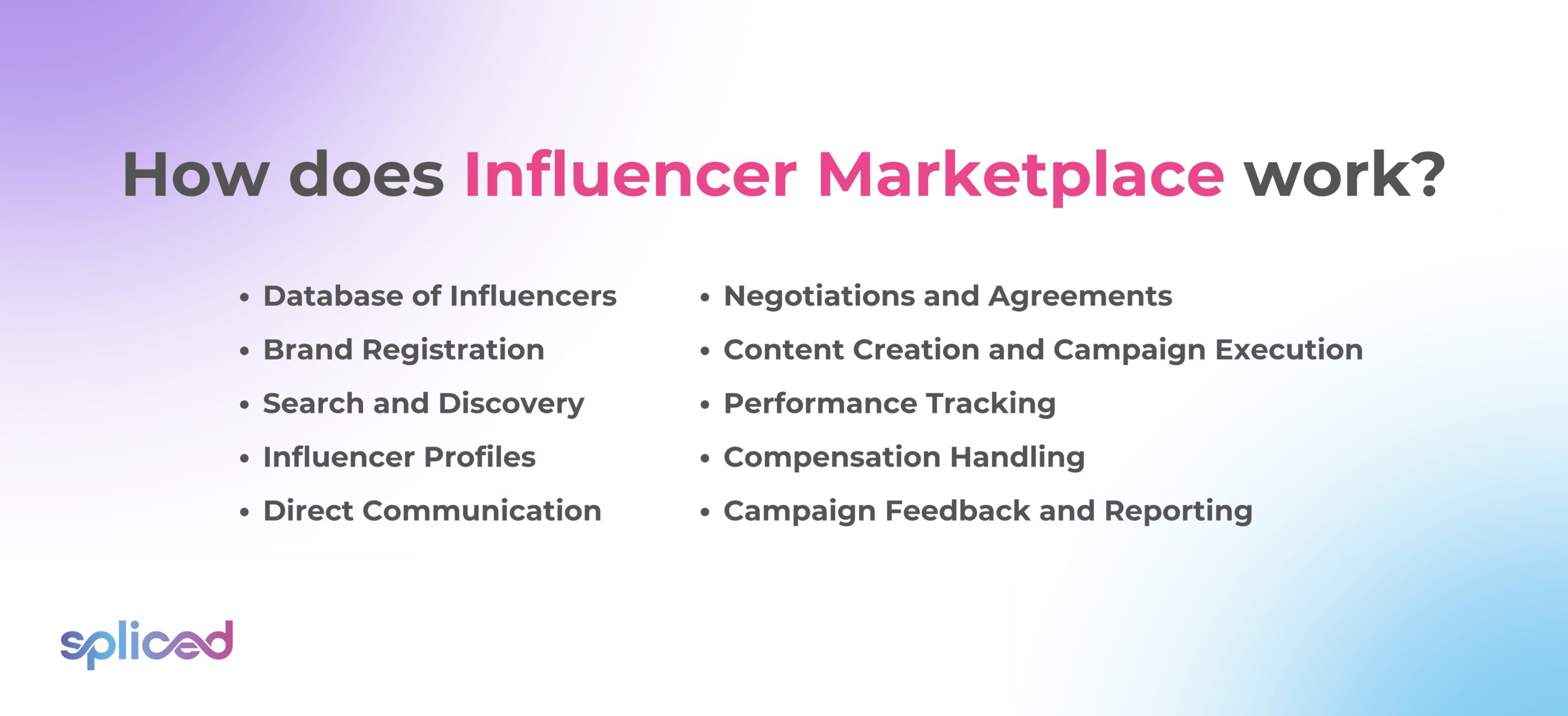
Modern influencer marketplaces operate as end-to-end platforms that connect brands with creators, manage campaign workflows, and measure sales impact. The process combines database discovery, real-time creator matching powered by AI, automated negotiation tools, and commerce-linked performance tracking. Here’s how the workflow functions:
- Creator Database and AI Matching: Influencer marketplaces maintain databases of creators across multiple platforms, tagged by niche, audience size, engagement rate, and conversion history. In 2026, AI-powered matching algorithms analyze creator content, audience quality, platform performance, and past campaign results to recommend creators most likely to drive measurable outcomes for a specific brand or product.
- Brand Registration and Campaign Setup: Brands create marketplace accounts, define campaign goals (brand awareness, website traffic, direct sales, or marketplace revenue), set budget parameters, and specify target audience demographics. 2026 platforms require explicit ROI targets and commerce integration (Amazon, TikTok Shop, or direct store links) to enable attribution.
- Creator Discovery and Filtering: Brands use advanced search filters to identify creators by niche, platform, audience demographics, engagement authenticity score, geographic location, and platform-specific performance history. Filters now include conversion data, past sales lift metrics, and compatibility scores based on brand-creator audience overlap.
- Creator Profiles and Vetting: Marketplace creator profiles display follower count, engagement rate, audience demographics, content style, platform-specific analytics, previous brand partnerships, and authenticity indicators. Brands review profiles to assess fit based on audience quality, content alignment, and track record of driving measurable business results.
- Automated Outreach and Negotiation: Brands send campaign proposals directly to creators through the marketplace with specific requirements, deliverables, timelines, and compensation. Creators review offers and accept, negotiate, or decline. Many 2026 platforms automate counter-offers based on creator rates and campaign scope, reducing negotiation friction.
- Agreement and Contract Terms: Once both parties agree, the marketplace documents campaign requirements including content specifications, posting timeline, usage rights, exclusivity clauses, and payment terms. Smart contracts and automated agreements now lock in deliverables and payout triggers.
- Content Creation and Delivery: Creators develop content aligned with brand guidelines and audience authenticity. Content may include product reviews, unboxing videos, lifestyle posts, or sponsored stories. Creators post across their chosen platforms (TikTok, Instagram, YouTube, etc.) and share proof of posting through the marketplace.
- Real-Time Performance Analytics: Marketplaces track content performance across reach, impressions, engagement rate, click-through rate, and traffic to brand links. In 2026, advanced platforms connect creator content to downstream commerce events (product page visits, add-to-cart, purchases, and marketplace revenue) to measure direct sales attribution and calculate actual ROI.
- Automated Payout and Compensation: The marketplace processes creator payments upon campaign completion and metric verification. Many platforms now offer variable payouts tied to performance (base pay plus commission on attributed sales), reducing upfront risk for brands and aligning creator incentives with measurable outcomes.
- Campaign Analysis and Reporting: Both parties review final campaign metrics, audience engagement data, and sales impact. Detailed reports show reach, engagement quality, click traffic, conversion data, and ROI. Brands and creators use insights to optimize future partnerships and identify high-performing content formats and creator types.
2026 Evolution: Unlike earlier marketplace models focused on discovery and awareness metrics, current platforms prioritize performance measurement and direct commerce attribution. This shift reflects the evolution of creator marketing budgets toward measurable sales channels rather than brand awareness only. AI-driven creator matching, real-time analytics, and integration with commerce platforms (Amazon, TikTok Shop, Shopify) now enable brands to isolate creator-driven revenue and optimize creator selection based on conversion history rather than follower count alone.
How Influencer Marketplaces Drive Measurable Results in 2026
Influencer marketplaces have evolved from discovery platforms into performance measurement tools. In 2026, brands use marketplaces to connect with creators while tracking real-time ROI, attributing sales to specific campaigns, and automating payouts. The median ROI for influencer marketing is $6.50 per $1 spent, with 85% of marketers now treating creator partnerships as direct sales drivers rather than awareness-only channels.
Performance-driven features distinguish modern marketplaces. AI-powered creator matching identifies influencers most likely to convert for your specific audience. Real-time analytics show content performance across platforms. Integration with commerce platforms like Amazon and TikTok Shop enables attribution tracking from creator content to actual sales. Automated payouts based on verified performance metrics reduce payment disputes and administrative friction.
Nano and micro-influencers (10,000 to 100,000 followers) dominate 2026 performance benchmarks. These creators deliver higher conversion rates, stronger audience engagement, and lower costs than mega-influencers. Marketplaces now prioritize filtering by conversion history and platform-specific performance rather than follower count alone, reflecting the shift toward measurable business outcomes.
Why influencer marketplaces drive measurable business outcomes
Influencer marketplaces enable brands to connect with creators who deliver authentic endorsements backed by established credibility and trust. Influencer recommendations carry weight because followers view them as sincere suggestions from reliable sources, directly strengthening brand credibility and customer confidence.
Marketplaces provide direct access to audiences aligned with brand objectives. Influencers maintain follower bases with shared interests and demographics. By selecting creators whose audiences match target segments, brands reach prospective customers through channels that traditional advertising cannot access. This precision targeting reduces wasted ad spend and improves cost per acquisition.
Influencer content generates measurable engagement. Followers actively comment, like, and share influencer posts, building community around the brand or product. This interaction signals authentic audience interest and extends beyond the creator to the brand itself, driving recognition and participation with branded content.
Creators produce visually compelling content that resonates with target audiences. When products or services appear in this content, visual appeal and narrative quality increase, making brands more engaging and relatable to customers. This content effectiveness translates to higher perceived value and stronger purchase intent.
Creator partnerships cost less than broad-scale advertising campaigns, particularly when using nano and micro-influencers. In 2026, brands increasingly allocate creator budgets as performance spending rather than awareness spending. Creator content generates sustained attention and interest over time, delivering continued value long after the initial partnership ends. Extended reach and engagement from evergreen creator content improve overall ROI.
Influencers drive direct conversion through actionable mechanisms. Many creators share discount codes, affiliate links, or limited-time offers that simplify the path from content exposure to purchase. This mechanism enables brands to measure which creator activities directly influence buyer behavior.
Creator endorsements generate social proof and activate the fear of missing out (FOMO). When audiences observe others responding positively to products or services through influencer content, purchase likelihood increases. FOMO effects compound engagement and conversion when offers appear limited or exclusive.
Influencer marketplace data provides quantifiable performance tracking. Brands measure engagement rates, click-through rates, website traffic, conversions, and sales lift to evaluate creator campaign effectiveness. By 2026, leading marketplaces integrate commerce data from Amazon, TikTok Shop, and direct sales channels, enabling brands to isolate the revenue impact of specific creator partnerships. This data-driven approach replaces estimation with measurement, supporting informed decisions about future creator investments.
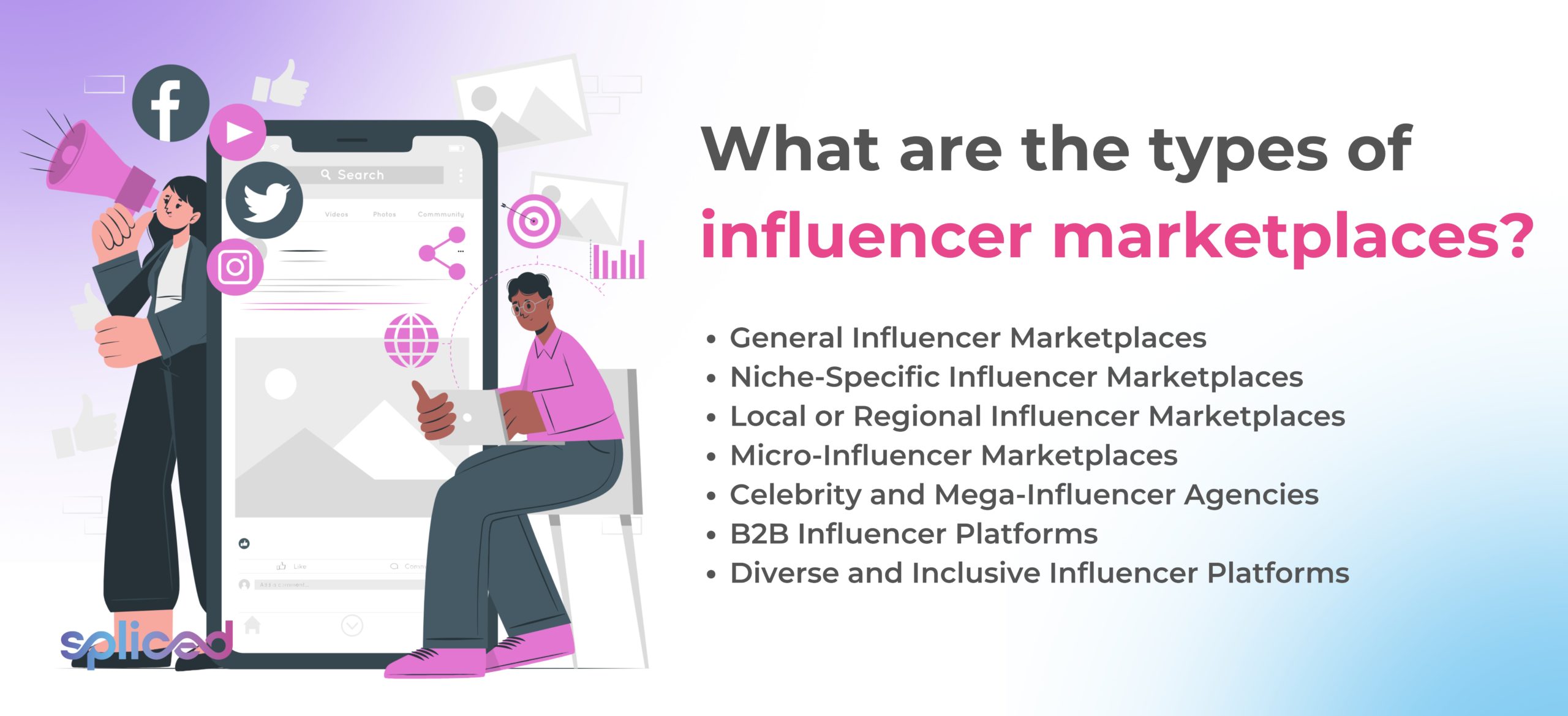
What are the types of influencer marketplaces?
Influencer marketplaces fall into three primary categories based on creator scope, industry focus, and specialization. Each type serves different brand needs, from broad audience reach to niche expertise and vertical-specific requirements.
General Influencer Marketplaces
General influencer marketplaces host creators across multiple industries and demographics. Brands use filtering and search tools to identify influencers by follower count, engagement rate, audience demographics, and content category. These platforms support brands with diverse marketing needs across fashion, lifestyle, technology, food, and other sectors. General marketplaces prioritize breadth of creator inventory and flexibility in campaign scope.
Niche-Specific Influencer Marketplaces
Niche-specific marketplaces concentrate on creators within defined industries or expertise areas. Examples include beauty, fitness, finance, gaming, and sustainability. These platforms allow brands to access creators with established credibility and tight community bonds within their vertical. Niche marketplaces reduce search friction and improve audience alignment when brands target specific consumer segments or product categories.
Vertical-Specific Platforms with Commerce Integration
Modern influencer platforms now integrate commerce data and performance tracking alongside creator discovery. These marketplaces connect creator campaigns directly to sales outcomes on Amazon, TikTok Shop, and direct commerce channels. Brands using these platforms measure creator ROI, track conversion attribution, and optimize creator spend based on revenue impact rather than engagement metrics alone. This category reflects the 2026 shift toward performance-driven creator budgets and measurable sales lift.
- General Influencer Marketplaces: Platforms that host influencers across multiple sectors and industries are general influencer marketplaces. Brands use specific criteria to discover and collaborate with influencers on campaigns spanning diverse niches. General marketplaces excel for brands with varied marketing needs across multiple demographics. They provide influencer selection flexibility and enable exploration of multiple sectors and audience segments simultaneously.
- Niche-Specific Influencer Marketplaces: Platforms that focus exclusively on influencers within a defined expertise area or industry are niche-specific influencer marketplaces. Brands seeking influencers with deep domain knowledge find concentrated pools of specialists on these platforms. Niche marketplaces simplify discovery for marketers targeting influencers with extensive authority and recognized expertise in particular industries. These platforms are essential for campaigns requiring specialized knowledge or technical credibility.
- Local or Regional Influencer Marketplaces: Platforms targeting influencers within specific geographic areas are local or regional influencer marketplaces. These platforms serve brands executing location-specific campaigns or seeking to build local consumer bases. Regional marketplaces connect brands with creators who have measurable reach and impact in particular geographic zones. They enable brands to advertise location-specific products, services, or events to hyper-targeted audiences.
- Nano and Micro-Influencer Marketplaces: Platforms specializing in nano and micro-influencers (typically 1,000 to 100,000 followers) connect brands with creators who maintain highly engaged, loyal communities. Nano and micro-influencer marketplaces are now the preferred choice for performance-driven campaigns because these creators deliver higher conversion rates and better ROI than macro-influencers. Micro-influencers offer authentic engagement, niche expertise, and tighter community access. In 2026, brands increasingly allocate budgets toward micro-influencer partnerships for direct sales impact and measurable attribution.
- Celebrity and Mega-Influencer Agencies: Agencies representing celebrities, athletes, and public figures with large followings (typically 1 million followers and above) are celebrity and mega-influencer agencies. These firms facilitate brand partnerships with high-profile creators to reach broad, diverse audiences. Mega-influencer agencies specialize in relationship management and negotiating endorsement deals. Brands typically partner with mega-influencers for broad awareness campaigns, though performance-driven brands increasingly question ROI relative to nano and micro-influencer strategies.
- B2B Influencer Platforms: Platforms designed specifically for business-to-business marketing connect brands with industry experts and thought leaders who influence professional purchasing decisions. B2B influencer platforms provide access to creators capable of communicating complex, industry-specific topics to professional audiences. These platforms prioritize credibility, domain expertise, and audience relevance over follower counts, reflecting B2B decision-making processes.
- Performance and Commerce-Integrated Platforms: Emerging platforms that connect creator discovery directly to commerce data and real-time performance tracking are performance and commerce-integrated platforms. These platforms measure creator impact on direct sales, marketplace demand (Amazon, TikTok Shop), and measurable attribution. By 2026, brands increasingly prioritize platforms offering AI-powered creator matching, automated payouts, and integrated analytics that link content performance to revenue impact. These platforms serve brands treating creator marketing as a performance budget with measurable ROI requirements.
- Diverse and Inclusive Influencer Platforms: Platforms prioritizing representation of underrepresented creators across ethnic, cultural, gender, and social backgrounds are diverse and inclusive influencer platforms. These platforms connect brands with creators from varied demographics to ensure authentic representation in marketing campaigns. Brands using these platforms reach diverse consumer segments while supporting creator communities historically underrepresented in influencer marketing.
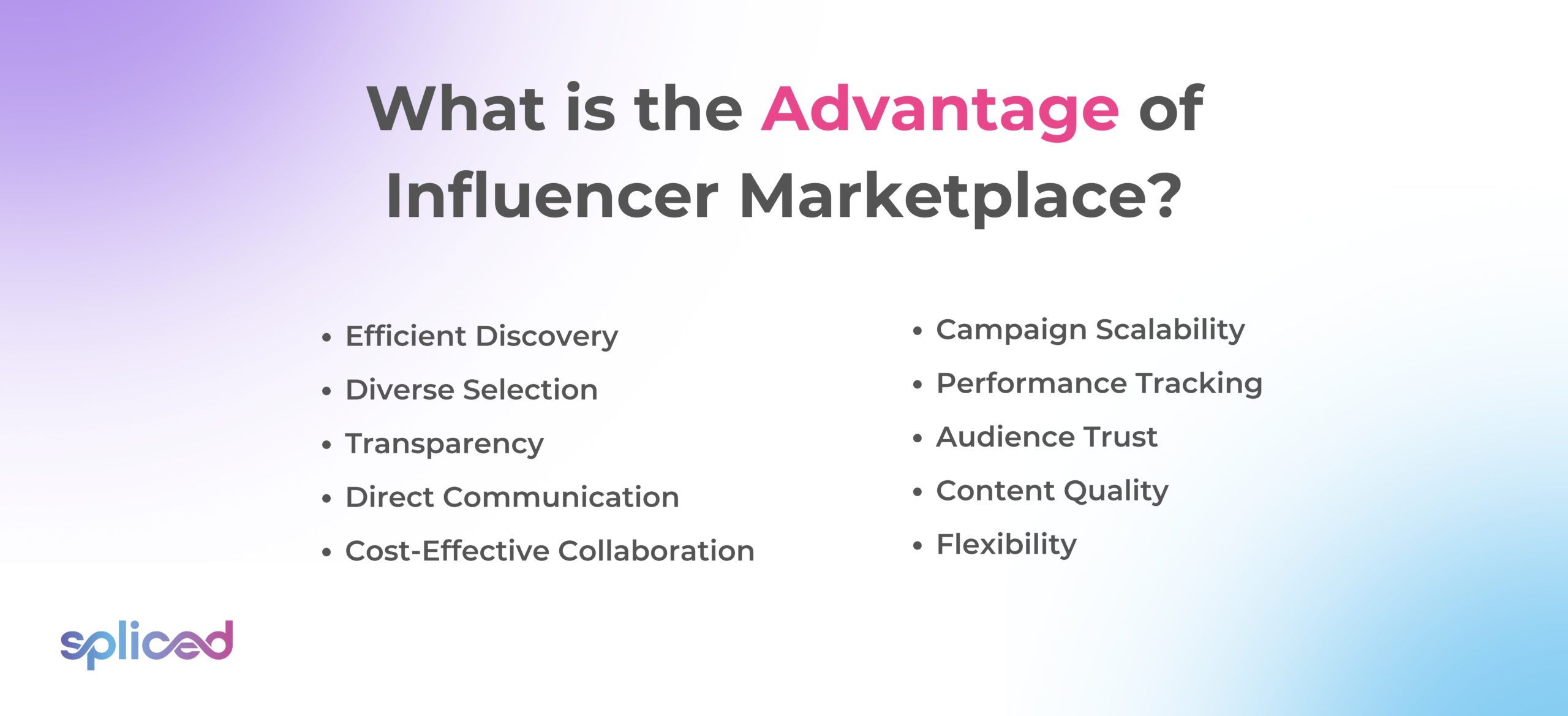
What are the Advantages of Influencer Marketplace?
Influencer marketplaces deliver measurable advantages for brands in 2026 by combining creator discovery with performance tracking and commerce attribution. The primary benefits include faster iteration, reduced creator sourcing friction, and direct ROI visibility.
- Efficient Discovery: Influencer marketplaces use AI-powered matching to connect brands with creators aligned to campaign objectives and audience demographics. This reduces sourcing time compared to manual outreach and allows brands to test multiple creator tiers simultaneously.
- Nano and Micro-Influencer Access: Marketplaces provide access to creators across all follower ranges. In 2026, nano-influencers (10K to 100K followers) and micro-influencers (100K to 500K followers) outperform macro-influencers on conversion rates and deliver better ROI for performance-driven campaigns.
- Transparency and Vetting: Platforms display engagement rates, audience demographics, platform-specific performance metrics, and previous campaign results. Brands access authenticity indicators and creator quality scores before committing budget, reducing fake follower and bot engagement risk.
- Direct Communication: Brands negotiate directly with creators through the platform, clarifying expectations, timelines, deliverables, and content rights without intermediaries.
- Lower Sourcing Costs: Direct marketplace negotiation reduces agency markups and intermediary fees. Brands compare creator rates across multiple candidates and secure better terms than traditional influencer agency partnerships.
- Campaign Scalability: Brands launch parallel campaigns with multiple creators targeting different audience segments, platforms, and demographics simultaneously, accelerating reach and audience testing.
- Real-Time Performance Tracking: Modern marketplaces integrate analytics dashboards showing engagement, reach, click-through rates, and conversion data. Brands measure creator impact on website traffic and direct sales, moving beyond vanity metrics to actual revenue attribution.
- Commerce Integration: Leading platforms connect to e-commerce systems including Amazon, TikTok Shop, and Shopify, enabling direct sales tracking and automated payouts. This integration lets brands measure the relationship between creator content and measurable sales lift.
- Content Authenticity: Creator-produced content resonates with audiences more effectively than branded messaging. Influencers deliver authentic endorsements that improve brand credibility and audience trust compared to traditional advertising.
- Flexibility Across Campaign Types: Brands select creators based on specific goals including brand awareness, traffic generation, or direct sales. Marketplaces filter by creator capability and audience alignment to match campaign intent, from awareness budgets to performance budgets tied to measurable conversions.
For brands seeking deeper creator performance analysis and commerce attribution beyond standard marketplace features, tools like Spliced provide advanced audience filtering, conversion tracking, and ROI measurement specifically designed for Amazon sellers and brands running creator campaigns across multiple platforms.
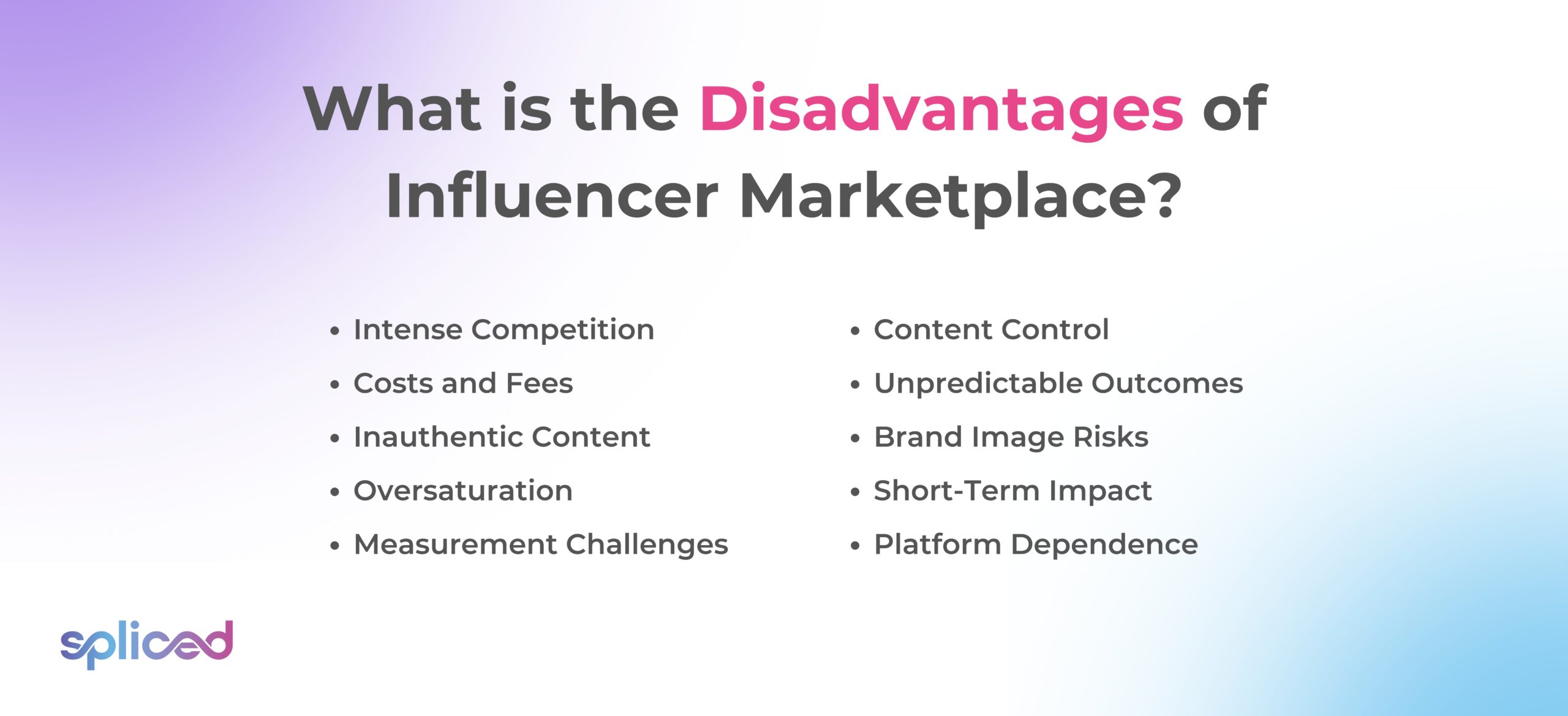
What are the disadvantages of Influencer Marketplace?
Influencer marketplaces present several material challenges in 2026, particularly as brands increasingly tie creator spending to measurable sales outcomes. The disadvantages below reflect current market dynamics and performance measurement realities.
- Intense Competition: Influencer marketplaces remain highly competitive, with thousands of marketers bidding for partnerships with established creators. Top-tier influencers receive dozens of collaboration requests weekly, making it difficult to secure agreements without premium positioning or higher budgets.
- Rising Creator Costs: Influencer fees have increased substantially since 2024. Macro-influencers and micro-influencers with proven conversion track records command premium rates. Marketplace fees, platform commissions, and talent agent cuts further reduce campaign budgets allocated to content creation and audience reach.
- Authenticity and Fake Influencer Risk: Inauthentic partnerships and fake follower profiles remain prevalent. Influencers prioritizing payment over genuine brand alignment produce low-engagement content that damages audience trust and brand perception. Platform vetting processes do not eliminate all fraudulent accounts.
- Market Oversaturation: Oversaturation increases daily as new creators and brands enter influencer marketplaces. Audience fatigue with sponsored content reduces campaign novelty and impact. Creators face algorithm suppression when posting branded content, limiting organic reach regardless of audience size.
- Attribution and ROI Measurement Friction: Measuring direct sales impact from influencer campaigns remains difficult. Marketplace analytics provide engagement metrics but rarely isolate revenue causality. Cross-platform sales (TikTok discovery leading to Amazon purchase, for example) require sophisticated tracking infrastructure most marketplaces do not provide natively. This gap creates ROI blind spots for brands managing performance budgets.
- Content Control Limitations: Brands cannot dictate final creative execution. Influencers retain creative autonomy per most marketplace agreements, resulting in misaligned messaging, brand voice inconsistency, or content that underperforms against campaign objectives. Revision requests extend timelines and campaign windows.
- Unpredictable Audience Response: Audience reception to influencer endorsements cannot be guaranteed. Identical campaigns produce vastly different engagement and conversion outcomes depending on timing, platform algorithm shifts, audience sentiment, or competing content. Planning cannot eliminate this variance.
- Brand Association Risks: Partnering with the wrong influencer exposes brands to reputation damage. Public controversies, influencer account compromises, or misaligned values create negative brand association. Due diligence vetting reduces but does not eliminate this risk.
- Short Campaign Lifespan: Influencer marketing typically generates immediate spikes in traffic or sales followed by sharp decline. Sustained growth requires ongoing influencer relationships or continuous new campaigns. Single-post collaborations produce minimal long-term brand equity.
- Platform Algorithm Volatility: Social media algorithm changes directly impact influencer reach and campaign performance. TikTok algorithmic shifts, Instagram feed prioritization changes, and platform policy updates can render campaigns ineffective overnight. Marketplaces offer no protection against these external factors.
- Difficulty Isolating Attribution: Influencer activity competes with paid advertising, organic search, email, and word-of-mouth for customer conversion credit. Without integrated commerce tracking, brands cannot accurately assign revenue to influencer campaigns versus other channels, creating budget allocation uncertainty.
Brands addressing these disadvantages use advanced attribution tools, establish clear performance benchmarks before campaigns launch, prioritize nano and micro-influencers with verified engagement metrics, and integrate marketplace data with commerce platforms to measure true ROI impact.

How to Find an Influencer Marketplace
Finding the right influencer marketplace requires evaluating your campaign goals, budget, and performance measurement needs. Start with these discovery and evaluation methods.
- Ask for Recommendations: Contact peers, coworkers, or industry contacts with influencer marketing experience. Request feedback on platforms they use for creator discovery, performance tracking, and ROI measurement.
- Industry Conferences and Events: Attend marketing, social media, or influencer marketing conferences, seminars, and events. These gatherings feature discussions about influencer marketplace features, including AI-powered creator matching, commerce integration, and attribution capabilities. Network with attendees who can share firsthand experience.
- Online Communities and Forums: Participate in marketing or influencer marketing communities, forums, and social media groups. Ask members about their experience with platforms, focusing on ease of discovery, vetting tools, and performance reporting.
- Consult Influencer Marketing Agencies: Contact influencer marketing consultancies and agencies. They maintain current knowledge of marketplace features, pricing, and suitability for different campaign types. They can recommend platforms aligned with your specific goals, whether discovery-focused or performance-driven.
- Read Reviews and Testimonials: Review feedback and case studies from brands using influencer marketplaces. Look for evidence of successful creator matches, campaign execution speed, and measurable ROI.
- Search Social Media Directly: Use LinkedIn, Twitter, and Instagram to identify creators and platforms. Creators often reference their marketplace presence and the types of campaigns they accept. This method surfaces active creators and shows which platforms have engaged user bases.
- Industry Publications and Blogs: Review marketing publications, blogs, and research reports covering influencer platforms. Publications often evaluate features such as creator vetting, audience demographics, analytics, and commerce integration.
- Evaluate Platform Capabilities for 2026: When comparing marketplaces, prioritize features that support performance-driven campaigns. Look for AI-powered creator matching, real-time performance analytics, automated payouts, integration with Amazon or TikTok Shop, creator authenticity scoring, and conversion history tracking. These capabilities reduce iteration time and improve attribution accuracy.
How Spliced Supports Performance-Driven Creator Campaigns in 2026
Spliced helps brands and Amazon sellers manage creator and affiliate campaigns with a focus on measurable business outcomes rather than vanity metrics. Unlike traditional influencer marketplaces that emphasize discovery alone, Spliced connects creator activity directly to commerce data, enabling brands to track ROI, isolate attribution, and understand which creator partnerships drive actual sales.
The platform’s advanced search and filtering capabilities allow brands to target creators by audience demographics, engagement quality, niche alignment, platform-specific performance (TikTok vs. Instagram), and historical conversion data. This precision targeting reduces the friction of marketplace discovery and increases the likelihood of matching brands with creators whose audiences genuinely convert.
Spliced provides real-time analytics and performance tracking that goes beyond follower counts and engagement rates. Brands access detailed insights into audience authenticity, content performance across platforms, and creator ROI history. This data-driven approach helps marketers evaluate creator quality before committing budget and measure campaign impact throughout execution.
The platform integrates commerce context directly into campaign management. Brands selling through Amazon, TikTok Shop, or direct channels can connect creator content to actual sales, seasonal demand shifts, and marketplace performance. This integration addresses the 2026 shift toward performance-first budgeting and helps brands separate creator-driven lift from noise such as Prime Day, platform algorithm changes, and category-wide trends.
Spliced automates critical 2026 workflows: AI-powered creator matching, real-time performance analysis, automated payouts, and integrated communication tools. These features reduce the manual effort of campaign management and enable faster iteration based on live performance data rather than post-campaign analysis.
The platform’s authenticity verification uses AI-powered audience analysis to flag fake followers and inactive accounts before partnerships begin. This protection reduces brand risk in an environment where creator cost inflation and rising competition have made inauthentic influencers more prevalent.
Spliced supports both nano and micro-influencer strategies, which dominate 2026 performance budgets. These creators deliver stronger ROI per dollar spent and tighter community access than larger accounts, but require more efficient discovery and management tools. Spliced’s filtering and automation capabilities make managing distributed creator networks cost-effective.
Brands using Spliced for Amazon and TikTok Shop growth benefit from commerce-linked attribution. When TikTok discovery drives demand that converts through Amazon search or storefront visits, Spliced connects the touchpoints and isolates the sales lift. This measurement capability addresses one of the largest disadvantages of traditional marketplaces: difficulty proving influencer ROI beyond direct clicks.
Influencer Marketplace Strategy in 2026
Influencer marketplace strategy centers on connecting brands with creators for measurable business outcomes, not just awareness. In 2026, platforms operate as performance infrastructure that bridges brand demand with creator supply while tracking sales impact across commerce channels.
Database and discovery. Platforms maintain expansive creator databases spanning niches, audience sizes, and social platforms. Brands filter by audience demographics, engagement rates, geography, niche expertise, and conversion history. This segmentation enables discovery of creators whose audience composition matches target customers, improving collaboration relevance and campaign performance.
Performance data and attribution. Marketplaces provide creator performance metrics including reach, engagement, audience demographics, and previous campaign outcomes. Advanced platforms now include conversion rates, platform-specific performance (TikTok versus Instagram), and estimated ROI from prior campaigns. This data-driven approach helps brands select creators with proven sales impact and set realistic campaign benchmarks.
Campaign management and workflow. Platforms enable direct brand-creator communication, campaign coordination, content review, and payment processing within a single interface. Documented agreements on creative direction, compensation, and deliverables reduce misalignment. Real-time collaboration tools keep both parties accountable to campaign timelines and quality standards.
Real-time analytics and optimization. Modern marketplaces track performance metrics as campaigns run, enabling rapid iteration. Brands monitor impressions, engagement, click-through rates, and increasingly, direct sales lift. This visibility supports mid-campaign adjustments and faster decision-making compared to traditional influencer workflows.
Authenticity verification. AI-powered algorithms assess follower authenticity, engagement patterns, and audience quality. This verification reduces exposure to fake influencers and protects brand reputation while ensuring campaign budgets reach genuine audience connections.
Commerce integration. Advanced platforms in 2026 integrate with Amazon, TikTok Shop, and direct storefronts to track creator-influenced sales. This connection bridges content performance with actual revenue, enabling brands to understand which creators drive measurable commerce impact. For Amazon sellers and TikTok Shop merchants, this integration is critical for measuring creator ROI and optimizing budget allocation.
Global and customizable reach. Platforms serve local and international campaigns through geographic filtering and multi-language support. Customizable workflows adapt to different industries, campaign types, and brand requirements, supporting everything from awareness-focused content to direct-response sales campaigns.
Educational resources and performance standards are core to influencer marketplace strategy in 2026. Many platforms now offer training, analytics guides, and best practice documentation to help brands and creators navigate performance measurement, attribution tracking, and ROI optimization. These resources encourage data-driven collaborations, help teams understand conversion mechanics across platforms like Amazon and TikTok Shop, and establish clear expectations around measurable outcomes.
Influencer marketplaces feature case studies and performance reports from brands that have achieved measurable sales lift and strong ROI through platform partnerships. These examples demonstrate concrete outcomes such as revenue impact, customer acquisition cost reduction, and conversion rate improvements. Performance-focused case studies build trust by showing how brands isolate creator-driven sales from other channels, validate nano and micro-influencer effectiveness, and justify creator budget allocation as a direct sales driver rather than purely awareness spending.
How do brands find suitable influencers on these platforms?
Brands find suitable influencers on marketplace platforms through a structured evaluation process that prioritizes performance fit, audience alignment, and measurable campaign outcomes. In 2026, this process increasingly emphasizes conversion history and ROI potential alongside traditional discovery metrics.
Platforms provide advanced search filters that allow brands to define specific criteria. These filters include demographic factors such as age, gender, location, and platform preference (TikTok, Instagram, YouTube). Brands narrow the influencer pool to creators whose follower profiles closely match their ideal customer profiles using these filters.
Brands assess influencers against their primary marketing objectives. If the goal is to drive direct sales, increase website traffic, or build brand awareness, brands search for creators with documented success in similar campaigns. They review previous collaborations and conversion data to evaluate effectiveness in achieving comparable objectives.
Content alignment is critical. Brands review an influencer’s existing content to ensure it naturally incorporates products or services without appearing forced. Authentic integration preserves credibility with the creator’s audience and increases conversion probability.
Engagement metrics signal audience participation quality. Likes, comments, shares, and click-through rates reveal genuine interaction levels. Brands verify follower authenticity by checking for signs of artificial inflation or purchased followers, which distort campaign ROI. Many platforms now include authenticity scores or bot-detection indicators.
Influencer marketplace platforms display historical performance data including reach, engagement rates, and conversion rates. Brands use this data to make informed decisions about influencer suitability. In 2026, conversion rate and average order value data are increasingly available, allowing direct ROI comparison across creators.
Brands communicate directly with influencers through the platform to discuss campaign objectives, content requirements, timeline, and compensation. This conversation reveals the influencer’s professionalism, responsiveness, and willingness to meet specific performance expectations.
Many platforms offer content approval workflows. Brands review influencer-generated content before publication to ensure it aligns with brand guidelines, messaging standards, and compliance requirements. This control maintains campaign consistency and brand safety across partnerships.
Brands evaluate cost efficiency by comparing influencer fees against expected campaign performance. Nano and micro-influencers (under 100,000 followers) frequently deliver higher ROI and lower costs than macro-influencers in 2026. Brands negotiate directly through the platform to establish mutually beneficial terms that balance creator compensation with performance expectations.
For recurring campaigns, brands assess influencers for long-term partnership potential. Consistent collaboration with proven creators reduces onboarding time and improves content quality through familiarity with brand values and audience preferences.
How Spliced Helps Brands Discover and Measure Creator Performance
Spliced helps brands discover creators and measure campaign performance through advanced search, audience filtering, and commerce-linked attribution. The platform uses AI-powered matching to identify creators whose audience demographics, engagement patterns, and content style align with campaign objectives. Spliced indexes creator profiles across multiple platforms including TikTok, Instagram, and YouTube, enabling brands to compare performance data before outreach.
Beyond discovery, Spliced connects creator activity to measurable business outcomes. Brands access historical performance data including audience composition, engagement rates, conversion history, and platform-specific ROI metrics. For Amazon sellers and TikTok Shop merchants, Spliced tracks the relationship between creator content and direct sales impact, isolating attribution from seasonal demand shifts and platform algorithm changes. This performance-first approach addresses the 2026 shift toward creator marketing as a revenue channel rather than awareness-only spend.
Spliced is especially valuable for brands managing multiple creator partnerships simultaneously. The platform automates creator search filtering by audience authenticity scores, engagement quality, niche relevance, and conversion likelihood. Brands reduce discovery time and iteration cycles while maintaining data-driven confidence in creator selection.
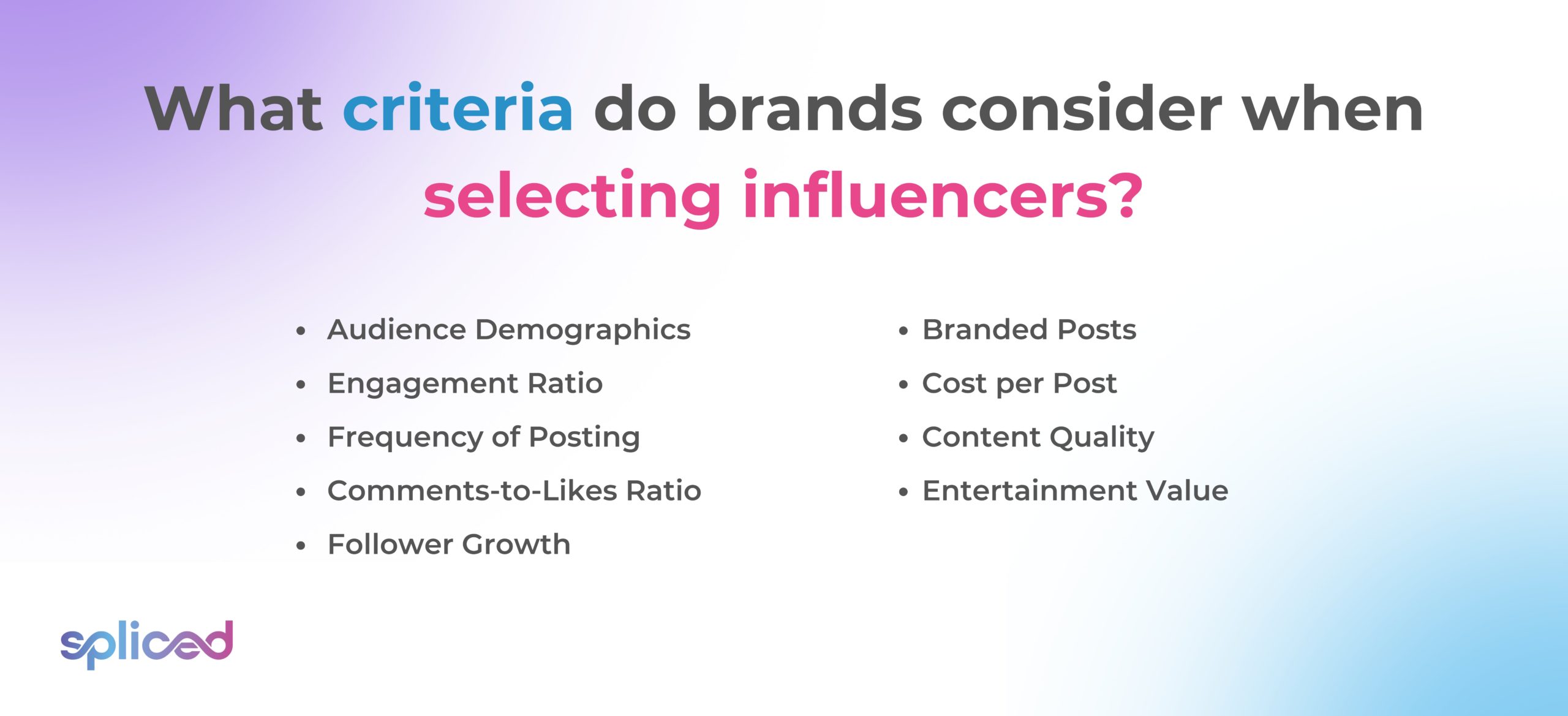
What criteria do brands consider when selecting influencers in 2026?
Brands selecting influencers prioritize measurable performance indicators alongside audience fit. In 2026, selection criteria increasingly emphasize conversion potential, platform-specific performance, and attribution capability rather than follower count alone.
- Audience Demographics: Brands align influencer follower demographics with target audience profile including age, gender, location, and interests. Demographic match remains foundational for campaign relevance and message resonance.
- Engagement Rate: Brands evaluate engagement metrics showing interaction levels relative to follower count. Higher engagement indicates audience receptivity and active community participation rather than passive follower accumulation.
- Conversion History: Brands now assess influencer performance on direct sales and conversions from previous campaigns. Demonstrable conversion records indicate actual business impact beyond content reach.
- Platform-Specific Performance: Brands evaluate influencer performance across specific platforms. TikTok creators show different conversion patterns than Instagram creators; platform expertise directly affects campaign ROI.
- Posting Consistency: Brands examine posting frequency and schedule reliability. Consistent posting maintains audience engagement and ensures predictable content delivery aligned with campaign timelines.
- Comment Quality and Authenticity: Brands analyze comment sections for genuine audience dialogue versus bot activity or spam. Quality comments indicate authentic community engagement and audience trust in the creator.
- Organic Follower Growth: Brands assess follower growth trajectory over time. Steady organic growth reflects audience building through genuine content value; sudden spikes suggest artificial growth tactics that inflate metrics without audience quality.
- Brand Alignment and Previous Partnerships: Brands review prior collaborations for fit with brand values and messaging. Influencers with conflicting partnerships or inconsistent brand messaging pose reputation and authenticity risks.
- Cost Per Post and ROI Expectations: Brands compare influencer fees against expected return on investment. Pricing varies by reach, niche authority, and platform; cost justification requires clear revenue attribution.
- Content Quality and Production Value: Brands assess visual quality, storytelling approach, and creative execution. High-production content elevates brand perception; authenticity and relatability increasingly matter alongside professional polish.
- Audience Trust and Creator Authenticity Score: Brands evaluate how audiences perceive influencer credibility. Third-party authenticity scoring tools help identify creators with genuine influence versus inflated metrics.
Brands using tools like Spliced gain advanced filtering across these criteria, including historical conversion data, audience composition analysis, and direct integration with commerce platforms. This enables faster, more accurate creator matching aligned with measurable business outcomes rather than vanity metrics.
What challenges do brands and influencers face on these platforms?
Influencer marketplaces create friction across discovery, measurement, and execution. Brands and influencers encounter authenticity risks, cost inflation, attribution complexity, and platform volatility that limit ROI predictability and campaign efficiency.
- Fake influencers and artificial metrics: Influencers with artificially inflated follower counts, engagement rates, or bot-driven interactions create significant risk. Brands struggle to distinguish genuine audience connection from purchased followers and engagement. Detection requires manual analysis or third-party verification, adding cost and time to vetting.
- Creator cost inflation and rising campaign fees: Influencer rates have increased substantially since 2024. Established creators command higher fees, and marketplace commissions add 10 to 20 percent overhead. Micro and nano-influencers offer better ROI but require more management across multiple partnerships to reach scale.
- Attribution and ROI measurement friction: Isolating the direct sales impact of influencer content remains difficult. Multi-touch customer journeys, platform algorithm changes, seasonal demand shifts, and external events (sales promotions, competitive activity) obscure the influencer’s true contribution. Most marketplaces lack deep commerce integration, forcing brands to manually match campaign activity to sales data.
- Platform algorithm volatility and reach decay: TikTok, Instagram, and YouTube algorithms change frequently, affecting organic reach and engagement. Influencer content performance fluctuates independent of quality or strategy. Brands cannot guarantee consistent visibility or audience response even with strong creator partnerships.
- Audience authenticity and engagement quality: Large follower counts do not correlate with genuine influence or purchase intent. High engagement rates may reflect audience composition misalignment with brand targets. Brands must evaluate follower demographics, audience sentiment, and conversion history separately from raw follower and engagement numbers.
- Campaign coordination and content approval delays: Managing influencer relationships, ensuring compliance with brand guidelines, and coordinating content creation and approvals requires strong project management. Miscommunication, missed deadlines, and content revisions extend campaign timelines and reduce agility.
- Marketplace saturation and influencer competition: High competition for established creators drives up costs and reduces availability. Brands struggle to secure partnerships with top-performing influencers in competitive niches. Smaller influencers receive more partnership requests, increasing friction and selectivity on their part.
- Sponsored content engagement decline: Audiences distinguish between organic and paid content, often engaging less with promotional material. Balancing brand messaging with authentic creator voice requires careful negotiation and reduces posting flexibility for influencers.
- Long-term partnership instability: Creator priorities, audience preferences, and platform strategies shift over time. Maintaining consistent collaboration requires ongoing effort, renegotiation, and performance monitoring. Influencers may deprioritize brands in favor of newer or higher-paying partnerships.
These challenges explain why brands increasingly demand platforms and tools that provide real-time performance analytics, commerce attribution, creator authentication scoring, and direct sales tracking. Spliced addresses measurement friction by connecting campaign execution with marketplace demand and sales data, giving brands visibility into whether creator activity drives measurable revenue lift.
Are there ethical considerations in influencer marketing?
Yes. Ethical considerations are foundational to influencer marketing in 2026, where creator partnerships directly drive measurable sales and brand trust is quantifiable through performance data. Influencer marketing has grown exponentially, but authenticity risks, disclosure compliance, and fair compensation practices remain critical challenges that brands, creators, and regulators must address.
Transparency and disclosure form the legal and moral foundation of influencer marketing. Creators must explicitly identify sponsored partnerships and label paid content according to FTC guidelines and platform-specific requirements. Non-disclosure undermines consumer trust, exposes brands to regulatory penalties, and damages creator credibility. Compliant disclosure protects both parties and maintains audience confidence in creator recommendations.
Authenticity and genuine brand alignment separate ethical partnerships from transactional endorsements. Creators who promote products misaligned with their values or audience interests face engagement drops, audience skepticism, and long-term reputation damage. Ethical partnerships require honest evaluation of product fit before promotion. Creators benefit from selective collaboration; brands benefit from genuine advocacy that converts audience members into customers.
Creator responsibility to audience welfare is paramount, especially for creators with large followings. Promoting unverified health claims, unsafe products, or misleading content erodes audience trust and creates liability for both creator and brand. Responsible promotion of wellness, finance, and health products requires substantiation and avoidance of pseudoscientific or exaggerated claims. Creator credibility directly impacts conversion rates and customer lifetime value for brands.
Data privacy and consumer consent compliance are legal requirements. Brands and creators collecting audience data must adhere to privacy regulations including GDPR, CCPA, and platform-specific data policies. Transparent data usage practices protect consumer rights and reduce regulatory exposure for both parties. Proper consent mechanisms are standard practice for ethical campaigns in 2026.
Regulatory compliance extends beyond disclosure. FTC guidelines in the United States, ASA standards in the United Kingdom, and equivalent frameworks globally mandate sponsored content labeling, substantiation of claims, and adherence to platform terms. Compliance reduces legal risk and maintains marketplace integrity. Non-compliant campaigns face fines, platform removal, and reputational harm.
Fair creator compensation aligns incentives with authentic advocacy. Underpayment pressures creators to accept poorly-fitting partnerships or over-promise results, compromising campaign quality and authenticity. Competitive rates based on audience size, engagement, and conversion history attract higher-quality creators and reduce churn. Brands investing in fair compensation see improved content quality, higher engagement rates, and better ROI from creator-driven sales.
Long-term ethical relationships outperform transactional campaigns. Repeated partnerships with aligned creators build audience familiarity with brand associations, improve conversion rates, and reduce costs compared to new creator recruitment. Transparency, fair terms, and performance-based incentives establish trust that benefits both parties across multiple campaigns.
What notable features do modern influencer marketplaces offer?
Modern influencer marketplaces offer AI-powered search and discovery, relationship management, multi-channel integration, content administration, automated compensation, and real-time analytics. These features enable brands to identify creators, manage campaigns, and measure performance within a single platform.
Search and Discovery Engines. Advanced algorithms filter creators by audience demographics, engagement rates, niche expertise, platform-specific performance (TikTok, Instagram, YouTube), follower authenticity scores, and conversion history. Brands identify creators aligned with campaign objectives faster than manual outreach. 2026 platforms add AI-powered matching that predicts creator conversion likelihood based on historical performance data.
Relationship and Contact Management. Integrated messaging tools enable direct communication between brands and creators. Teams negotiate campaign expectations, creative direction, compensation terms, and timeline through the platform. Clear documentation reduces miscommunication and establishes accountability throughout the partnership lifecycle.
Multi-Channel Integration. Modern marketplaces connect to TikTok, Instagram, YouTube, Amazon, and TikTok Shop. Brands track performance metrics across platforms in a unified dashboard, monitor real-time engagement, and coordinate content release schedules. This integration reduces manual data entry and strengthens cross-platform campaign coherence.
Campaign Content Administration. Brands review and approve creator-generated content before publication. Version control, feedback loops, and approval workflows ensure content aligns with brand guidelines, messaging standards, and regulatory requirements. This governance maintains brand safety and consistency across creator partnerships.
Automated Compensation and Payouts. Marketplaces handle payment processing, fee transparency, and contract terms in a standardized format. Brands and creators negotiate rates based on deliverables, audience size, engagement metrics, and exclusivity clauses. Automated payouts reduce administrative overhead and ensure timely creator compensation.
Real-Time Analytics and Reporting. Dashboards track reach, impressions, engagement rates, audience demographics, click-through rates, and conversion metrics. Advanced platforms measure sales lift, attribute revenue to specific creators, and calculate ROI per campaign. Data-driven reporting helps brands optimize creator selection, refine campaign messaging, and allocate budget toward top performers. 2026 platforms include predictive analytics that forecast performance before campaign launch.
Brands using these features report faster campaign iteration, clearer performance visibility, and measurable sales impact. Spliced enhances this capability by adding commerce attribution for Amazon and TikTok Shop sales, audience filtering by authenticity, and conversion-focused creator matching beyond standard discovery features.
What emerging trends shape influencer marketplace practices in 2026?
Nano and micro-influencers dominate creator partnership strategies in 2026. These creators typically command 10,000 to 100,000 followers and consistently outperform larger influencers on conversion metrics and ROI. Their audiences are highly engaged, niche-specific communities with stronger trust signals. Brands report better returns and lower cost-per-engagement when working with nano and micro-influencers compared to macro-influencers, making this shift a performance-driven priority rather than a cost-cutting measure alone.
AI-powered creator matching and real-time analytics now define marketplace functionality. By 2026, advanced platforms use machine learning to forecast which creators will convert for specific campaigns, automate payouts based on performance thresholds, and surface the most relevant partner matches without manual screening. This automation reduces time-to-launch and improves creator selection accuracy, allowing brands to iterate faster and measure results continuously rather than waiting for campaign completion.
Performance-first budgeting replaces awareness-only campaign structures. Brands increasingly allocate creator marketing budgets as direct sales drivers with measurable attribution to revenue, not as pure brand awareness spending. Marketplaces now integrate with commerce platforms (Amazon, TikTok Shop, Shopify) to track when creator content influences actual purchases. This shift requires stronger measurement infrastructure and creator accountability for conversion impact, fundamentally changing how brands evaluate creator partnerships.
Long-term creator relationships continue to strengthen but now include performance clauses and renewal criteria. Brands increasingly structure ongoing partnerships with bonus incentives tied to conversion metrics, audience growth, or engagement benchmarks. This approach balances authentic storytelling with measurable business outcomes, replacing transactional one-off campaigns with accountable, sustainable collaborations.
Authenticity verification and creator vetting have become critical marketplace differentiators. Brands now demand transparency around audience composition, engagement quality, and potential fake follower detection. Marketplaces that integrate authenticity scoring, audience demographic verification, and engagement pattern analysis gain competitive advantage. This trend addresses growing concerns about influencer fraud and ensures brand safety while maintaining genuine audience connection.
UGC-style content and creator-owned distribution dominate over highly produced brand content. Brands recognize that casual, authentic creator content converts better than polished advertising. Marketplaces now facilitate direct creator ownership of content assets and multi-platform distribution strategies, allowing creators to repurpose and adapt content across TikTok, Instagram, YouTube Shorts, and other channels in real time.
Influencer Marketplaces vs. Influencer Agencies
Influencer marketplaces are digital platforms where brands discover and directly engage creators for campaigns. Brands search by specific parameters including audience demographics, niche, engagement rates, conversion history, and platform performance. After identifying potential partners, brands negotiate terms and manage campaigns independently. This direct model gives brands full control over influencer selection, campaign execution, and performance tracking. Marketplaces are ideal for brands seeking transparency in creator costs and the ability to iterate quickly across multiple partnerships without intermediaries.
Influencer agencies provide full-service campaign management. Agencies maintain relationships with creators, handle selection and negotiation, develop campaign strategy, ensure content quality, secure approvals, and measure performance. Teams of specialists manage each phase of campaign execution. This outsourced approach reduces brand workload but limits direct control over creator relationships and content decisions. Agencies add service fees that increase total campaign costs.
The operational difference shapes how each model supports 2026 marketing priorities. Marketplaces enable rapid iteration, direct ROI measurement, and real-time creator matching powered by AI. Brands using marketplaces maintain visibility into creator performance data and can adjust campaigns based on conversion metrics and platform-specific results. Agencies prioritize strategic guidance and relationship management, offering value when brands lack in-house expertise or prefer outsourced workflow management. However, agencies introduce reporting delays and reduce transparency into individual creator performance.
Pricing and transparency differ significantly. Marketplace users negotiate directly with creators, seeing clear per-creator costs without intermediary markups. Payment often flows through the marketplace, which handles creator payouts and provides detailed performance analytics. Agencies charge service fees based on campaign scope and complexity. These fees cover strategy, management, and relationship services but increase total spend. For brands tracking ROI and attributing sales to specific creators, marketplaces provide clearer cost accounting and performance isolation. For brands prioritizing strategic partnership management and content oversight, agency fees represent investment in specialized expertise.