
Influencer marketing represents a shift from traditional celebrity endorsements to a diverse ecosystem of content creators across follower tiers. Influencers are individuals with the capacity to affect purchasing decisions and behaviors within a specific audience due to their experience, authority, or relatability in a given niche. Brands now leverage these creator partnerships as a strategic approach to communicate with target consumers through authentic, relationship-driven channels rather than one-way messaging.
The effectiveness of influencer marketing stems from genuine connection between creators and their followers. Creator content resonates more deeply with audiences than traditional advertising, establishing trust that conventional marketing rarely achieves. Influencers increase brand recognition, strengthen product credibility, and generate organic engagement within communities. When brands collaborate with the right influencer tier, they access measurable outcomes in terms of engagement quality and attributed sales performance.
Influencer marketing operates through structured partnerships between brands and creators. Brands identify creators whose content naturally aligns with their products or services, then collaborate on authentic promotional content. Partnership formats include sponsored posts, product reviews, unboxing videos, and creator-hosted events. Brands leverage the existing trust between creators and their audiences to build genuine interest and marketplace demand.
Influencer marketing delivers measurable advantages when executed strategically. Brands reach highly targeted consumer segments while improving marketing precision and reducing wasted impressions. Creator partnerships deliver the authenticity that modern consumers seek, moving beyond corporate messaging. Challenges include identifying creators whose values align with brand positioning, managing disclosure compliance (required by ACCC, FCA, and other regulatory bodies as of 2026), and balancing promotional messaging with genuine community value. Audiences quickly detect inauthentic endorsements and undisclosed sponsorships.
Influencers are categorized into five primary tiers by follower count and engagement characteristics.
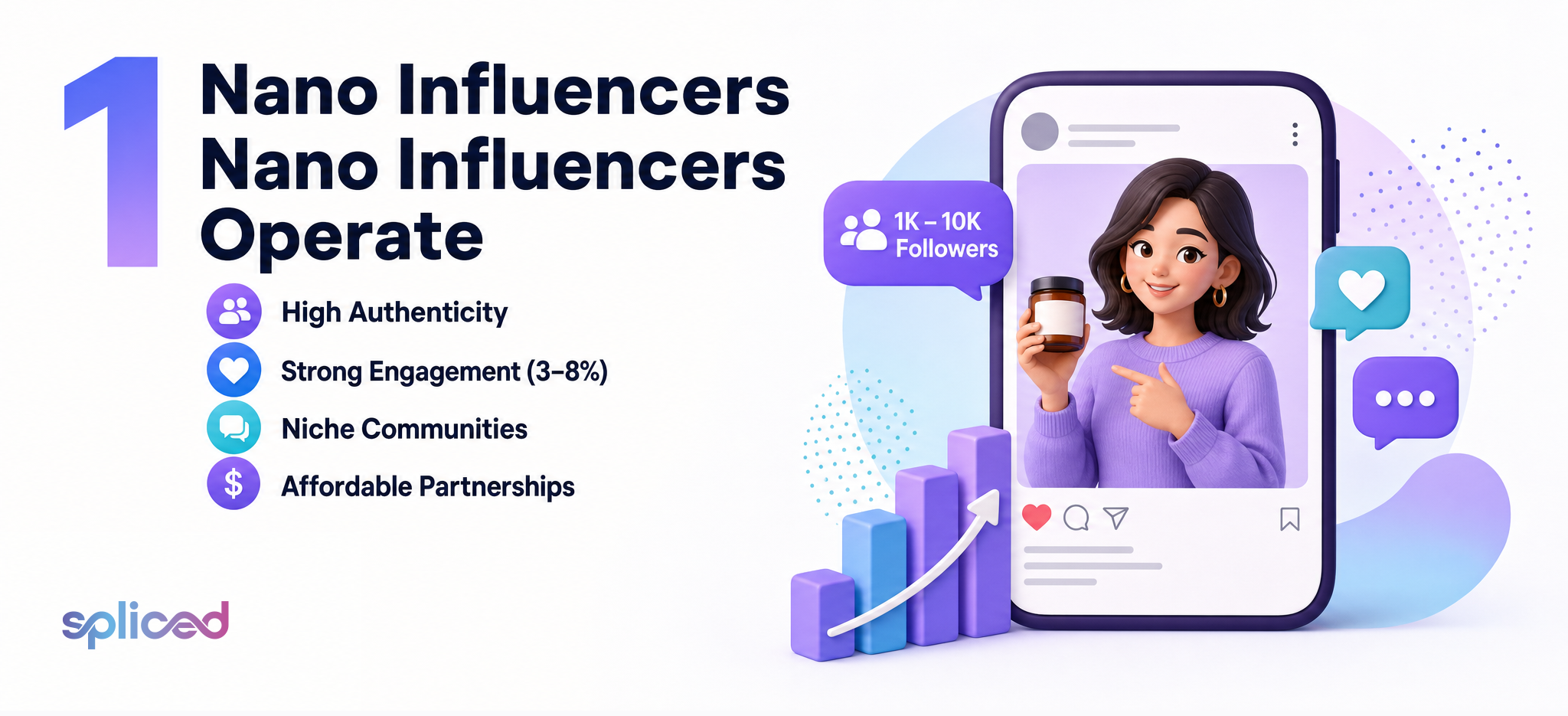
- Nano-Influencers: Nano-influencers operate with under 10,000 followers and demonstrate the highest engagement rates, often ranging from 3 to 8 percent. Their small, tight-knit communities foster authentic brand advocacy. These creators charge $50 to $500 per post, making them cost-effective for niche market entry and hyper-targeted campaigns targeting local audiences or specific communities.
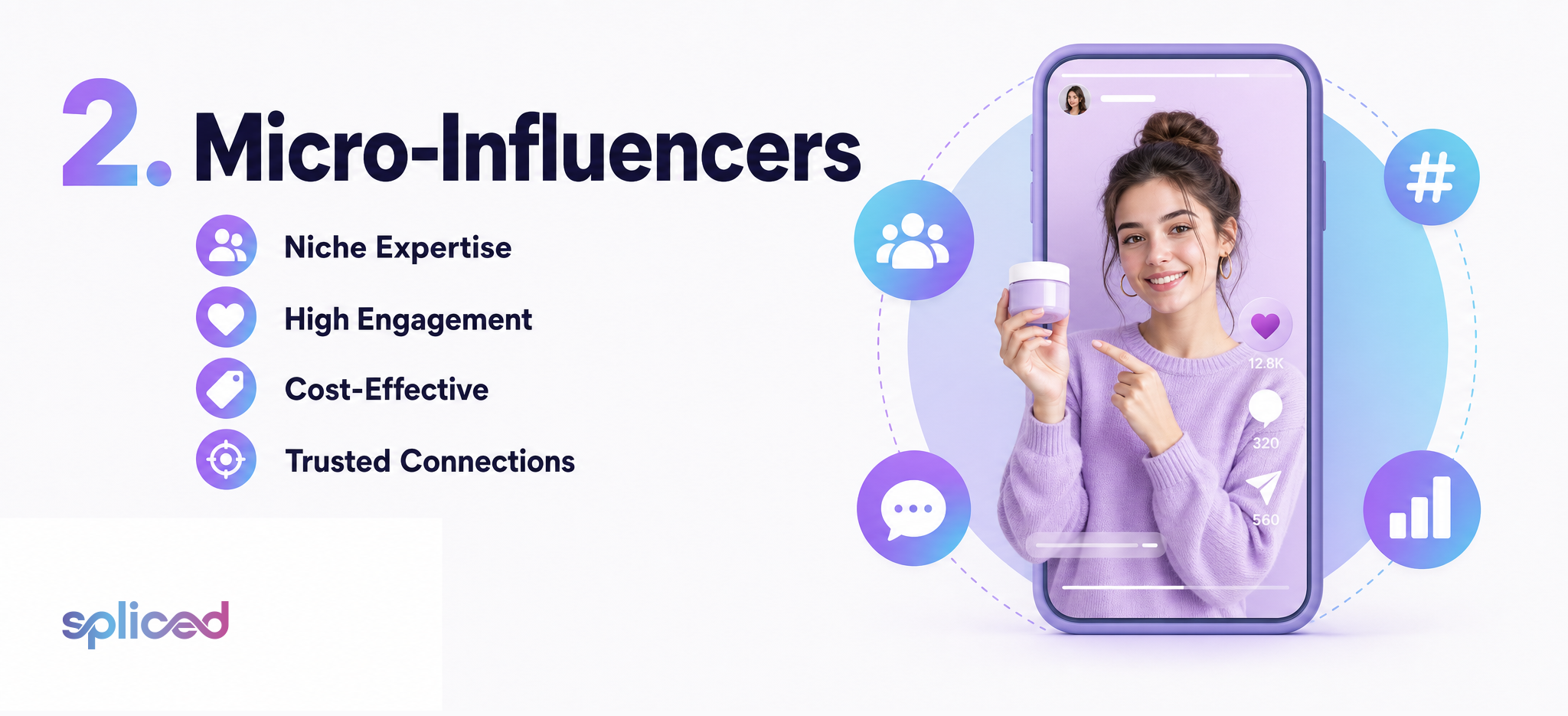
- Micro-Influencers: Micro-influencers maintain 10,000 to 50,000 followers with engagement rates between 1.5 and 4 percent. Often positioned as the 2026 “sweet spot” for ROI-focused campaigns, micro-influencers combine niche expertise with authentic audience connection. Typical rates range from $250 to $3,000 per post. Their dedicated followers view recommendations as peer advice rather than corporate messaging, driving meaningful conversions.
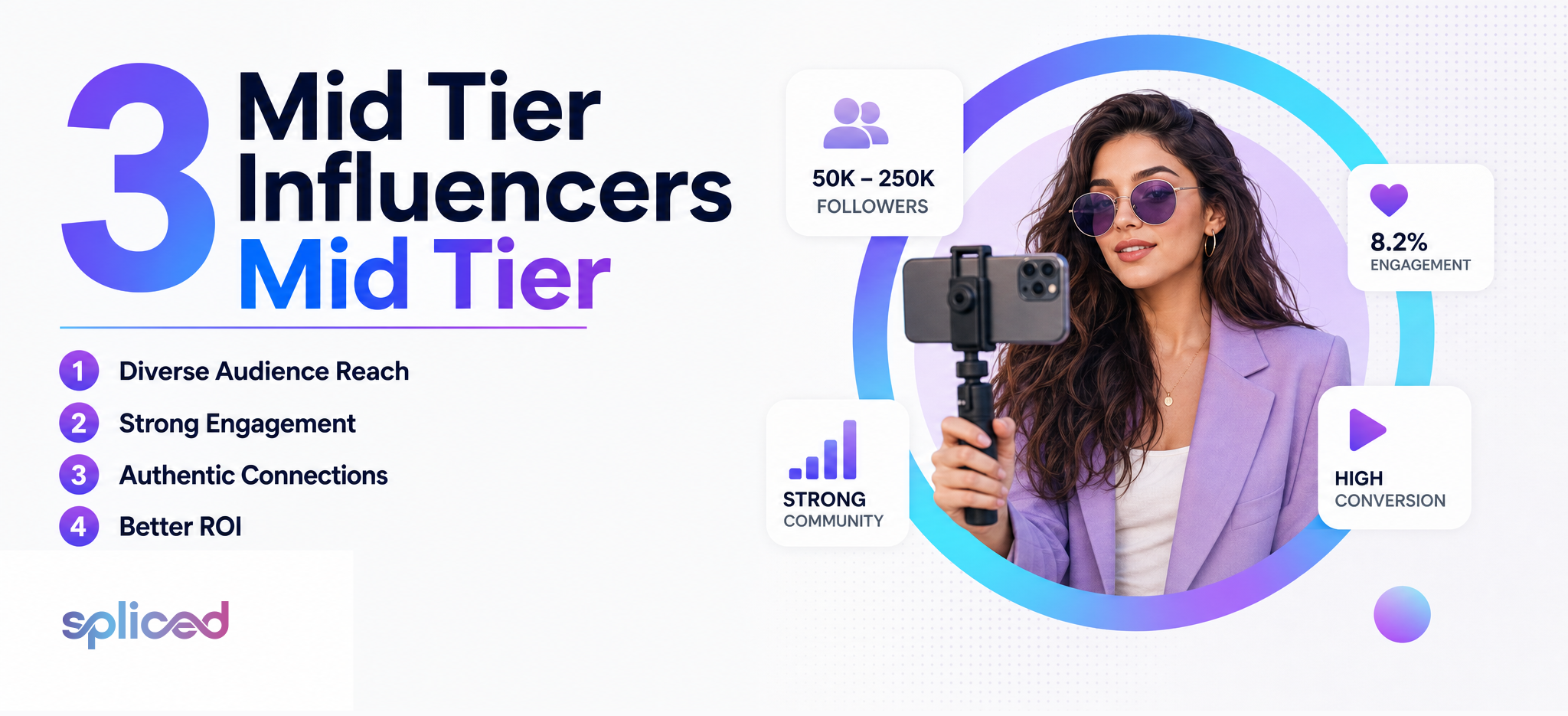
- Mid-Tier Influencers: Mid-tier influencers operate at 50,000 to 250,000 followers with balanced engagement and reach. Pricing typically ranges from $1,800 to $5,000 per post. These creators offer scalability without sacrificing audience authenticity, appealing to brands seeking meaningful reach beyond niche segments while maintaining genuine community connection and engagement quality.
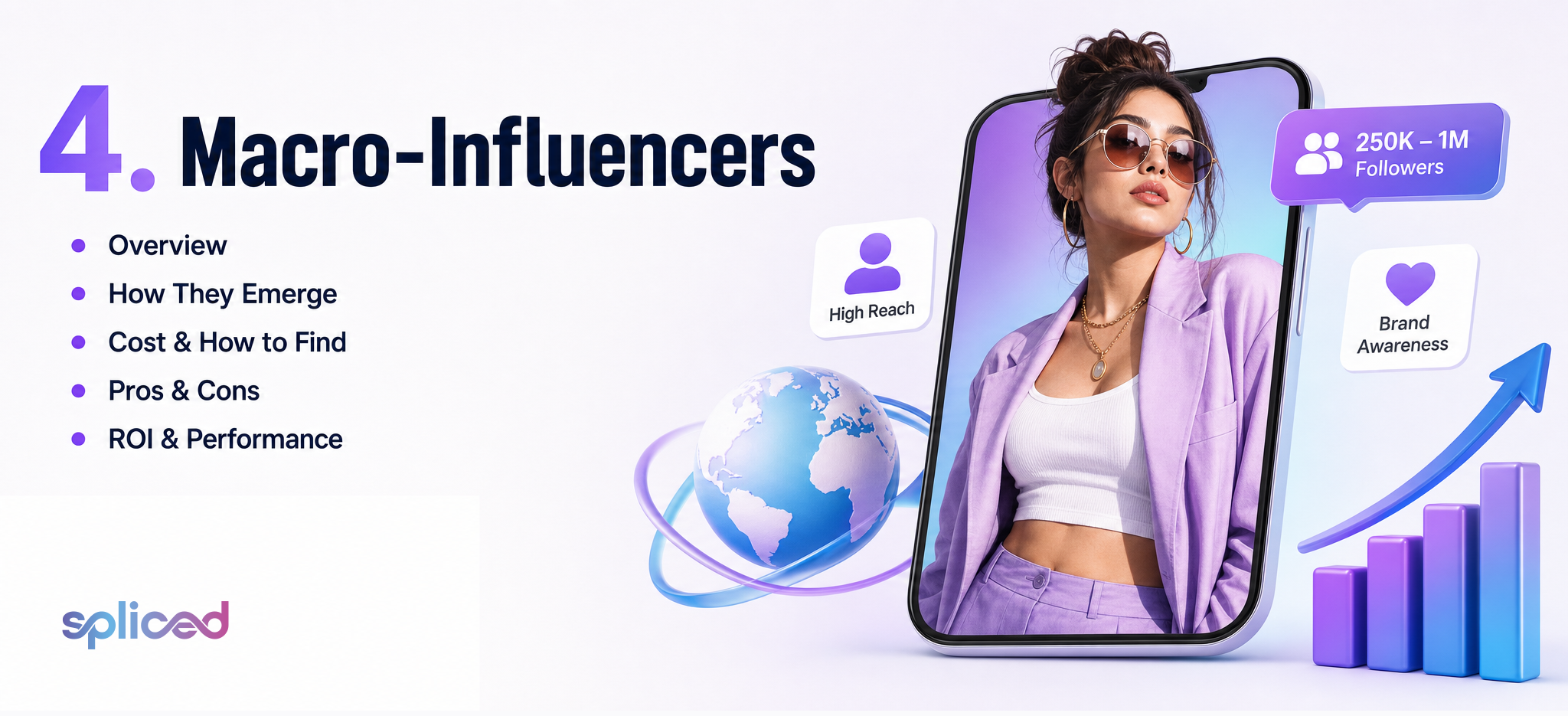
- Macro-Influencers: Macro-influencers command 250,000 to 1 million followers with broader appeal across multiple demographics. Per-post rates start at $5,000 and often exceed industry averages. While engagement rates decline as follower count grows, macro-influencers deliver substantial reach for product launches and brand awareness campaigns, particularly on TikTok and YouTube.
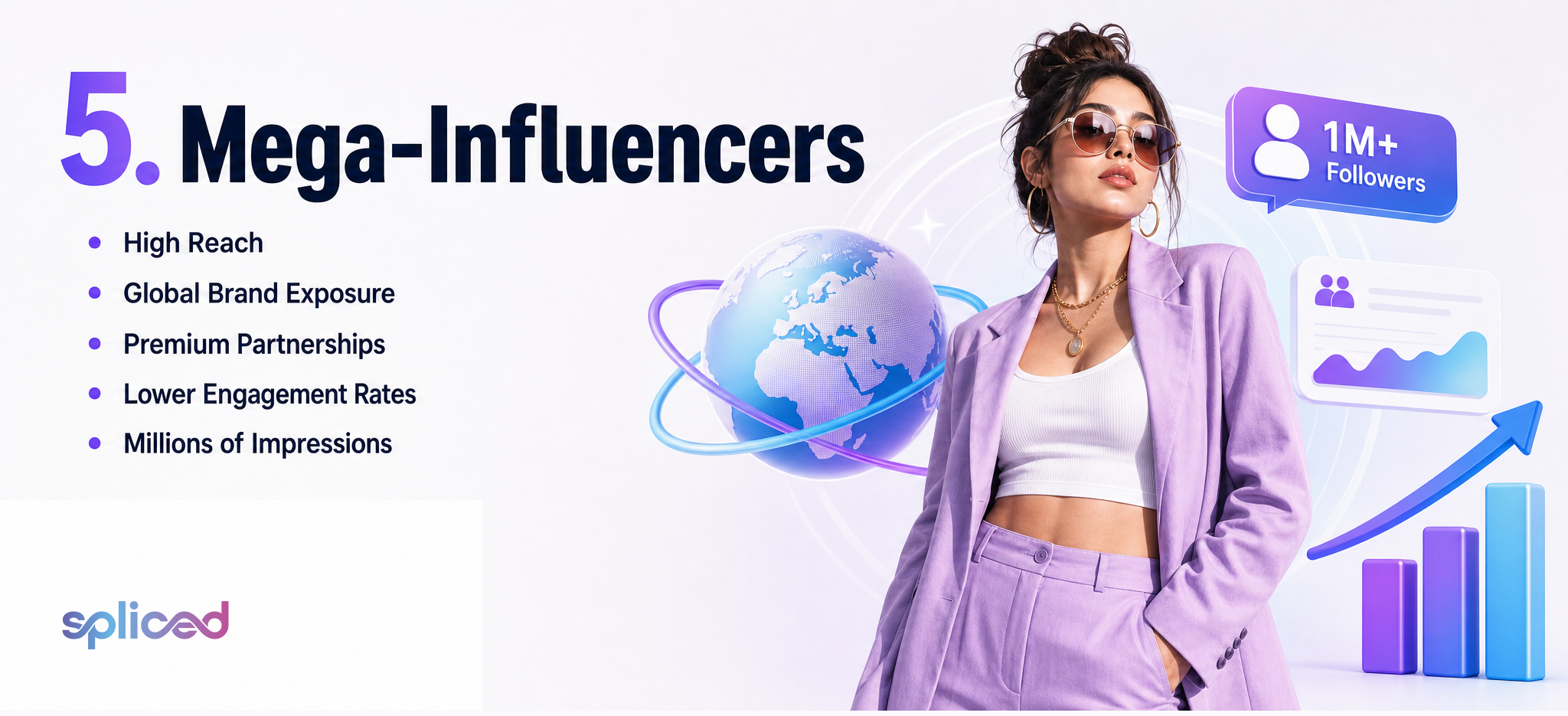
- Mega-Influencers: Mega-influencers exceed 1 million followers and include celebrities, athletes, and mainstream public figures. Costs begin at $10,000 per post and frequently reach six figures. Mega-influencers generate immediate brand visibility and massive impressions. However, lower engagement rates and reduced personal connection with audiences can dilute authentic endorsement credibility compared to smaller creator tiers.
1. Nano-Influencers
Nano-influencers operate with fewer than 10,000 followers, typically between 1,000 and 10,000. Examples include home cooking channels featuring original recipes, fitness creators demonstrating workout techniques, local travel accounts highlighting community destinations, and specialty hobby enthusiasts. Nano-influencers suit brands entering niche markets, building localized awareness, or selling specialized products to defined demographic segments where deeper engagement matters more than reach.
Nano-influencers distinguish themselves through exceptional authenticity and intimate audience relationships. Their small follower counts enable sustained, meaningful interactions and foster genuine community bonds. Brands collaborating with nano-influencers access highly engaged audiences and generate organic conversations about products. Audience members perceive recommendations as peer advice rather than commercial promotions, strengthening purchase intent and brand loyalty.
Aspiring nano-influencers focus on consistent, high-quality content within their niche and regular audience interaction. Building loyal communities requires demonstrated expertise and authentic engagement rather than pursuing growth metrics. Working with nano-influencers costs $50 to $500 per post, providing brands with affordable access to engaged, relevant audiences. Discovery occurs through social media platform searches, hashtag research, niche-specific online communities, and industry-focused groups aligned with brand positioning.
Nano-influencers deliver distinct advantages and constraints. High authenticity and engagement rates (3 to 8 percent) position recommendations as genuine peer suggestions. Disadvantages include limited individual reach and the logistical complexity of coordinating multi-creator campaigns to achieve scale. Despite smaller per-post impressions, nano-influencers frequently generate higher conversion rates than larger creators due to audience trust and community intimacy. Their authentic recommendations drive measurable engagement and purchasing behavior, making them particularly effective for conversion-focused campaigns and hyper-targeted market entry.
2. Micro-Influencers
Micro-influencers range from 10,000 to 50,000 followers and deliver strong engagement rates between 1.5 and 4 percent. Their smaller but devoted audience enables intimate exchanges and stronger bonds. Micro-influencers frequently specialize in particular fields such as beauty, fitness, fashion, or travel, and their endorsements function as trusted suggestions from experienced authorities. Fitness enthusiasts share workout programs, beauty experts review skincare products, and travel enthusiasts provide detailed itineraries. Micro-influencers serve brands seeking to penetrate specialized markets, establish trust, and create genuine connections with niche communities.
Individuals become micro-influencers by building followings based on expertise, knowledge, or demonstrated interest in specific fields. They produce high-quality material consistently and interact with their audience to foster community. Success requires offering valuable niche-specific content, engaging with brands in their sector, and establishing an engaged following that values their recommendations and advice.
Micro-influencer rates in 2026 range from $250 to $3,000 per post, depending on niche, follower count, and engagement level. Brands identify micro-influencers through relevant hashtags, niche-specific forums, community groups, and social listening tools. Advantages include reaching specific audiences while maintaining meaningful reach and generating endorsements perceived as genuine and informed, resulting in higher interaction rates.
Disadvantages include smaller total reach compared to macro-influencers and campaign coordination that becomes time-intensive when working with multiple creators. Micro-influencers frequently deliver higher conversion rates due to their particular expertise and genuine engagement with followers. Their posts resonate with audiences, generating meaningful conversations and receptive engagement. Content engagement rates remain high despite smaller post impressions compared to macro-influencer campaigns, making them cost-effective for ROI-focused brands measuring sales impact on platforms like Amazon and TikTok Shop.
3. Mid-Tier Influencers
Mid-tier influencers range from 50,000 to 250,000 followers and blend reach with meaningful engagement. They provide marketers with larger audiences while preserving credibility and relatability. Mid-tier influencers connect with diverse demographics through demonstrated expertise in lifestyle, fitness, travel, fashion, and other verticals. Lifestyle bloggers share daily experiences, fitness creators demonstrate training regimens, and travel enthusiasts document destinations. Their wider reach combined with significant community bonds makes them effective partners for brands seeking visibility without sacrificing authentic engagement.
Mid-tier influencers develop strong internet presence through focused content in specific areas of interest or lifestyle. They create material that appeals to broad audiences while connecting with followers across multiple demographics. Building mid-tier status requires establishing distinct brand identity, maintaining consistent posting schedules, engaging authentically with audiences, and forming strategic partnerships with relevant brands and platforms.
Mid-tier influencer rates in 2026 range from $1,800 to $5,000 per post, varying by follower count, engagement rates, and niche expertise. Brands discover mid-tier influencers through social media networks, influencer marketing platforms, and niche-specific hashtags. Working with mid-tier influencers allows businesses to reach broader audiences while maintaining personal relationships and authentic community connections that smaller influencers provide.
Endorsements attract diverse audiences and enhance brand visibility across multiple segments. Engagement proves more selective than micro-influencers but remains genuine and effective. Mid-tier influencers frequently achieve competitive conversion rates due to larger, actively engaged communities. Their content resonates across audience segments, generating meaningful conversations and actual purchase intent. Post engagement rates remain high despite smaller average impressions compared to macro-influencers, positioning mid-tier creators as the current market sweet spot for brands balancing reach, authenticity, and measurable sales outcomes.
4. Macro-Influencers
Macro-influencers range from 250,000 to 1,000,000 followers and deliver unmatched brand awareness and exposure. Their large communities allow rapid message distribution to broad audiences, making them ideal for brands seeking global visibility and immediate reach. Macro-influencers create content spanning fashion, beauty, lifestyle, entertainment, wellness, and technology. Their endorsements generate significant traffic and drive awareness for product launches, large campaigns, and audience acquisition across multiple demographics and geographies.
Macro-influencers emerge as famous personalities, celebrities, or established public figures with substantial online followings. Their prominence develops through combinations of professional experience, demonstrated talent, and broad cultural appeal. Reaching macro-influencer status requires achieving excellence in their profession, building substantial followings over time, and establishing recognized authority within specific industries or communities.
Macro-influencer rates in 2026 start at $5,000 per post and typically range from $5,000 to tens of thousands of dollars, depending on popularity, follower count, and documented engagement metrics. Brands identify macro-influencers through established social media networks, influencer marketing agencies, and industry recognition. Direct outreach often works effectively as macro-influencers maintain professional management and publicist relationships.
Primary advantages include large community size and rapid brand exposure opportunities. Endorsements significantly increase brand visibility and recognition within broad audiences. Notable disadvantages include perception of reduced authenticity compared to smaller influencers, which lowers engagement and trust levels. Larger follower bases dilute sponsorship distinctiveness and reduce the sense of personal recommendation that followers experience with micro and mid-tier creators.
Macro-influencers’ large follower networks typically produce engagement rates lower than smaller influencers, though absolute reach remains substantial. High traffic volume and conversion outcomes occur especially when content proves visually compelling and strategically aligned with audience interests. Average post impressions remain significantly higher due to their massive audiences, though engagement rates of 0.5 to 1.5 percent fall below micro-influencer benchmarks. Brands measuring detailed sales attribution should pair macro-influencer campaigns with tracking tools to separate macro-influencer impact from other demand drivers like seasonality, pricing changes, or platform trends.
5. Mega-Influencers
Mega-influencers occupy the pinnacle of the influencer hierarchy with 1 million or more followers, delivering unparalleled brand exposure across global audiences. These individuals are typically celebrities, actors, musicians, or established public figures with decades of achievement in their respective fields. Their endorsements generate immediate brand recognition, positioning them as optimal choices for major product launches, global campaigns, and initiatives targeting broad demographic segments.
Mega-influencers build their status through sustained excellence in entertainment, sports, business, or media. The path to mega-influencer status requires exceptional talent, consistent visibility, and a reputation that transcends digital platforms. Celebrity status and accumulated followers create a protective moat; mega-influencers command premium rates because their reach is difficult to replicate.
Compensation for mega-influencer partnerships ranges from $10,000 to $500,000 per post, depending on follower count, engagement metrics, and campaign scope. Brands identify mega-influencers through talent agencies, industry events, and direct outreach to established celebrities. Cost reflects both audience size and the production quality expected from creators at this tier.
Mega-influencer partnerships deliver rapid visibility and broad awareness, particularly valuable for launches requiring simultaneous reach across multiple demographics. However, engagement rates decline as audience size increases, often falling below 0.5 percent. Audiences perceive mega-influencer endorsements as less authentic than smaller creator recommendations, which impacts trust. Despite lower engagement rates relative to their follower count, mega-influencers drive substantial traffic and conversions for brands prioritizing visibility over niche resonance. Average post impressions exceed millions, delivering measurable reach even when engagement rates decline.
What does “Influencer” mean?
An influencer is a creator or public figure whose content, expertise, or personal brand shapes the purchasing decisions and behaviors of a defined audience. Influencers gain this power through demonstrated credibility, authority, niche knowledge, or relatability within a specific subject area. They build sizable followings across social platforms by producing consistent, relevant content that their audience values and trusts.
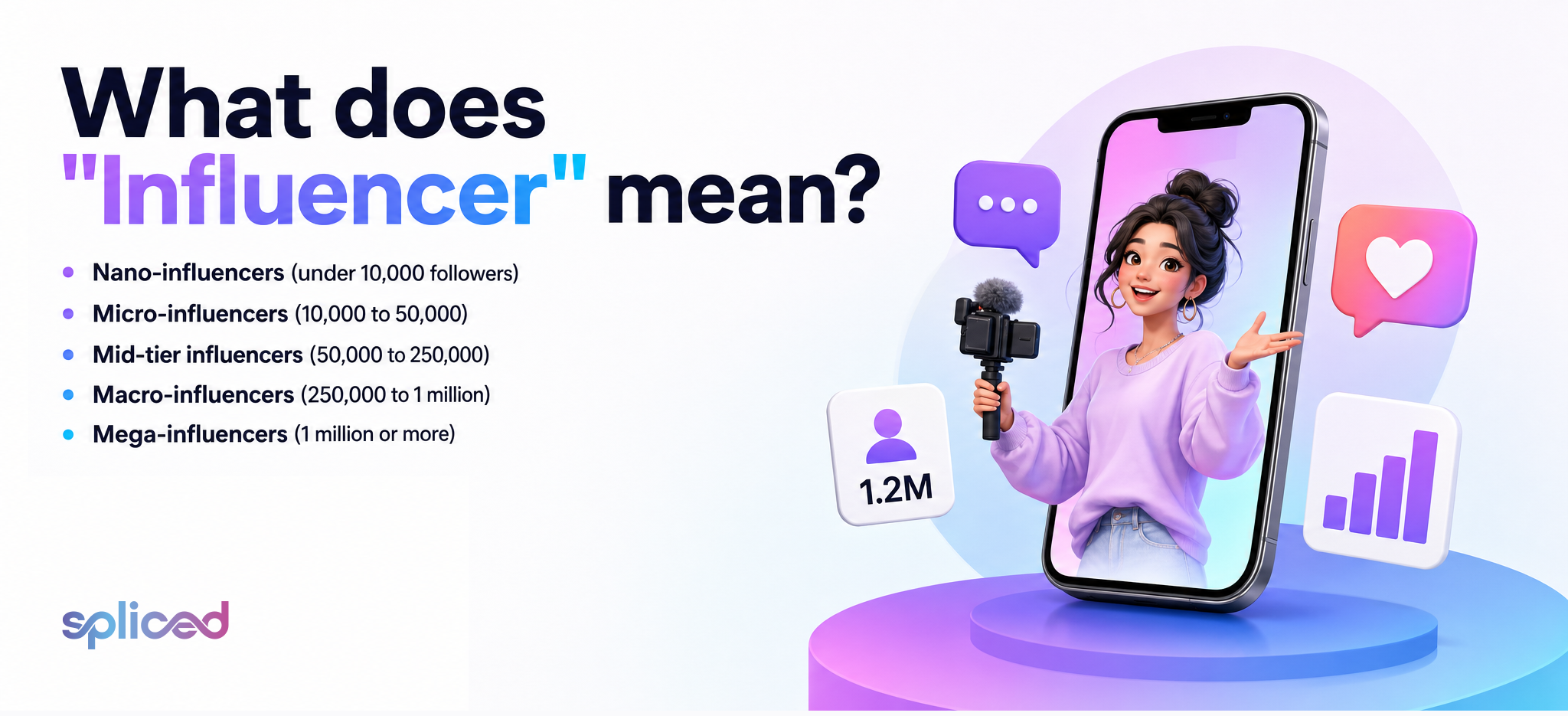
The influencer ecosystem spans five primary tiers defined by follower count: nano-influencers (under 10,000 followers), micro-influencers (10,000 to 50,000), mid-tier influencers (50,000 to 250,000), macro-influencers (250,000 to 1 million), and mega-influencers (1 million or more). Each tier delivers distinct advantages for brands; the rise of influencer marketing reflects brands’ recognition that creators drive authentic engagement and measurable outcomes superior to traditional advertising.
Influencers operate across Instagram, YouTube, TikTok, Twitter, LinkedIn, and emerging platforms. Top performers produce distinctive photography, captions, videos, and written content that represent brands credibly while maintaining personal authenticity. Great influencers succeed because they embed promotional content into genuine storytelling, making brand messages feel like peer recommendations rather than advertisements.
What is the purpose of an Influencer?
Influencers serve as trusted intermediaries between brands and target audiences, establishing connections that traditional advertising cannot replicate. They communicate brand messages, product recommendations, and endorsements through a lens of personal experience and demonstrated expertise. Their audience values their perspective because it emerges from genuine familiarity with the subject matter. Influencers develop trust through consistency, transparency, and relatability; followers act on their recommendations because they perceive authenticity.
Influencers communicate through multiple channels: social media posts, video tutorials, product reviews, behind-the-scenes content, and personal narratives that situate products within their lifestyle. This narrative approach allows audiences to understand how a brand or product integrates into their own lives. Influencer partnerships amplify brand awareness, build credibility within specific niches, and generate engagement that drives measurable business outcomes including website traffic, lead generation, and sales.
How important are Influencers in Influencer Marketing?
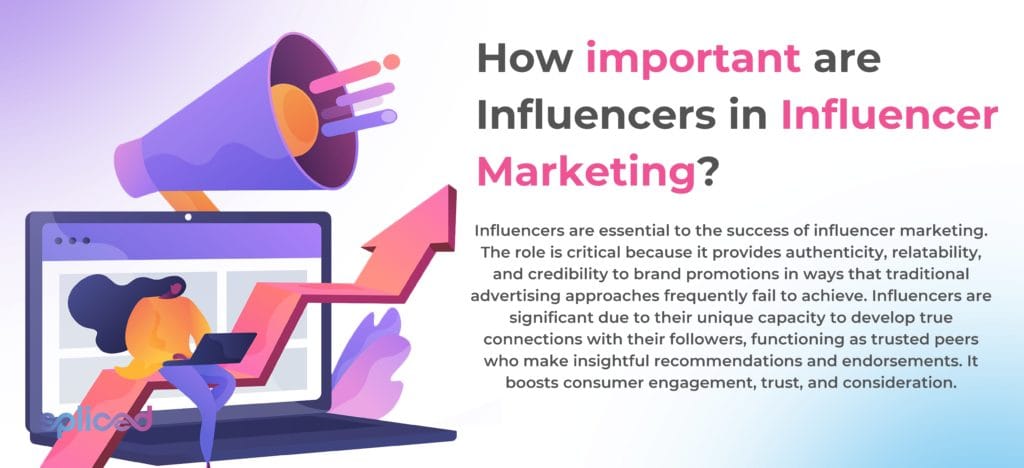
Influencers are foundational to influencer marketing success. Their importance derives from delivering authenticity, credibility, and relatability that traditional advertising fundamentally cannot achieve. Influencers function as trusted peers whose recommendations carry weight because audiences perceive genuine expertise and honest assessment. This trust mechanism directly increases consumer engagement, builds brand consideration, and generates conversions. Brands collaborating with influencers access highly targeted demographic segments, penetrate specialized niches, and produce custom content that resonates with intended audiences in ways that paid ads cannot match.
Influencers understand platform dynamics, audience psychology, and content formats native to each channel, whether Instagram, YouTube, TikTok, or emerging platforms. They create content aligned with audience preferences and platform behavior patterns, ensuring brand messages attract attention and drive meaningful interactions. This proficiency transforms marketing from broadcast communication into dialogue; audiences engage authentically because influencer recommendations feel peer-to-peer rather than corporate. For brands selling on TikTok Shop or Amazon, influencer-driven discovery significantly improves conversion potential compared to other acquisition channels. Influencer marketing effectiveness depends on aligning creator audience demographics with target buyers and measuring whether content drives actual sales lift rather than engagement metrics alone.
How does an Influencer work?
Influencers operate by building authentic relationships with their followers and translating those relationships into measurable business outcomes for brands. The mechanism relies on trust, expertise, and platform-specific content creation. Influencers identify brand partnerships that align with their audience’s interests, then integrate products or services into their existing content in ways that feel natural rather than promotional. This alignment between influencer values, audience expectations, and brand messaging determines whether a partnership drives engagement and conversions.
The influencer workflow begins when brands identify creators whose follower demographics match their target market. Influencers then negotiate terms, including deliverables, posting timelines, and compensation. In 2026, compensation ranges from $50 to $500 for nano-influencers, $250 to $3,000 for micro-influencers, $1,800 to $5,000 for mid-tier creators, and $5,000 or more for macro and mega-influencers. Influencers create original content featuring the brand, maintain disclosure compliance (required by the FCA and ACCC), and track performance through engagement metrics and, where possible, sales attribution.
Platform expertise distinguishes effective influencers from unsuccessful ones. TikTok prioritizes short-form video and trending sounds; Instagram favors polished imagery and Stories; YouTube rewards long-form narrative and audience loyalty; LinkedIn suits professional thought leadership. Influencers who understand these dynamics create content that performs within platform algorithms while maintaining authentic voice. Content that matches platform norms and audience behavior drives higher engagement rates, with nano and micro-influencers typically achieving 3 to 8 percent and 1.5 to 4 percent engagement respectively, compared to lower rates for macro and mega-influencers.
Measurement of influencer impact requires attribution beyond vanity metrics. Brands increasingly track whether creator content drives direct sales on Amazon, TikTok Shop, or owned e-commerce channels. Spliced connects creator campaigns to commerce data so brands understand which influencer partnerships produce measurable ROI. This shift from reach-based evaluation to performance-based evaluation reflects 2026 regulatory scrutiny around undisclosed partnerships and misleading claims; influencers and brands must now demonstrate genuine value exchange rather than follower counts alone.
How to find an Influencer?
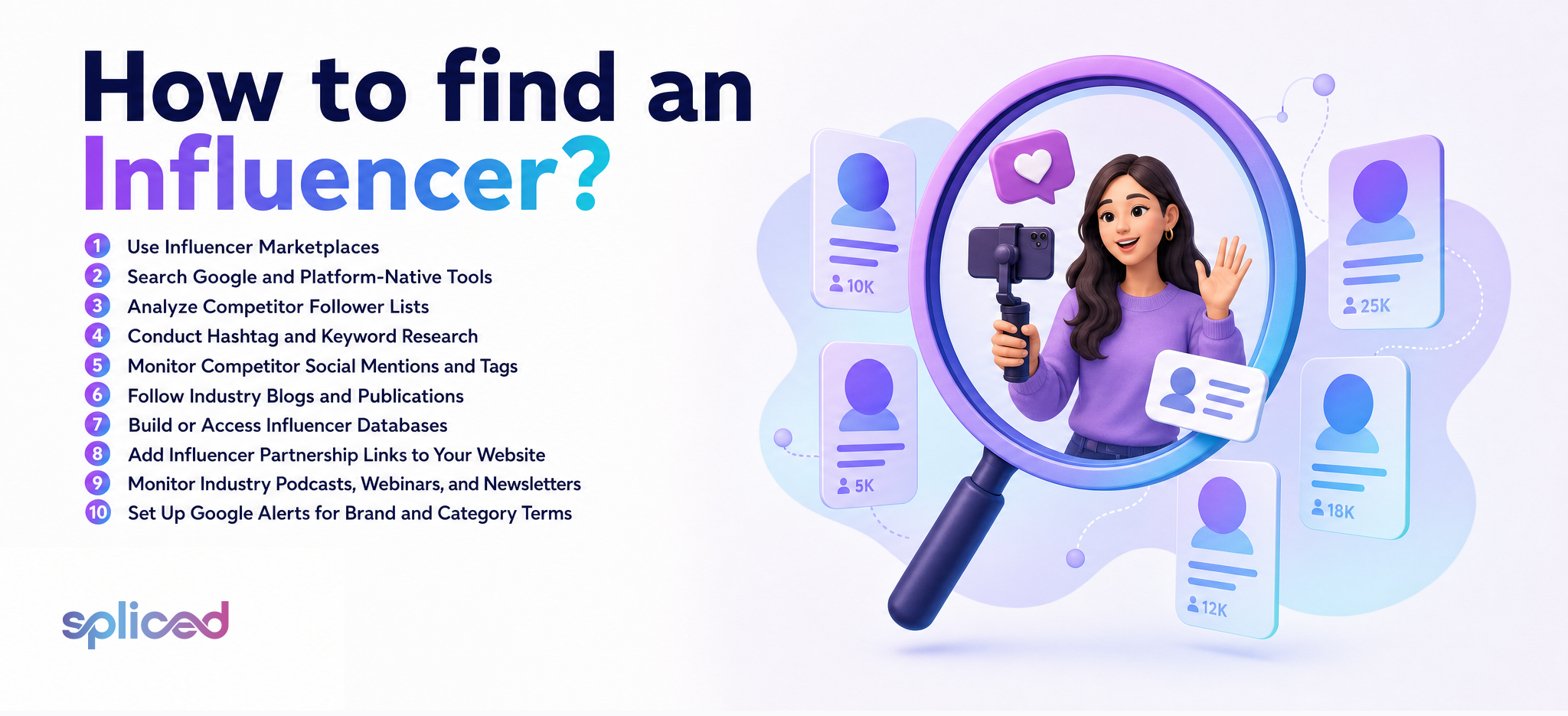
Finding the right influencer requires systematic search, vetting for authenticity, and evaluation of audience alignment. The process begins by defining what type of influencer matches your campaign goals: nano-influencers deliver niche credibility at low cost; micro-influencers balance reach and engagement; mid-tier creators provide broader visibility; macro and mega-influencers maximize awareness but at premium rates. Listed below are evidence-based methods to locate influencers across platforms and follower tiers.
- Use Influencer Marketplaces: Platforms like AspireIQ, Upfluence, and Creator.co maintain searchable databases of creators across follower tiers and industries. These tools allow filtering by audience demographics, engagement rates, and previous brand partnerships, reducing manual vetting time.
- Search Google and Platform-Native Tools: Google search combined with platform-specific discovery (Instagram’s Explore, YouTube’s search, TikTok’s Creator Fund database) identifies creators in your niche. Add site operators like “site:instagram.com” plus relevant keywords to surface accounts. Verify engagement rates and audience authenticity through tools like HypeAuditor or Social Blade before outreach.
- Analyze Competitor Follower Lists: Review accounts following direct competitors or using competitor-relevant hashtags. Influencers already engaged with similar brands often share target audience overlap, reducing discovery risk and outreach time.
- Conduct Hashtag and Keyword Research: Track hashtags relevant to your product category, industry trends, and target demographics. Instagram and TikTok group top posts and creator accounts by hashtag; consistent hashtag use by specific creators signals niche authority. Search for long-tail hashtags with 10K to 100K posts to find micro-influencers with engaged followers.
- Monitor Competitor Social Mentions and Tags: Use social listening tools to identify who tags, mentions, or creates user-generated content around competitor brands. These creators already understand your market and may be receptive to partnership discussion.
- Follow Industry Blogs and Publications: Identify bylined authors and contributors in trade publications, industry blogs, and thought leadership platforms. These individuals often maintain active social channels and command credibility within their field, positioning them as high-value influencer partners.
- Build or Access Influencer Databases: Create internal spreadsheets tracking nano and micro-influencers in your category, or purchase access to databases like Klear or Sprout Social. Databases provide historical engagement data, audience demographics, and contact information, reducing outreach friction.
- Add Influencer Partnership Links to Your Website: Include a dedicated email address or partnership form in your website footer and menu. This passive method surfaces creators already interested in your brand, lowering acquisition cost and indicating pre-existing audience alignment.
- Monitor Industry Podcasts, Webinars, and Newsletters: Subscribe to industry newsletters and listen to relevant podcasts. Hosts, regular guests, and featured speakers build audiences and establish thought leadership; these individuals often translate podcast influence to social channels.
- Set Up Google Alerts for Brand and Category Terms: Google Alerts surface new content, mentions, and creators discussing your category. Set multiple alerts for product keywords, competitor names, and industry trends to catch emerging influencers early in their growth trajectory.
- Search for Top Videos and Channels by Keyword: YouTube search and TikTok’s Discover tab surface high-performing content in specific categories. Channels or accounts with consistent views and comments represent creators with engaged audiences; examine their upload frequency, audience engagement, and existing brand partnerships.
- Leverage LinkedIn for B2B and Thought Leadership: LinkedIn’s search function and content feed surface professionals with engaged followings. This platform is especially valuable for B2B influencers, industry executives, and subject matter experts who drive decision-making conversations.
- Deploy Social Listening Tools: Platforms like Sprout Social, Hootsuite, and Mention track mentions of your brand, competitors, and category keywords across social networks. These tools identify creators already talking about your space, reducing outreach cost and highlighting creators with existing audience interest.
Which type of influencer often has the smallest following, but the highest engagement rate?
Nano-influencers have the smallest following but consistently achieve the highest engagement rates across all influencer tiers in 2026. Nano-influencers maintain follower counts under 10,000 yet generate engagement rates of 3 to 8 percent, substantially higher than larger creators. Their content generates meaningful interactions because followers view them as peers rather than distant personalities. Nano-influencers build genuine community through regular response to comments, personal messages, and authentic storytelling. Brands benefit from nano-influencer partnerships through niche audience access, authentic product placement, and conversion rates that often exceed those of macro-influencers. The recommendation from a nano-influencer carries weight as trusted advice rather than paid advertising.
What is the role of Spliced in finding the right type of Influencers to work with?
Spliced connects creator metrics to measurable commerce outcomes, helping brands select influencers based on audience overlap rather than follower count alone. The platform scores nano, micro, and mid-tier creators by engagement depth, audience demographics, and niche relevance. Brands use Spliced to match influencers with campaign goals on Amazon and TikTok Shop, where creator-driven traffic converts into verifiable sales. The data analytics surface authenticity signals, including audience sentiment, comment quality, and historical conversion patterns. Spliced reduces selection risk by comparing each creator’s actual performance against campaign benchmarks.
Spliced tracks how influencer content performs across channels, measuring TikTok Shop clicks, Amazon search uplift, and direct commerce attribution. Brands avoid overpaying for macro-influencers when micro-influencers deliver better conversion per dollar spent. The platform flags creators with authentic engagement versus those using engagement pods or purchased followers. Spliced identifies which influencer tier delivers the highest return for specific product categories, audience segments, and seasonal campaigns. This data-driven approach to creator selection produces measurable outcomes rather than relying on follower vanity metrics.
Is finding an Influencer hard?
Finding an influencer is difficult. The challenge increases when targeting niche audiences or requiring specific engagement quality. Brands face obstacles identifying authentic creators versus accounts with purchased followers or artificial engagement. Manual research across platforms, competitor follower lists, and hashtag analysis consumes significant time. Influencer marketing platforms like Spliced reduce difficulty by providing filtered databases, but verification remains necessary. A brand must confirm audience alignment, content authenticity, and historical collaboration quality before outreach.
The difficulty varies by market competitiveness and influencer tier. Finding nano-influencers in emerging niches is relatively easier because fewer brands compete for their attention. Securing established macro-influencers is harder due to high demand, agent representation, and lengthy negotiation cycles. Regulatory scrutiny in 2026, including ACCC cases against undisclosed partnerships and FCA action against unauthorized financial promotion, requires brands to verify influencer compliance with disclosure requirements. Success depends on clear criteria, systematic vetting, and alignment between brand values and creator authenticity.
Does finding an influencer require significant time investment?
Yes, finding an influencer requires substantial time investment. The timeline varies based on campaign scope, niche specificity, and available resources. Identifying influencers whose values align with brand positioning, target audience demographics, and campaign objectives forms the foundation. This process continues through relationship building and contract negotiation. Research intensity depends on niche competitiveness; established influencer platforms or agency partnerships accelerate discovery, while specialized niches demand extended vetting.
Time commitment typically ranges from 8 to 40 hours depending on audience authenticity verification, engagement rate analysis, and content complexity assessment. In 2026, brands increasingly use creator intelligence platforms to compress timelines while maintaining vetting rigor. Investing adequate time in influencer selection ensures smooth collaboration, authentic audience resonance, and measurable campaign results aligned with business objectives.
What distinguishes an influencer from a social media influencer?
Influencers and social media influencers differ in scope and operational channels. An influencer is someone with authority to shape audience beliefs, purchasing decisions, and behaviors across multiple contexts. Authority derives from expertise, professional reputation, industry standing, or demonstrated credibility. This influence extends beyond social platforms into public speaking, consulting, thought leadership, and direct industry impact.
A social media influencer concentrates their influence within specific platforms including Instagram, YouTube, TikTok, LinkedIn, and X (formerly Twitter). Social media influencers build engaged communities through regular content, stories, videos, and direct audience interaction on their chosen channels. They establish trust through consistent posting, community engagement, and authentic voice within their niche. Social media influencers bridge brand and consumer gaps by sharing tested recommendations, personal insights, and curated content that demonstrates product application within their lifestyle context.
What other categories exist within social media influencer types?
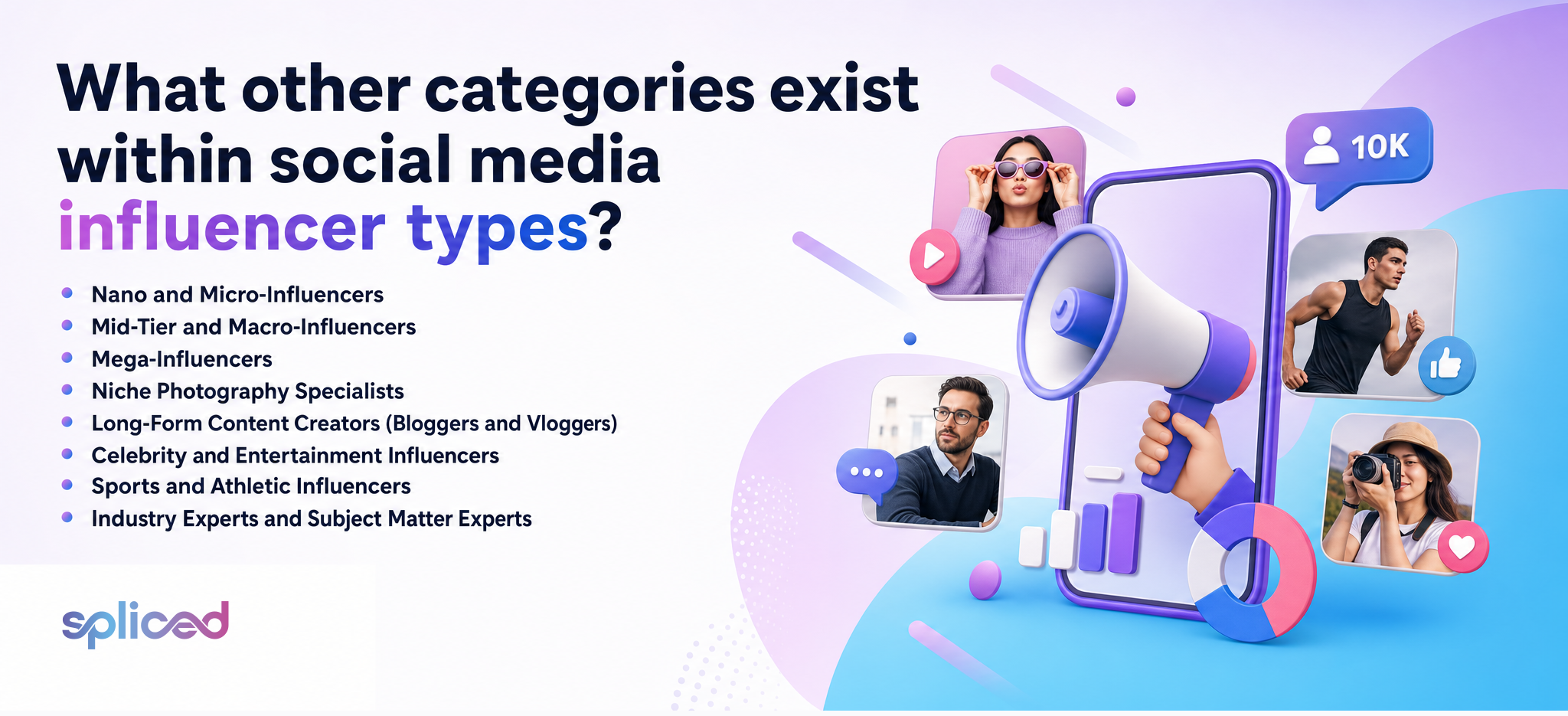
Social media influencers extend beyond follower count categories into specialization types. Each type commands distinct rates, audience trust profiles, and campaign applications relevant to 2026 brand partnerships.
- Nano and Micro-Influencers: Nano-influencers hold under 10,000 followers; micro-influencers maintain 10,000 to 50,000 followers. Both publish consistent niche content and monetize through brand partnerships. Micro-influencers charge $250 to $3,000 per post in 2026 and maintain engagement rates between 1.5 to 4 percent. Both tiers command audience trust through perceived authenticity and genuine expertise within their vertical.
- Mid-Tier and Macro-Influencers: Mid-tier influencers hold 50,000 to 250,000 followers and charge $1,800 to $5,000 per post. Macro-influencers control 250,000 to 1,000,000 followers, commanding $5,000 and above per collaboration. Both operate as full-time creators, including established journalists, content specialists, and video producers. Macro-influencers maintain professional operations with management teams and production infrastructure.
- Mega-Influencers: Mega-influencers exceed 1,000,000 followers and charge $10,000 and above per post in 2026. Their celebrity status, entertainment background, or extraordinary reach commands premium rates. Brands typically approach mega-influencers rather than competing for limited availability through standard outreach channels.
- Niche Photography Specialists: Photography influencers built followings through visual expertise rather than traditional celebrity pathways. Instagram photography specialists demonstrate technical proficiency, aesthetic curation, and visual storytelling that attracts brands in lifestyle, travel, and commerce sectors.
- Long-Form Content Creators (Bloggers and Vloggers): Text-based bloggers and YouTube video creators pioneered long-format influencer content. They establish authority through in-depth tutorials, product analysis, and detailed lifestyle documentation. Their content depth generates sustained audience trust and higher conversion intent than short-form alternatives.
- Celebrity and Entertainment Influencers: Celebrities, actors, musicians, and established entertainment figures operate as macro or mega-influencers with millions of followers. They command premium fees due to pre-existing fame and cross-platform recognition beyond social media. Entertainment influencers generate brand awareness through high impressions rather than engagement depth.
- Sports and Athletic Influencers: Sports influencers span high school athletes, collegiate competitors, professional athletes, coaches, sports journalists, and superfans. College athletes represent the largest creator segment in sports verticals. In 2026, NIL (Name, Image, Likeness) agreements expand sports influencer monetization across apparel, beverage, gaming, and financial services.
- Industry Experts and Subject Matter Experts: SME creators establish authority through verified expertise, research-backed claims, and demonstrated competency. Consumer audiences reject unsubstantiated sponsored claims; they engage with creators whose recommendations include measurable evidence and professional credentials. SMEs command premium rates due to specialized knowledge delivery.
- Activist and Social Impact Influencers: Activist creators mobilize audiences around social justice, environmental, and community issues rather than personal fame. Their influence stems from cause commitment and direct community engagement via messaging and grassroots coordination. Brand alignment requires authentic value alignment rather than transactional sponsorship.
- Journalism and Media Influencers: Journalists qualify as macro-influencers through institutional credibility, audience reach beyond social media, and editorial authority. Media influencers command trust through journalistic standards and established publication credentials that social-only creators cannot replicate.
- Student Athlete and Emerging Talent Influencers: Student-athletes leverage collegiate platforms and NIL opportunities to partner across sports apparel, consumer goods, gaming, and technology. Early-career athlete influencers provide cost-efficient brand partnerships before professional-tier rates apply. Growth potential and authenticity appeal to brands targeting younger demographics.
- Thought Leaders and Executive Influencers: C-suite executives, business leaders, and industry strategists build influence through LinkedIn, X, and emerging platforms. Executive influencers share insights on business trends, leadership philosophy, and industry foresight. B2B brands prioritize thought leader partnerships for credibility and professional audience reach in 2026.
- Reality Television and Entertainment Influencers: Reality TV stars, competition show participants, and streaming platform personalities build social followings independent of traditional entertainment channels. Entertainment background provides instant recognizability; brand partnerships monetize celebrity status and entertainment audience overlap. Cost premiums reflect name recognition rather than social expertise.
Brands evaluating influencer partnerships in 2026 must assess platform fit, audience alignment, engagement authenticity, and measurable commerce impact before committing budget. Each influencer category brings distinct strengths, costs, and conversion potential across Instagram, TikTok, YouTube, and emerging platforms.