
Influencer marketing platforms streamline creator discovery, campaign management, and performance tracking across multiple channels and social networks. These platforms serve as centralized hubs where brands set budgets, define target audiences, and measure campaign effectiveness. Pricing varies by platform and feature set; most do not publish rates publicly, requiring direct vendor contact for custom quotes.
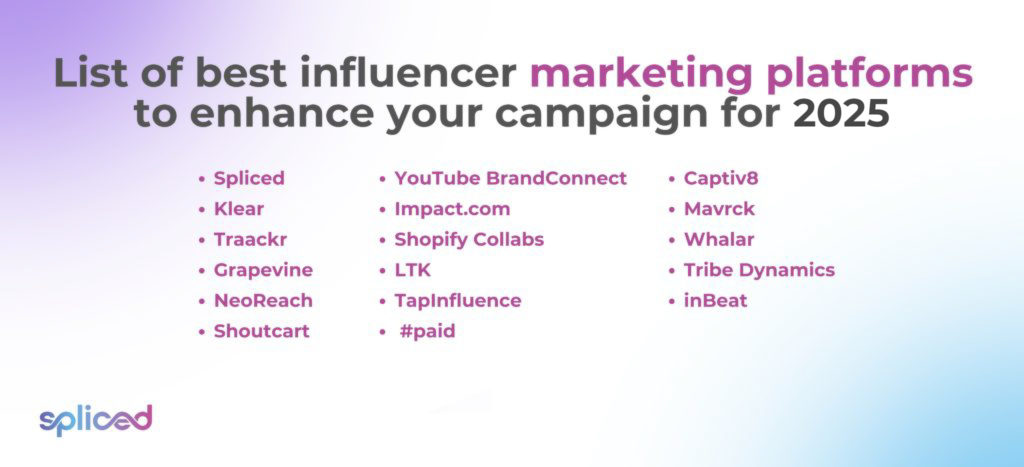
The 17 best influencer marketing platforms for 2026 campaigns are listed below.
- Spliced: All-in-one platform that integrates creator discovery, affiliate tracking, and commerce attribution with Amazon and TikTok APIs for measurable ROI across channels.
- Klear: Data-driven influencer discovery and analytics platform owned by Meltwater. Delivers audience insights, engagement metrics, and campaign performance reporting. G2 rating 4.2 out of 5.
- Traackr: Relationship-focused platform for influencer discovery and long-term partnership management. Features content tracking, fraud detection, and ROI measurement. G2 rating 4.2 out of 5.
- Grapevine: Founded in 2012; specializes in YouTube and video content creator partnerships. Offers collaboration management and campaign performance tracking. G2 rating 3.6 out of 5.
- NeoReach: Enterprise-grade platform for influencer discovery, campaign automation, and analytics. Supports multi-platform outreach and audience insights. G2 rating 4.6 out of 5.
- Shoutcart: Marketplace model focused on Instagram influencer collaborations. Brands purchase shoutouts directly from creators with built-in payment processing. G2 rating 3.6 out of 5.
- YouTube BrandConnect: Official YouTube platform for creator partnerships. Direct access to YouTube’s creator community with managed collaboration and content approval workflows. G2 rating 3.3 out of 5.
- Impact.com: Affiliate and influencer marketing platform with advanced attribution modeling, fraud prevention, and real-time conversion tracking. G2 rating 4.6 out of 5.
- Shopify Collabs: Integrated app for Shopify sellers connecting with influencers and affiliate partners. Includes commission tracking, analytics, and PayPal payouts. Pricing starts at $250 per month. G2 rating 4.7 out of 5.
- LTK: Creator monetization platform for fashion and lifestyle influencers. Enables shoppable content and affiliate commission tracking. Plans include LTK Connect at $417 per month and LTK Connect Pro at $1000 per month. G2 rating 4 out of 5.
- TapInfluence: Campaign management platform with influencer discovery, relationship tools, content approvals, and analytics. Standard plan costs $1999 per month. G2 rating 9 out of 10.
- #paid: Data-driven platform for influencer matching and campaign execution. Features relationship management, content approvals, and performance analytics. G2 rating 4.6 out of 5.
- Captiv8: AI-powered content discovery and influencer partnership platform. Emphasizes audience insights and data-driven campaign decisions. G2 rating 4.7 out of 5.
- Mavrck: Micro and mid-tier influencer platform with campaign management and ROI measurement. Features include audience insights and fraud detection. G2 rating 4.5 out of 5.
- Whalar: Creative-focused platform for authentic influencer partnerships. Prioritizes content quality, audience alignment, and data-driven decisions.
- Tribe Dynamics: Analytics and measurement platform for beauty and lifestyle brands. Tracks mentions, sentiment, and engagement across platforms. Pricing includes Micro at $1500 per month, Established at $2750 per month, and Powerhouse at $4000 per month. G2 rating 4.7 out of 5.
- inBeat: User-generated content platform for micro and macro influencer collaborations. Features include discovery, relationship management, and campaign analytics. Pricing ranges from $35 to $400 per month. G2 rating 4.9 out of 5.
1. Spliced
Spliced is a creator and affiliate marketing platform that connects brands with influencers and content creators using commerce-linked attribution and performance data. It enables brands to find, connect, and collaborate with creators based on precise demographic, engagement, and sales impact metrics. Spliced’s data-driven approach simplifies creator discovery and lets marketers identify creators whose audiences align with their target market and measurable business outcomes.
The platform evaluates creator reach, audience composition, engagement quality, and historical conversion performance through detailed analytics. Spliced provides insights into past campaign results, helping brands assess partnership fit and predict ROI. Multi-channel collaboration features let brands manage creator outreach, content workflows, contract execution, and performance tracking from a unified dashboard.
Spliced integrates directly with Amazon and TikTok Shop APIs, making it the preferred solution for sellers who need commerce attribution and cross-platform ROI measurement. Amazon sellers synchronize product catalogs, manage TikTok Shop promotions, track inventory across channels, and measure sales impact from creator content. This integration reveals which creators drive measurable demand on Amazon and TikTok, separating influence from noise and seasonal trends.
Core features include AI-powered creator scoring, campaign automation, real-time sales attribution, affiliate tracking, and multi-platform performance analytics. Brands connect marketing accounts, build campaigns, approve content, and measure outcomes through an intuitive interface. Pricing is transparent and scalable, with plans aligned to creator count, monthly campaign volume, and commerce integration depth.
Spliced is built for data-driven teams at Amazon sellers, TikTok Shop brands, and companies running creator programs where sales attribution matters more than vanity metrics. Its analytics, collaboration tools, and commerce integrations deliver measurable ROI and efficient creator partnership execution.
2. Klear
Klear, owned by Meltwater, is an influencer marketing platform that provides discovery tools, audience analytics, and campaign management across multiple social networks. The platform helps brands and agencies identify, evaluate, and manage influencer partnerships at scale. Klear integrates influencer data, audience insights, and performance tracking into one system for streamlined campaign execution.
Brands use Klear to search influencers by niche, geography, audience size, engagement rate, and demographic composition. The platform displays audience quality metrics, historical performance, and engagement authenticity scores. Campaign management features support influencer outreach, content approval, performance tracking, and ROI calculation across campaigns.
Klear is essential for influencer marketing because it centralizes influencer discovery and provides audience verification. Brands make informed partnership decisions through data-driven audience analysis rather than follower count alone. Key features include influencer search and segmentation, relationship management, campaign tracking, analytics and reporting, contract workflows, and fraud detection.
Users register for Klear, complete account setup, and access a searchable influencer database. Marketers define campaign criteria, filter influencers by performance metrics, reach selected creators, negotiate terms, manage content approval, and measure results through the dashboard. Pricing is customized based on company size, campaign complexity, influencer volume, and additional features needed.
Klear currently holds a 4.3 out of 5 rating based on recent user reviews. Users report strong performance in creator discovery and audience insight delivery. Strengths include comprehensive audience analysis, e-commerce integration, influencer scoring, intuitive search, and multi-user account customization. Weaknesses include limited micro-influencer coverage and higher price points for smaller teams.
3. Traackr
Traackr is a data-driven platform for influencer discovery, relationship management, and campaign measurement. It centralizes influencer identification, partnership workflows, and performance analytics to help brands execute influencer programs at scale. Traackr combines audience data, engagement verification, and campaign ROI tracking into a single operating system for influencer marketing.
The platform identifies influencers through filters including audience size, demographics, niche, engagement authenticity, and geographic location. Traackr facilitates collaboration through content approval workflows, communication tools, contract management, and payment processing. Performance measurement tracks reach, engagement, sentiment, and business impact metrics tied to campaign objectives.
Traackr is critical for influencer marketing because it combines discovery with relationship intelligence and outcome measurement. Brands identify relevant creators, build sustainable partnerships, and quantify campaign return on investment. Core features include influencer database search and segmentation, relationship management, content tracking and approval, audience analysis, fraud detection, and performance analytics.
Users create accounts, define campaign goals, search the influencer database using specific criteria, select creators, initiate outreach, manage collaboration workflows, track campaign progress, and review analytics. Traackr offers custom pricing tied to organization size, campaign complexity, influencer volume, and feature requirements.
Traackr maintains a 4.3 out of 5 rating in current reviews. Users value comprehensive influencer analytics, relationship tracking capabilities, and data-driven campaign decisions. Key advantages include advanced discovery capabilities, detailed audience insights, content approval workflows, and performance reporting. Main limitations include enterprise-level pricing that may exceed smaller budgets and a learning curve for new users navigating complex features.
4. Grapevine
Grapevine was one of the first major influencer marketing firms, founded in 2012. The platform combines managed services and technology to deliver influencer program results for enterprise partners. Grapevine connects businesses with YouTube content producers and video creators across multiple social platforms.
Grapevine arranges brand and influencer partnerships by providing a database and analytics tools for influencer discovery. Brands filter creators by niche, audience size, and engagement rates. Once influencers are identified, Grapevine facilitates outreach, collaboration agreements, and campaign performance measurement.
Grapevine serves brands that prioritize video content and YouTube reach. The platform’s core features include demographic filtering, collaboration management, campaign tracking, and performance reporting. It maintains a substantial network of video creators focused on YouTube and emerging short-form platforms.
Users register, create an account, and access Grapevine’s interface to search for influencers matching campaign objectives and audience criteria. Brands then launch collaborations, manage ongoing campaigns, and evaluate initiative effectiveness through the platform’s tools.
Grapevine offers customized pricing based on enterprise size and campaign scope, including variables such as influencer count and campaign complexity. The platform maintains a 3.7 out of 5 rating. Users report ease of use for influencer discovery and appreciate the streamlined collaboration features. Some users request expanded analytics and creator segmentation options.
Grapevine excels for video-focused campaigns, particularly YouTube influencer partnerships. Its intuitive interface suits both new and experienced marketers. The platform is less suitable for multi-platform strategies or brands requiring deep TikTok or Instagram creator networks. Brands focused exclusively on YouTube benefit most from Grapevine’s specialized toolset.
5. NeoReach
NeoReach executes enterprise-scale influencer campaigns for Fortune 500 companies and established brands. The platform combines best-in-class influencer discovery, relationship management, and campaign monitoring with enterprise-grade analytics. NeoReach helps companies and agencies find and collaborate with influencers across multiple social platforms with specialized focus on performance measurement.
NeoReach provides access to a comprehensive influencer database, enabling marketers to identify potential collaborators quickly. The platform manages influencer outreach, contract negotiation, content approval workflows, and campaign performance tracking. NeoReach simplifies influencer identification, partnership automation, and campaign effectiveness evaluation, allowing marketers to reach target audiences through strategic creator collaborations.
Key features include influencer discovery, campaign management, relationship management tools, analytics and reporting, content tracking, audience insights, and fraud detection. Users register, create accounts, and access the platform to search influencers matching campaign objectives. Brands select creators, establish partnerships, manage content approval workflows, track campaign progress, and evaluate results.
NeoReach offers customized pricing based on company size and specific demands. Costs vary by influencer count, campaign complexity, and additional features required. The platform holds a 4.7 out of 5 rating. Users praise the analytics capabilities, influencer discovery depth, ease of use, and comprehensive creator information and audience insights.
NeoReach’s broad influencer-finding capabilities enable marketers to locate relevant creators across multiple platforms. The user-friendly interface serves both new and experienced marketers. Data-driven analytics support informed decision-making. Higher pricing limits accessibility for smaller organizations or those with constrained budgets. Micro-influencer coverage is more limited than macro-influencer options. Platform effectiveness depends on user expertise in influencer marketing strategy and campaign execution.
6. Shoutcart
Shoutcart is an Instagram-focused influencer marketing platform that connects brands with Instagram creators. Marketers purchase shoutouts, mentions, or promotional posts from influencers to reach target audiences. The platform functions as a marketplace where users browse influencer profiles, each offering distinct promotional opportunities. Brands filter creators by niche, follower count, engagement rate, and other performance indicators.
Marketers select an influencer and shoutout type, pay the agreed rate, and the influencer creates and distributes the promotional content. Shoutcart streamlines Instagram influencer collaboration for brands seeking rapid campaign execution. The platform provides access to diverse creators at varying price points and audiences, enabling brands to leverage influencer reach and credibility for product or service promotion.
Core features include influencer search and filtering, campaign management, payment processing, and content tracking. Shoutcart prioritizes simplicity for both brands and influencers. Users register, browse the influencer database, select creators matching campaign goals, choose promotional formats, process payments, and coordinate content with selected influencers.
Shoutcart pricing varies by influencer prominence, engagement metrics, and promotional content type. Shoutout costs range from minimal amounts to several hundred dollars depending on influencer rates. The platform maintains a 3.7 out of 5 rating and is frequently praised for ease of use. Users note that influencer authenticity and brand alignment directly impact shoutout effectiveness and audience response.
Shoutcart’s primary advantages are accessibility, simplicity, and rapid campaign launch capability for Instagram collaborations. The platform offers diverse creator options across multiple price tiers and niches. Shoutout impact depends directly on influencer audience engagement and partnership authenticity. The platform focuses exclusively on Instagram, making it unsuitable for brands requiring multi-platform influencer marketing strategies or TikTok and YouTube creator access.
7. YouTube BrandConnect
YouTube BrandConnect connects brands with video creators on the platform for collaborative influencer marketing campaigns. The platform enables companies to reach target audiences by partnering with YouTube creators who have substantial subscriber bases and measurable influence. Brands discover and contact YouTube creators whose content aligns with their products and campaign objectives through the BrandConnect interface.
Brands collaborate with creators to develop content that promotes products or services. Videos are published on creator channels where they reach subscribers and broader audiences. YouTube remains one of the world’s largest video platforms with billions of active users. Brands leverage creator reach and audience authority to market products effectively at scale.
Primary features include content collaboration management, video distribution, creator relationship tools, and performance analytics. The platform provides direct, official pathways for brand and creator partnerships. Brands establish accounts or connect through Google representatives, search creators by specialty and audience fit, negotiate partnership terms, manage content production, and track campaign results through built-in reporting.
Pricing varies based on campaign objectives, creator involvement, and partnership scope. Payment arrangements occur directly between brands and creators or through the platform. Industry feedback reflects a 4.4 out of 5 star rating for BrandConnect’s straightforward, official approach to YouTube influencer partnerships in 2026.
BrandConnect advantages include direct access to YouTube’s creator community, simplified influencer discovery, and official partnership frameworks. Working with established YouTube creators carries premium costs that vary significantly based on creator authority and reach. Content quality and brand message alignment determine partnership success, consistent with all influencer campaigns.
8. Impact.com
Impact.com is a comprehensive affiliate marketing platform delivering management, monitoring, and optimization tools for affiliate partnerships and campaigns. The platform automates core affiliate marketing functions including recruiter onboarding, relationship management, sales tracking, conversion monitoring, and campaign performance optimization. Real-time data and analytics enable precise measurement of affiliate marketing initiative results.
Brands using affiliate marketing as performance-based strategy rely on Impact.com for partnership management, data-driven ROI decisions, and program scaling. Key features include affiliate recruitment and onboarding, partnership management, conversion tracking, fraud detection, payment processing, and multi-channel attribution modeling that connects sales across platforms.
Brands register, configure affiliate programs, and begin recruiting affiliates. The platform manages payout processing, campaign performance monitoring, and activity tracking. Users access real-time analytics to continuously refine affiliate activities. Pricing varies by enterprise size and needs, based on conversion volume tracked, setup fees, monthly subscriptions, and additional service tiers.
The affiliate marketing industry reports 4.7 out of 5 star ratings for Impact.com’s comprehensive feature set and program management efficiency. Users value real-time data delivery and actionable insights. Impact.com strengths include extensive affiliate tools, advanced analytics, fraud prevention, and multi-channel attribution that improve campaign outcomes. Platform complexity creates a learning curve for new affiliate marketers. Pricing scales with feature complexity and activity volume, reducing affordability for smaller enterprises with constrained budgets.
9. Shopify Collabs
Shopify Collabs addresses the business need to partner with online creators and influencers. The platform (formerly Dovetale) connects Shopify merchants with established content creators across YouTube, Instagram, TikTok, and blogs. Creators monetize their audiences through brand partnerships. Brands access established creator networks to reach engaged audiences through authentic endorsements.
Sellers access extensive influencer databases filtered by social platform, topic keywords, interests, and audience size. Creator social profiles and content samples help brands understand creator audiences and content style. Brands post branded applications on Shopify Collabs to receive creator submissions. The platform manages gift fulfillment, commission tracking, analytics, affiliate tools, email workflows, and payment collection.
Finding creators whose values and audience align with brand goals initiates successful partnerships. Merchants install the app, configure Shopify Collabs brand accounts, enter brand name and program contact information, establish profile requirements on the branded application page, and set creator screening criteria. Creating application surveys and sharing the Shopify Collabs brand page follows setup completion.
Pricing starts at $300 per month as of 2026. Users rate the platform 4.8 out of 5 stars for influencer management ease and quick app installation. Cost remains a primary concern among users. Advantages include straightforward app setup, simplified affiliate promotion execution, and PayPal payment processing security. Disadvantages include premium pricing and variable customer support quality.
10. LTK
LTK, formerly rewardStyle and LIKEtoKNOW.it, enables fashion and lifestyle creators to monetize content through shoppable posts and affiliate commissions. The platform bridges influencers and brand partners by converting social media content into direct purchase opportunities. Creators add product links to Instagram posts, TikTok videos, and other social channels; followers receive emails with product details and purchase links when they engage with tagged content.
LTK serves the influencer marketing ecosystem by allowing creators to earn performance-based income on recommended products while providing brands with attribution data. Influencers join LTK free and link their social accounts. Brands access performance metrics showing conversions, commissions, and creator ROI. The platform supports affiliate-driven revenue models, making it essential for commerce-focused influencer partnerships.
Key features include shoppable content creation, affiliate link management, commission tracking, and creator earnings dashboards. LTK Connect starts at $417 per month; LTK Connect Pro costs $1000 per month for enterprise creators and brand partners seeking advanced analytics and dedicated support.
Users rate LTK at 4.1 out of 5 stars in 2026. Strengths include seamless shopping integration, straightforward commission structures, and strong performance in fashion and lifestyle verticals. The platform excels at closing the gap between inspiration and purchase intent. Limitations include high pricing for premium tiers and dependence on creator audience size and engagement quality to drive sales volume.
11. TapInfluence
TapInfluence is an influencer marketing platform built for campaign planning, creator discovery, and performance measurement. Based in Boulder, Colorado, the platform provides search tools, content calendars, task management, and reporting features to streamline influencer collaboration workflows. Brands search for creators using niche, audience demographics, and engagement metrics; negotiate campaign terms; approve content; and track measurable outcomes.
TapInfluence supports data-driven influencer selection by offering detailed creator profiles, audience insights, and historical campaign performance data. The platform connects influencer activity to business objectives through campaign tracking and ROI measurement. Features include creator discovery and filtering, relationship management tools, content approval workflows, engagement analytics, audience demographic data, and performance scoring.
Setup requires account registration, campaign configuration, and creator search filters aligned with business goals. Brands select creators, initiate outreach, manage negotiations, approve deliverables, and analyze results through an integrated dashboard. Customized pricing scales with campaign complexity, creator count, and required features. Standard plans begin at $1999 per month.
TapInfluence earns a 4.3 out of 5 rating in 2026 G2 reviews. Users value the advanced filtering, detailed creator analytics, and streamlined collaboration workflows. The platform appeals to enterprise brands and agencies managing multiple concurrent campaigns. Notable strengths include data-rich creator evaluation and customizable reporting. Cost represents the primary constraint for smaller brands or those with limited influencer marketing budgets.
12. #paid
#paid is a creator collaboration and billing platform that helps brands discover influencers, manage partnerships, and automate payment processing. The platform simplifies influencer selection by filtering creators using audience demographics, engagement rates, niche focus, and platform presence. Brands initiate outreach, negotiate terms, approve content deliverables, and track campaign results within a unified workflow.
#paid emphasizes data-driven decision making for influencer partnerships. Core features include creator discovery and filtering, relationship management, content approval workflows, campaign tracking and analytics, audience demographic insights, and automated payment settlement. The platform prioritizes transparency in creator metrics and authentic engagement measurement to reduce fraud and inflated follower counts.
Brands register, create campaign briefs, search available creators, and establish collaboration terms through the platform interface. Real-time dashboards display campaign performance, creator deliverables, and ROI metrics. Customized pricing aligns with campaign scale, creator count, and additional features. No fixed minimum is published; costs vary based on platform usage and feature tiers selected.
#paid holds a 4.7 out of 5 rating in 2026 reviews. Users consistently praise the intuitive interface, transparent creator metrics, and reliable payment processing. The platform works well for brands prioritizing authenticity and engagement over follower counts. Advantages include simplified workflow automation, accurate audience data, and fraud prevention capabilities. Cost remains a consideration for smaller businesses or those with constrained marketing budgets; some users request more advanced campaign segmentation and API capabilities.
13. Captiv8
Captiv8 is an AI-powered influencer marketing platform that connects brands with creators and digital content producers. The platform automates influencer discovery, campaign management, content collaboration, and performance measurement. Brands use Captiv8 to identify influencers based on audience demographics, engagement rates, and niche expertise. After selection, brands collaborate with influencers, negotiate partnership terms, approve content, and track campaign effectiveness.
Captiv8 serves influencer marketing by streamlining influencer identification, partnership establishment, and campaign impact analysis. The platform enables marketers to leverage creator reach and authenticity to engage target audiences. Core features include influencer discovery, relationship management, content approval workflows, campaign tracking, audience analytics, and performance assessment. The platform prioritizes data-driven decision-making to improve marketing outcomes.
Users create accounts, complete profiles, and access the platform to search for influencers matching campaign objectives and brand values. The interface allows marketers to identify creators, initiate collaborations, establish partnership terms, manage campaign progress, and assess results. Captiv8 offers customized pricing based on company size and specific requirements. Costs vary by campaign complexity, number of influencers engaged, and feature selection.
Captiv8 holds a 4.7 out of 5 star rating from influencer marketing professionals. Users report that analytics capabilities and influencer discovery tools deliver actionable insights. The user-friendly interface supports both novice and experienced marketers. Key advantages include comprehensive relationship management features, accessible design, and data-focused analytics. Cost represents a limitation for smaller companies or teams with constrained influencer marketing budgets. Campaign success depends on user expertise in influencer marketing strategy and creative campaign execution.
14. Mavrck
Mavrck is an all-in-one corporate influencer marketing platform that helps brands expand audience reach through authentic, original creator content. Marketers use Mavrck to discover creators, execute campaigns, measure return on investment, and scale programs from a single interface. The platform streamlines influencer marketing execution and performance tracking.
Businesses identify influencers using multiple parameters including geographic location, audience demographics, niche specialization, and engagement metrics. After influencer selection, brands establish collaborations, agree on partnership terms, review content, and measure campaign results. Mavrck streamlines influencer selection, collaboration management, and campaign effectiveness evaluation. The platform enables marketers to reach target audiences by leveraging creator credibility and audience reach.
Key features include audience insights, performance measurement, influencer fraud detection, campaign tracking and analytics, influencer relationship management, and content approval workflows. The platform emphasizes data-driven decision-making to enhance marketing results. Users create accounts, complete profiles, and access the system. Brands begin by searching for influencers aligned with campaign objectives and brand criteria. Marketers establish collaborations through the platform, agree on terms, monitor campaign status, and evaluate outcomes.
Mavrck offers customized pricing based on organization size and specific requirements. Costs vary by campaign complexity, number of influencers, and additional feature needs. The influencer marketing industry has assigned Mavrck a 4.5 out of 5 star rating for analytics and influencer discovery capabilities.
Users value the platform’s ease of use and detailed influencer information. Mavrck’s key advantages include accessible influencer identification tools, authentic campaign development support, and awareness campaign execution. The platform suits any user type. User feedback indicates challenges with TikTok campaign management and messaging portal functionality, which represent areas for improvement in 2026.
15. Whalar
Whalar is an influencer marketing platform and service that helps brands develop authentic, high-performing creator campaigns. The platform emphasizes visual content quality and creative influencer partnerships. Whalar simplifies influencer marketing by offering tools for creator discovery, partnership management, content production, and efficiency measurement. Businesses identify influencers using specific criteria including geographic location, audience demographics, engagement metrics, and niche focus. After selection, brands launch collaborations, set partnership terms, review content, and assess campaign outcomes.
Whalar serves influencer marketing by simplifying creator identification, collaboration management, and campaign success measurement. The platform enables marketers to reach target audiences by combining creator innovation with audience reach. Core features include audience insights, campaign tracking and analytics, content approval procedures, influencer relationship management, and performance evaluation. The platform values data-driven decision-making to improve marketing outcomes.
Users create profiles, register accounts, and access the platform. Brands begin by identifying influencers matching campaign objectives and brand requirements. The user-friendly interface enables marketers to locate creators, initiate partnerships, establish agreement terms, oversee campaign execution, and measure results.
Whalar provides customized pricing aligned with organization size and specific requirements. Costs vary based on campaign complexity, influencer count, and additional feature selection. Influencer marketing professionals report positive feedback for Whalar’s creator discovery and analytics capabilities. Users appreciate the platform’s accessible design and comprehensive influencer performance data.
16. Tribe Dynamics
Tribe Dynamics delivers advanced influencer marketing analytics and performance measurement for beauty and lifestyle brands in 2026. The platform monitors social media conversations, brand mentions, influencer partnerships, and engagement across multiple channels. It aggregates data on sentiment, mentions, and engagement metrics to provide marketers with detailed insights into campaign performance. Brands use these insights to evaluate their results, identify high-performing influencers, and optimize their strategies for stronger ROI.
Tribe Dynamics serves the beauty and lifestyle sectors by providing tools to measure influencer marketing effectiveness with precision. It enables businesses to quantify partnership results, identify which influencers generate the strongest outcomes, and refine tactics based on real performance data. Key features include influencer tracking and analytics, brand advocacy measurement, content performance analysis, competitive benchmarking, and sentiment analysis. The platform offers comprehensive visibility into how influencer initiatives drive brand growth and market share.
Brands register for Tribe Dynamics to access monitoring and analytics capabilities. Users configure tracking parameters, monitor influencer mentions and engagement in real time, and make data-driven decisions about campaign optimization. Tribe Dynamics pricing is customized by industry vertical and firm size. Current 2026 pricing starts at $1,500 per month for Micro, $2,750 per month for Established, and $4,250 per month for Powerhouse tiers.
The beauty and lifestyle industries consistently rate Tribe Dynamics highly, with a 4.7 out of 5 star rating, for its detailed influencer tracking and analytics capabilities. Users value the platform’s ability to deliver actionable insights and measure partnership results with precision.
Tribe Dynamics excels through its industry-specific focus on beauty and lifestyle, providing brands with relevant benchmarks and insights tailored to their vertical. It delivers comprehensive analytics and reporting that enable brands to make informed decisions. Higher pricing limits accessibility for smaller firms or those with constrained marketing budgets. Platform value depends on how effectively brands interpret and act on the data provided.
17. inBeat
inBeat is a creator collaboration platform that connects brands with both established influencers and micro-influencers at scale. The platform streamlines influencer identification and engagement by providing tools to search influencers by audience characteristics, geographic location, niche, and engagement metrics. Once influencers are identified, brands negotiate terms, manage content approvals, and track campaign performance within a unified workspace.
inBeat serves influencer marketing by automating influencer discovery, relationship management, and performance measurement. It enables marketers to identify creators aligned with brand values, establish partnerships efficiently, and measure campaign impact objectively. Core features include influencer discovery with detailed filtering, relationship management workflows, content approval processes, campaign tracking with analytics, audience demographic insights, and performance assessment tools. The platform prioritizes data-driven decision-making to improve campaign outcomes across partnerships.
Users create an account, complete a profile, and access the platform immediately. Brands search for influencers matching their campaign objectives and audience targets. The interface allows marketers to identify creators, initiate partnerships, agree on terms, manage campaign execution, and measure results. inBeat offers scalable pricing based on organizational size and campaign complexity. Pricing ranges from $35 per month to $400 per month, depending on feature requirements and platform usage levels.
inBeat maintains a 4.9 out of 5 star rating in the influencer marketing industry for influencer discovery and analysis capabilities. Users consistently praise the clean interface and depth of information provided about creators and their audiences. inBeat’s core strengths include comprehensive influencer identification tools, robust relationship management features, and the ability to work with both macro and micro-influencers efficiently. The interface suits all experience levels. Pricing remains challenging for smaller companies or teams with limited influencer marketing budgets.
What is an Influencer Marketing Platform?
An influencer marketing platform is software designed to help brands execute influencer campaigns through centralized discovery, relationship management, and performance tracking. These platforms provide searchable databases of creators, tools for campaign coordination, and analytics to measure results. They function as a unified workspace where brands find influencers aligned with their target audience, manage partnerships, track content, and evaluate ROI across channels.
Platforms simplify influencer marketing by removing friction from creator discovery, partnership negotiation, content oversight, and performance measurement. They connect brands with influencers’ reach, creativity, and audience trust to achieve marketing objectives more efficiently than direct outreach alone. By centralizing campaign workflows, they reduce time spent on administrative tasks and increase the likelihood of data-driven decision-making.
Brands use these platforms as a hub to identify, contact, and maintain relationships with social media creators and content producers. Features typically include influencer search and filtering, collaboration management, content approval workflows, performance analytics, and audience demographic data. Marketers access large databases of creators segmented by niche, audience size, engagement rates, and platform presence. This structure makes it faster to find creators whose followers match campaign objectives and target demographics.
Influencer marketing platforms reduce execution complexity, connect brands with relevant creators, and provide measurement tools that replace guesswork with data. They enable brands to leverage creator credibility and audience engagement to reach target customers authentically and achieve measurable business outcomes.
How does an Influencer Marketing Platform work?
Influencer marketing platforms simplify the creator discovery and campaign management process. Modern consumers avoid traditional advertising and respond better to authentic recommendations from trusted creators. Platforms facilitate this by connecting brands with creators who produce genuine content that aligns with brand messaging.
The process begins with an influencer database organized by niche, audience demographics, and engagement metrics. Brands search this database to identify creators whose audiences match their target market. Once potential creators are found, the platform enables direct communication, contract negotiation, and campaign goal setting. In 2026, the best platforms also integrate commerce data from Amazon, TikTok Shop, and other marketplaces to track how creator content drives actual sales.
During campaign execution, platforms provide content approval workflows, performance tracking, and real-time analytics. Key metrics include reach, engagement rate, click-through rate, and increasingly, commerce attribution. Advanced platforms measure the direct relationship between creator activity and customer purchases, helping brands understand true return on investment. This data-driven approach replaces vanity metrics with measurable business outcomes.
Why is an Influencer Marketing Platform important in Influencer Marketing?
Influencer marketing platforms are essential because they match how audiences consume content in 2026. Younger audiences trust creator recommendations more than traditional advertising. Platforms streamline the discovery, management, and measurement of creator partnerships at scale, enabling brands to allocate budgets based on verified performance rather than follower counts alone.
Platforms reduce operational friction across four key areas. First, they simplify creator discovery using filters for niche, audience quality, and engagement authenticity. Second, they manage collaboration workflows including contracts, content approvals, and payment processing. Third, they provide access to performance data and ROI metrics so teams track which creators drive conversions and customer lifetime value. Fourth, they enable multi-platform coordination, allowing teams to run simultaneous campaigns across TikTok, Instagram, YouTube, and emerging platforms while maintaining consistent messaging and measurement.
In 2026, platforms that integrate commerce data gain competitive advantage. Brands selling on Amazon or TikTok Shop can connect creator activity directly to marketplace sales, measuring the halo effect when TikTok-driven awareness converts into Amazon purchases. This commerce-linked approach transforms influencer marketing from a brand awareness expense into a measurable revenue driver, justifying larger budgets and longer creator partnerships.
How can an Influencer Marketing Platform help a business grow?
Influencer marketing platforms accelerate business growth through four measurable mechanisms. First, they expand market reach by connecting brands with creators whose followers match the target customer profile. Second, they increase conversion rates by placing products in front of audiences that already trust the recommending creator. Third, they reduce customer acquisition cost by shifting from expensive paid ads to performance-based creator partnerships. Fourth, they build brand loyalty through authentic creator storytelling that resonates with audiences better than corporate messaging.
For eCommerce businesses, platforms that link creator campaigns to sales data show measurable growth. Brands can identify which creators drive the highest customer lifetime value, not just immediate conversions. This enables reinvestment in top-performing partnerships and smarter budget allocation. In 2026, Amazon sellers using platforms with TikTok integration report higher average order value and repeat purchase rates when TikTok awareness flows into marketplace purchases.
Automation is the third growth factor. Platforms reduce manual work in creator outreach, contract management, and performance tracking. Teams spend less time on administration and more time optimizing strategy based on real-time performance data. Brands that leverage this efficiency scale creator programs across multiple regions, platforms, and product categories simultaneously, amplifying revenue growth without proportional cost increases.
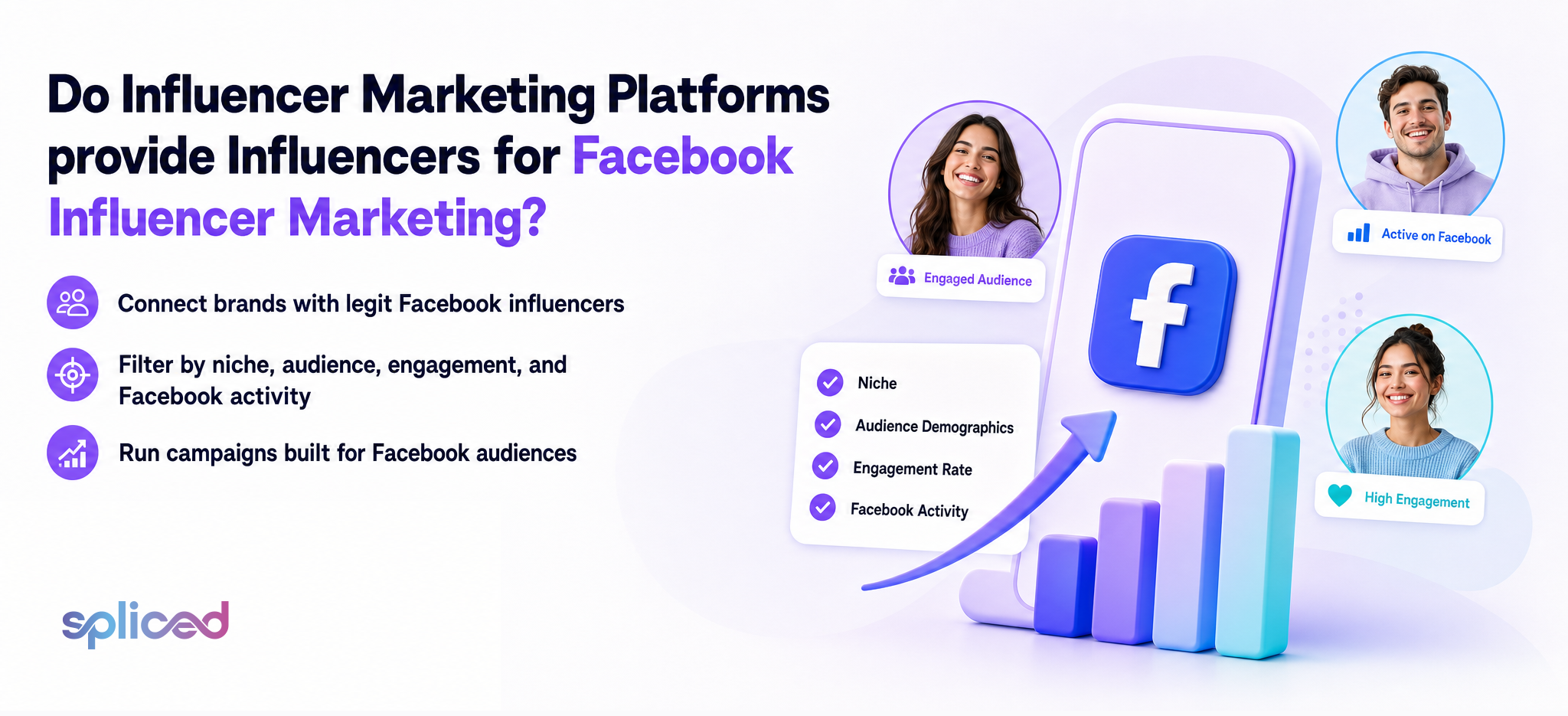
Do Influencer Marketing Platforms provide Influencers for Facebook Influencer Marketing?
Yes, influencer marketing platforms provide influencers for Facebook influencer marketing. Platforms connect brands with legitimate influencers who maintain engaged and active Facebook followers for campaigns specifically designed for Facebook. In 2026, 58% of marketers identify Facebook as a primary platform for creator partnerships. YouTube ties with Facebook on ROI metrics, with 21% of marketers reporting equivalent performance. Facebook ranks among the easiest platforms for creator collaboration, cited by 19% of marketers as their preferred interface for managing influencer relationships.
Influencer marketing platforms maintain extensive databases of creators across multiple social networks, streamlining the discovery process for brands seeking active Facebook influencers. Platforms enable brands to filter for Facebook influencers using niche focus, audience demographics, engagement rates, and Facebook activity levels. This segmentation approach helps brands identify creators whose audiences align with their target customer profiles and campaign objectives.
Do Influencer Marketing Platforms offer Influencers for Instagram Influencer Marketing?
Yes, influencer marketing platforms connect brands with influencers for Instagram campaigns. Instagram remains a core channel for influencer marketing because authentic creator voices resonate with audiences seeking product recommendations. Effective campaigns require content creators with genuine audience connections and creative storytelling ability. Instagram influencer marketing delivers measurable results when creator partnerships align with brand values and audience interests.
In 2026, 73% of marketers actively partner with creators on Instagram, according to industry trend data. Among those running influencer campaigns, 31% report Instagram delivers the highest ROI compared to other social platforms. Instagram influencer marketing continues to drive conversions because the platform’s visual format enables creators to showcase products authentically.
Influencer marketing platforms maintain comprehensive databases that include Instagram creators across follower ranges and niches. Brands access these databases to identify creators whose audiences, content style, and engagement patterns match campaign goals. Platform search capabilities allow filtering by niche focus, audience demographics, engagement metrics, and follower authenticity signals.
After identifying suitable Instagram influencers, brands negotiate partnership terms, agree on content deliverables, and establish performance benchmarks through the platform. Influencers create Instagram posts or Stories that integrate product recommendations naturally. This approach leverages creator reach and audience trust to drive product awareness and conversions among aligned customer segments.
What to Look for in an Influencer Marketing Platform?
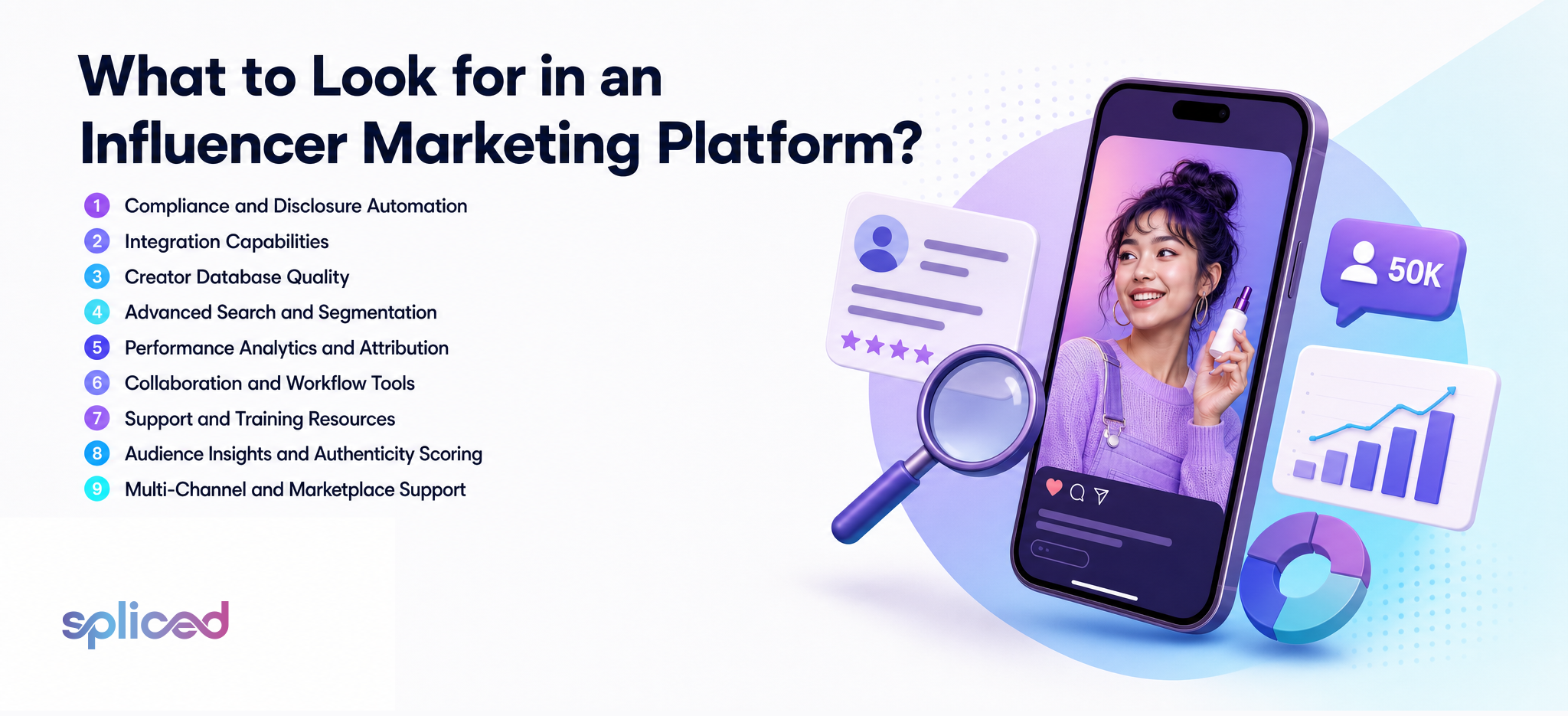
Key factors for evaluating influencer marketing platforms in 2026 include the following.
- Compliance and Disclosure Automation: Platforms must enforce clear labeling of sponsored content and maintain compliance with FTC guidelines and regional advertising regulations.
- Integration Capabilities: The platform should integrate with CRM systems, social media management tools, e-commerce platforms, and attribution software to unify campaign data.
- Creator Database Quality: Verify the platform maintains a diverse, regularly updated influencer database that includes micro, mid-tier, and macro creators across relevant niches.
- Advanced Search and Segmentation: The platform should offer filtering by location, engagement authenticity, audience demographics, content style, and platform-specific performance data.
- Performance Analytics and Attribution: Platforms must provide campaign tracking, ROI measurement, engagement metrics, and ideally commerce attribution data showing sales impact.
- Collaboration and Workflow Tools: Look for contract management, content approval workflows, communication features, and payment processing integrated into the platform.
- Support and Training Resources: Platforms should offer onboarding documentation, training materials, and responsive customer support for campaign execution.
- Audience Insights and Authenticity Scoring: The platform should deliver detailed audience composition data, engagement quality assessments, and fake follower detection capabilities.
- Multi-Channel and Marketplace Support: For eCommerce brands, ensure the platform connects to TikTok Shop, Amazon, and direct commerce channels for unified tracking.
What are the benefits of an Influencer Marketing Platform?
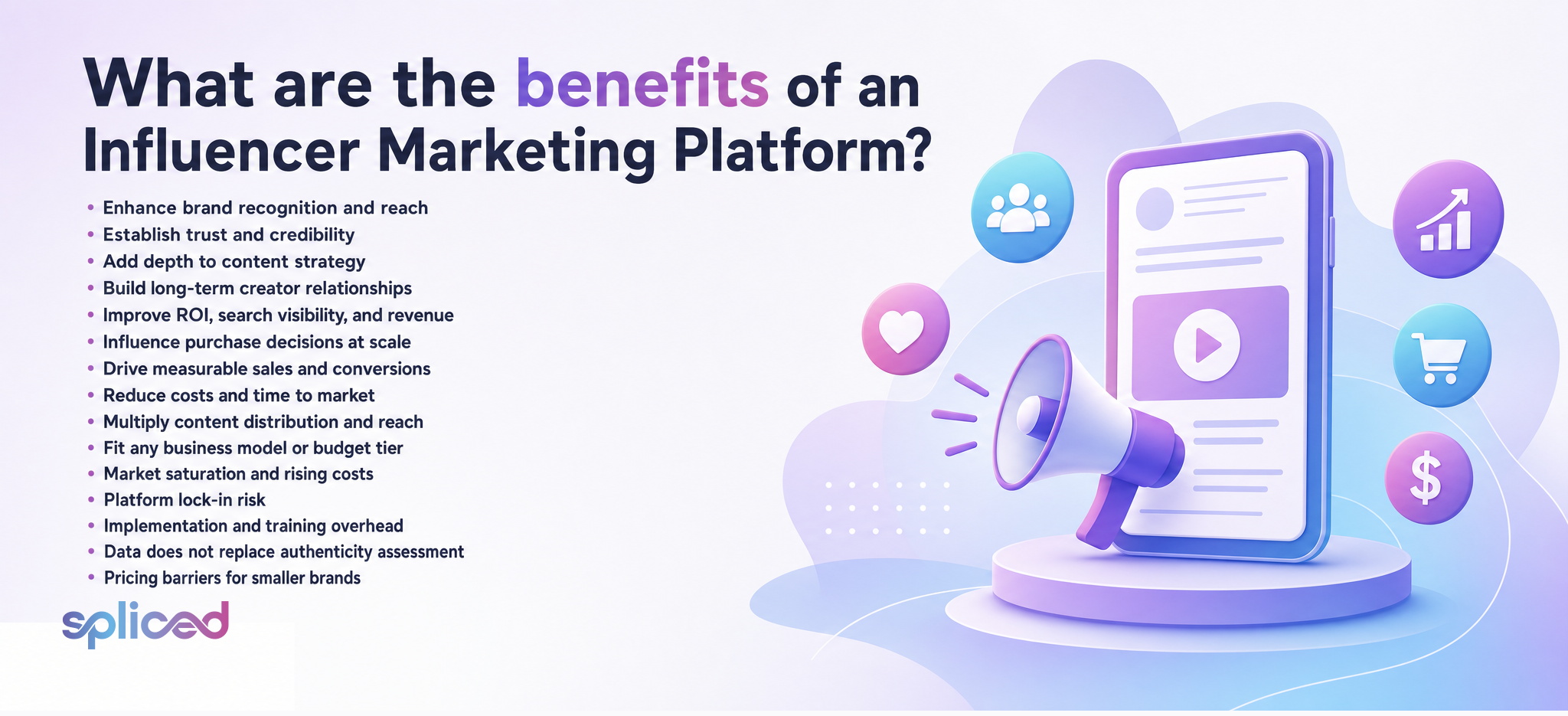
The key benefits of influencer marketing platforms in 2026 include the following.
- Enhance brand recognition and reach: Influencer marketing connects businesses with millions of potential customers across Millennial and Gen Z audiences. It bypasses ad blockers and delivers messages in trusted, organic contexts.
- Establish trust and credibility: Influencers build audience trust through authentic expertise in their niches. Research shows 75% of YouTube viewers prefer authentic, relevant content; 70% of young audiences engage regularly with influencers; and 60% trust influencer reviews more than celebrity endorsements.
- Add depth to content strategy: Influencer partnerships fill content calendar gaps with high-quality, audience-aligned material. Successful collaborations require clear content distribution plans and measurable campaign objectives.
- Build long-term creator relationships: Brands increasingly invest in multi-campaign partnerships rather than single activations. Long-term relationships establish audience trust, reduce friction, and compound returns through shares, reposts, and sustained brand exposure over time.
- Improve ROI, search visibility, and revenue: Influencer campaigns measurably impact conversion rates, organic search rankings, and bottom-line sales. Small businesses particularly benefit from visibility gains and traffic acceleration that influencer partnerships provide.
- Influence purchase decisions at scale: Influencers sway buying behavior across demographics, especially among younger audiences. Social platforms including TikTok, YouTube, and Instagram drive immediate and deferred purchase intent.
- Drive measurable sales and conversions: Influencer content accelerates purchase decisions. Audiences act on product recommendations immediately after encountering endorsed content from trusted creators.
- Reduce costs and time to market: Influencer partnerships lower advertising costs compared to traditional media. Performance-based compensation models align incentives and improve ROI accountability for brands.
- Multiply content distribution and reach: Influencers amplify brand content daily across multiple formats, including posts, stories, reviews, and promotional assets. Higher social sharing improves search rankings. Partnerships with established creators reach wider audiences and compound brand visibility.
- Fit any business model or budget tier: Influencer discovery platforms segment creators by niche, audience size, and engagement level. Brands of any scale find relevant creators and structure partnerships that match their resources and goals.
Common Limitations of Influencer Marketing Platforms in 2026
Influencer marketing platforms streamline creator discovery and campaign management; however, they carry known operational and cost constraints worth evaluating before purchase.
- Market saturation and rising costs: Increased platform adoption drives competition for top-tier creators. CPMs and creator fees rise as demand concentrates on proven performers.
- Platform lock-in risk: Heavy reliance on a single platform’s database and features limits discovery beyond that ecosystem and reduces negotiating flexibility.
- Implementation and training overhead: User-friendly interfaces mask complex workflows. Teams require time and structured onboarding to extract full value from advanced features.
- Data does not replace authenticity assessment: Platforms emphasize metrics over cultural fit and audience sentiment. Relying solely on engagement rates overlooks brand alignment, content quality, and genuine audience connection.
- Pricing barriers for smaller brands: Monthly subscriptions and per-campaign fees accumulate quickly. Cost structures favor enterprise budgets over bootstrapped or mid-market teams.
- Multi-influencer campaign complexity: Platforms simplify individual partner management but struggle with multi-creator orchestration, approval workflows, and contract administration at scale.
- Relationship depth limitations: Automated outreach and platform messaging lack the personalization required to build genuine, long-term creator partnerships and negotiate favorable terms.
Should You Invest in an Influencer Marketing Platform?
Influencer marketing platforms deliver measurable value for brands seeking creator partnerships at scale. They accelerate influencer discovery, centralize campaign workflows, and provide performance analytics that manual outreach cannot match. For multi-channel campaigns and teams managing 5 or more concurrent creator relationships, platforms reduce overhead and improve attribution.
Platform ROI depends on your specific situation. Enterprise brands, Amazon sellers managing TikTok Shop expansion, and DTC labels with repeatable creator programs gain fastest payback. Budget-constrained or single-campaign teams may achieve better results through direct creator relationships and hybrid tools.
Before committing, audit your needs against platform capabilities: influencer database fit to your niche, commerce integration (especially Amazon and TikTok), attribution accuracy, and pricing alignment with campaign volume. Compare trial access across 2 to 3 platforms before signing annual contracts.
Is Influencer Marketing Platform expensive?
Influencer marketing platforms range in cost from $35 to $4000 per month depending on features, scale, and pricing model. Subscription fees, usage-based charges, and per-campaign costs vary significantly across vendors. The expense becomes a barrier for smaller firms or teams with constrained budgets. Businesses should evaluate platform pricing against measurable returns, such as faster influencer discovery, centralized campaign tracking, and detailed performance analytics. Cost efficiency improves when platforms offer affiliate attribution or commerce integration; Amazon sellers and TikTok Shop brands particularly benefit from platforms that track sales impact rather than vanity metrics alone. Smaller brands may find entry-level plans or alternative solutions that deliver core discovery and reporting functions without enterprise pricing.
How do Influencer Marketing Platforms differ from Social Media Networks?
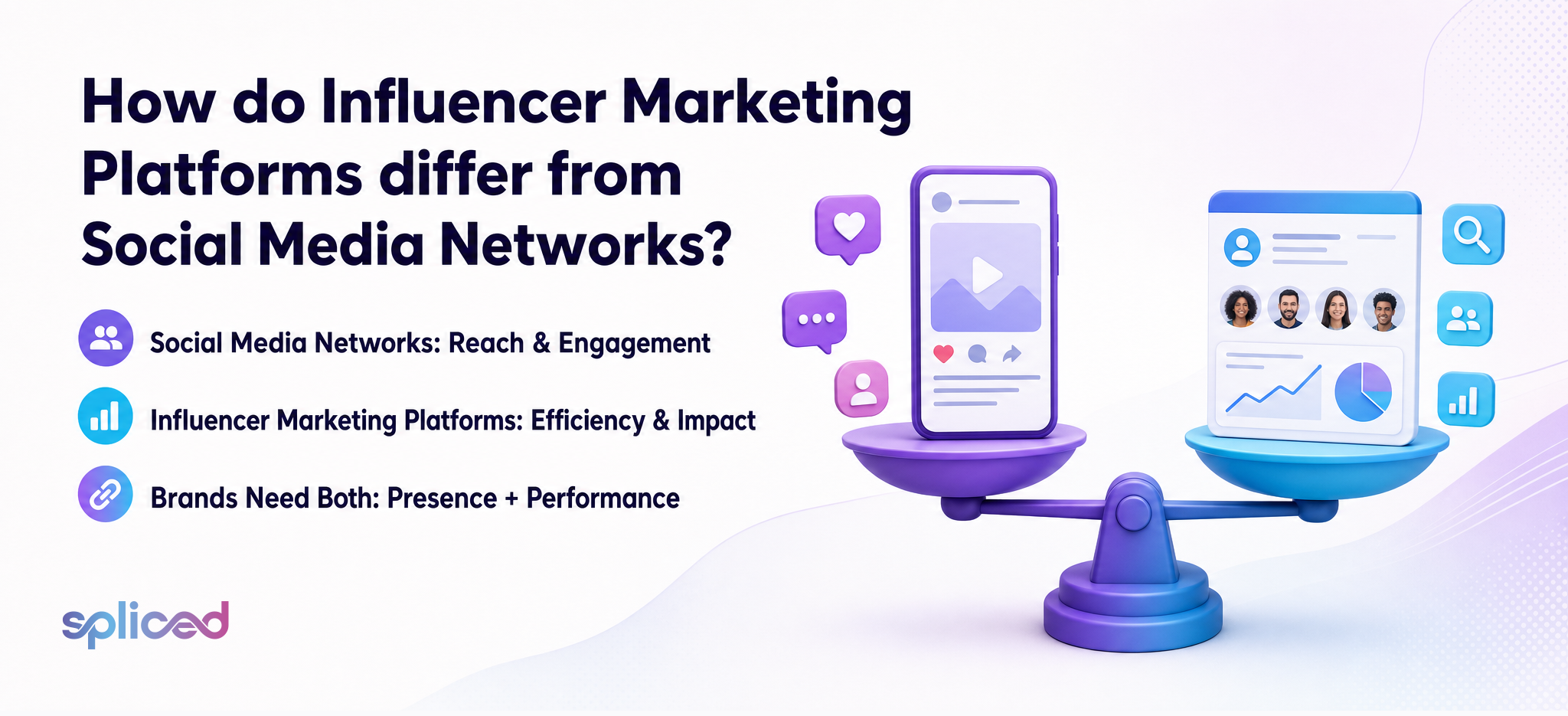
Influencer marketing platforms and social media networks serve different functions in the creator economy. Social media networks (Facebook, Instagram, TikTok, YouTube) are where creators post content and audiences engage; they provide the distribution channel. Influencer marketing platforms are specialized software designed to identify creators, manage campaigns, approve content, track performance, and measure ROI across multiple social channels simultaneously.
Influencer marketing platforms excel at solving the coordination problem: brands cannot efficiently manage dozens of creator partnerships, contracts, payment terms, and performance metrics directly through social networks. The platforms aggregate creator data, automate outreach, centralize collaboration workflows, and provide cross-channel analytics. For Amazon sellers and TikTok Shop operators, platforms that integrate commerce data go further; they connect influencer activity to actual sales and refunds, closing the attribution gap that social networks alone cannot fill.
Social media networks generate audience reach and engagement. Influencer platforms generate campaign efficiency and measurable business impact. Brands need both: creators build presence on social networks while platforms orchestrate the partnerships that turn presence into performance.