
Affiliate marketing is a performance partnership model in which a brand pays partners for tracked actions such as sales, leads, or qualified traffic. For Amazon and TikTok Shop brands, those partners are often creators, publishers, and content affiliates who promote products with measurable commerce outcomes. This root guide defines affiliate marketing in that marketplace context, explains how brand-side programs work, compares affiliate marketing with influencer marketing, and orders the Spliced affiliate topic cluster that follows.
What is affiliate marketing?
Affiliate marketing is a commercial arrangement where a brand compensates an external partner when a tracked referral produces a defined result. The partner promotes an offer with a tracked link, code, or platform attribution path. The brand pays a commission or bounty only when the tracked action occurs.
In marketplace ecommerce, the same model covers Amazon Associates style referrals, TikTok Shop creator commissions, and owned brand affiliate programs that recruit creators as recurring sellers. The defining properties are performance pay, partner distribution, and trackable attribution to an action.
Three conditions separate affiliate marketing from sponsorship and media buying. First, payout depends on a measured conversion event rather than delivery of impressions alone. Second, the partner owns or controls the distribution surface, such as a creator account, review site, or storefront list. Third, the brand can attribute the conversion to a partner identifier for commission calculation.
How does affiliate marketing work in ecommerce?
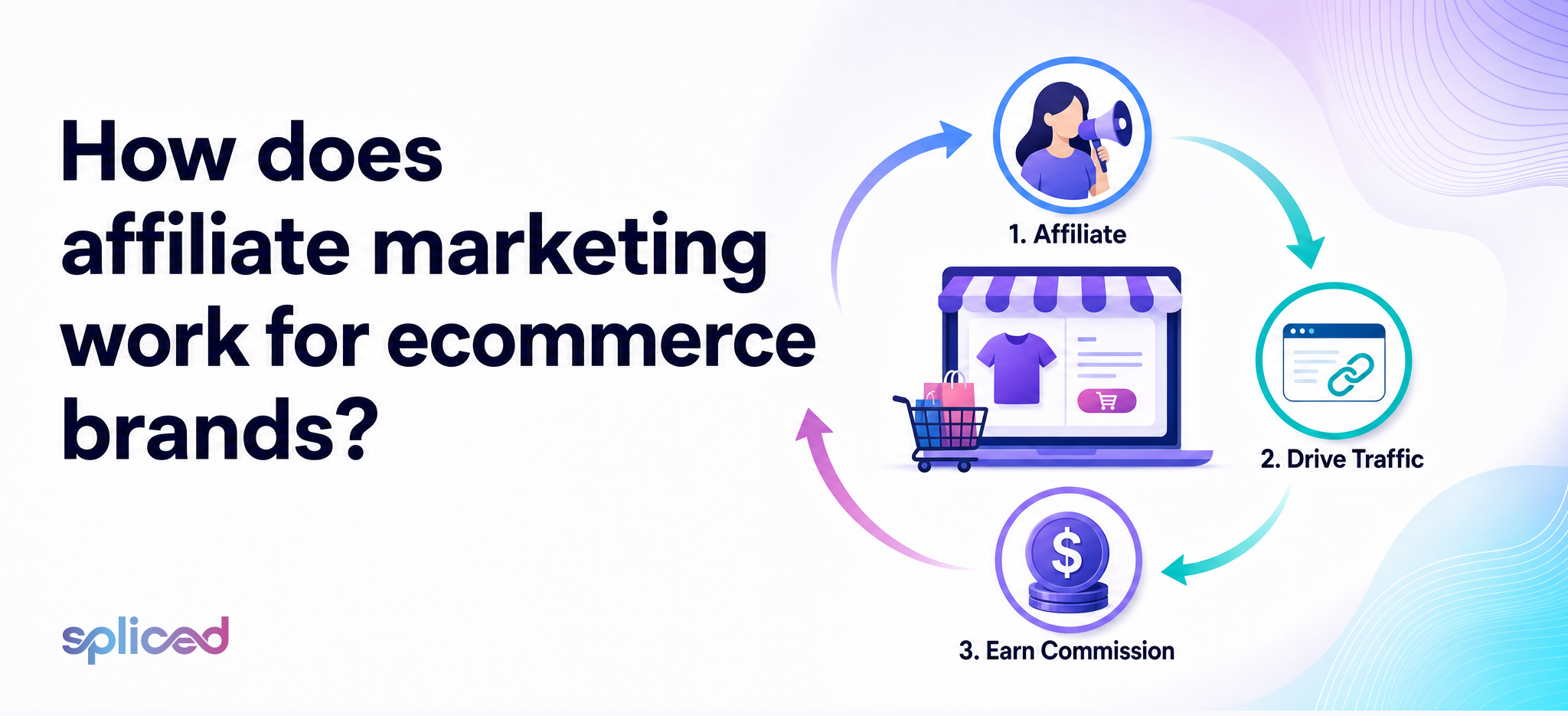
An ecommerce affiliate program starts with an offer, a partner, a tracking method, a conversion event, and a payout rule. The brand publishes commission terms and creatives. The partner publishes content or storefront placements that send buyers through a tracked path. When the buyer completes the agreed action, the system records the conversion and schedules the partner payout.
Brand operators usually run the loop in five stages.
- Define the offer: products, categories, excluded ASINs or SKUs, and commission rates.
- Choose partner types: creator affiliates, marketplace associates, content sites, or loyalty partners.
- Instrument tracking: deep links, codes, native shop attachments, or owned-platform click IDs.
- Activate partners: invitations, onboarding, samples, and content expectations.
- Pay and optimize: commission calculation, top performer incentives, and offer adjustments.
Stage one sets unit economics. Brands compare selling price, product cost, creator commission, shipping, and marketplace fees before publishing a rate. A rate that looks competitive to creators but destroys contribution margin cannot scale. Stage two determines distribution quality. Creator affiliates bring content and social trust. Content affiliates bring search demand. Loyalty partners bring repeat audiences.
Stage three decides reporting reliability. Marketplace native tracking and owned platform ledgers often disagree on the same sale. Brands that instrument both paths reduce blind spots. Stage four converts a signed partner into active promotions. Invite links, campaign assignment, and product selection matter as much as the commission percentage. Stage five closes the loop with revenue, commissions paid, and creator performance reviewed on a fixed cadence.
Ecommerce brands use this loop to scale distribution without paying only for impressions. Program mechanics deepen on the Amazon affiliate program page for Amazon Associates style flows.

What affiliate marketing types matter for Amazon and TikTok Shop?
Affiliate marketing types are classified by partner surface, tracking path, and payout trigger. Four types matter most when the goal is tracked product demand on Amazon and TikTok Shop.
- Creator affiliates promote products through short video, live shopping, storefronts, and social posts with commission on attributed sales.
- Marketplace associates use platform native programs such as Amazon Associates to earn commission on referred product purchases.
- Content and coupon affiliates publish reviews, comparisons, or deal pages that send traffic through tracked links.
- Loyalty and community affiliates route members or customers through branded referral offers with recurring or one time rewards.
Creator affiliates and marketplace associates sit closest to Amazon and TikTok Shop brand programs because they combine content distribution with commerce tracking. Content and coupon affiliates remain valid when they send measurable marketplace traffic, but they are secondary for brands whose primary acquisition channel is creator commerce. Loyalty and community affiliates matter when a brand already owns an audience that can refer new buyers or new creators.
On Spliced, brands also run structured Creator and Affiliate Collaboration campaigns across TikTok and Amazon with flexible compensation models: commission, retainer, or both. Product Promotion campaigns assign selected products with defined incentives. Outreach Agent campaigns automate creator acquisition while keeping commission rules attached to product sets.
Which creator affiliate models do ecommerce brands use?
Ecommerce brands commonly combine three creator affiliate models.
- Commission only: partners earn a percentage of attributed sales. A common brand side example is a 20% pay per sale rate on assigned products.
- Hybrid: a fixed incentive plus commission reduces creator risk and increases posting consistency. Fixed payouts attract early participation; commission aligns later volume.
- Action bounties: pay per click or pay per add to cart supplements pure sale commissions on selected funnels.
Spliced Affiliate Program Setup supports Pay Per Sale commission percentages, optional Pay Per Click rules such as $1 per 10 clicks, Amazon only Add to Cart rewards, and an attribution window such as 30 days or longer. Those controls are the operational form of the affiliate types above. Brands that open with commission only in crowded niches often under recruit. Brands that open with fixed payouts and no performance layer often overpay for low quality volume.
What are the core attributes of an affiliate program?
An affiliate program is defined by five core attributes: the offer, the tracking method, the commission structure, the attribution window, and the partner tiers. Brands that leave any attribute undefined create payout disputes and weak reporting.
What is the offer?
The offer states which products or categories pay commission and which items are excluded. Amazon sellers usually map offers to ASINs or brand catalogs. TikTok Shop sellers map offers to shop products and campaign product sets. Clear offer scope prevents partners from promoting out of stock or non commissionable items.
Offer quality also includes creative assets, sample policy, and claim limits. Partners convert more when they receive accurate product facts, approved talking points, and current pricing. Multi product campaigns require per product commission settings or a single apply to all rate so partners know which SKU pays what.
What tracking methods do ecommerce brands use?
Tracking maps partner traffic to conversions through links, codes, pixels, marketplace native attribution, or owned platform click IDs. Amazon Associates style programs rely on Amazon referral tracking. TikTok Shop programs often rely on shop attachments and platform commission reports. Owned programs add a brand controlled ledger for custom rates and multi channel partners.
Accurate cross platform attribution remains difficult when a creator introduces a product on TikTok and the buyer later purchases on Amazon. Brands therefore treat each tracked path as a partial ledger and keep offer rules consistent across channels even when reports diverge.
How are commissions structured?
Commission structure sets rates, baselines, and exclusions. Common structures include a flat percentage of sale price, category specific rates, and bonus tiers for volume. Early stage TikTok Shop playbooks often test competitive commissions at 20% or higher to earn creator attention, then tighten rates after unit economics prove out.
On owned platforms, brands also layer referral bonuses so creators who invite other creators earn multi tier rewards. Spliced Creator Incentives support up to 10 referral tiers, for example 3% on tier 1, 2% on tier 2, and 1% on tier 3, where total payout equals base commission plus referral bonuses. That structure turns top creators into recruiters for the brand network.
What is an attribution window?
The attribution window sets how long a click or eligible view remains payable. A 30 day window is a common brand side default for owned programs. Longer windows increase partner confidence. Shorter windows reduce delayed payout liability. Window choice must match the shopping cycle of the catalog. High consideration products often justify longer windows than impulse accessories.
What are partner tiers?
Partner tiers segment creators or publishers by volume, category fit, or access level. Tiers let brands reserve higher rates, samples, or early product access for proven partners while keeping an open entry path for new creators. Tier rules belong in the program terms so partners understand how advancement works.
How is affiliate marketing different from influencer marketing?
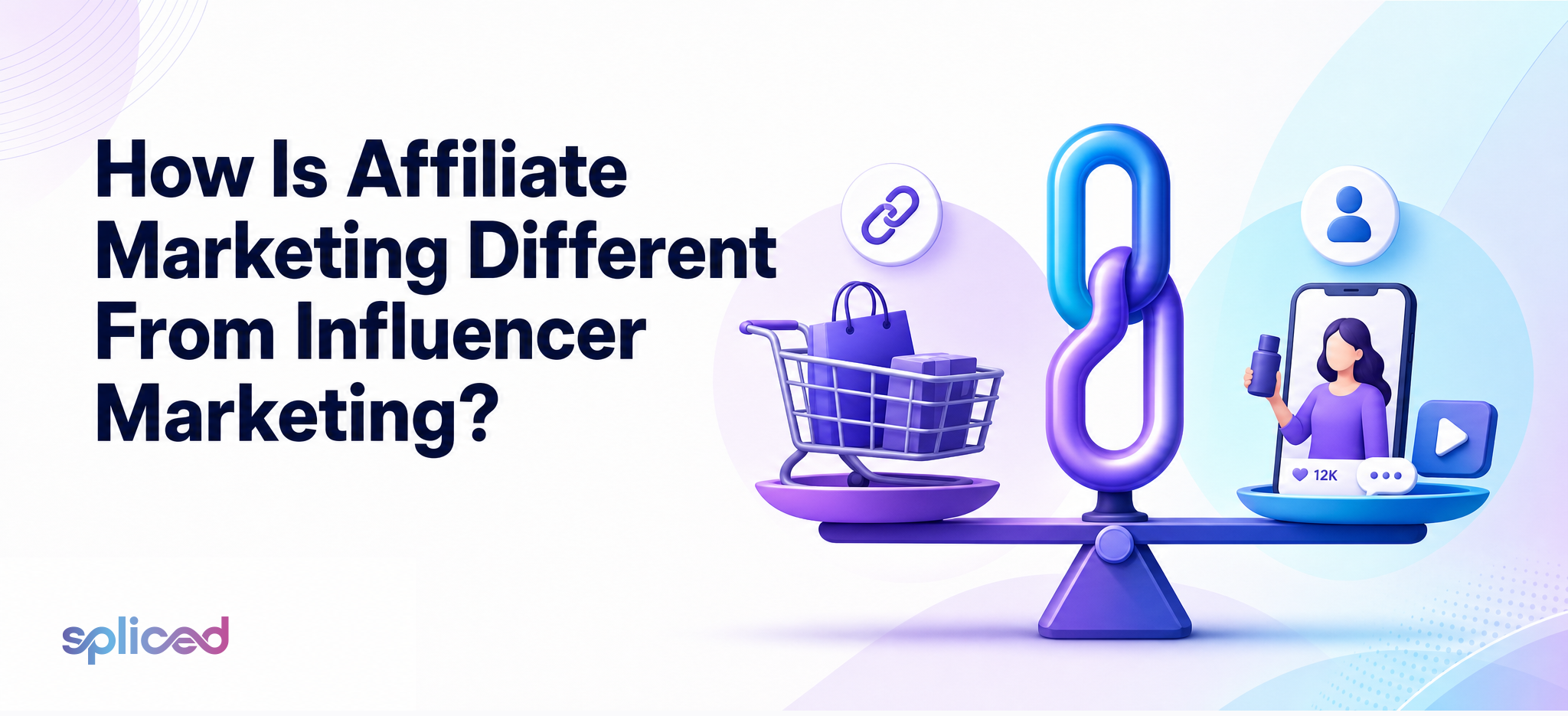
Affiliate marketing pays for tracked outcomes. Influencer marketing often pays for content delivery, reach, or a mix of fee plus performance. The practical boundary is the primary commercial contract: commission on attributed actions versus compensation for creative placement.
| Attribute | Affiliate marketing | Influencer marketing |
|---|---|---|
| Primary pay model | Commission or bounty on tracked actions | Flat fee, product seeding, or hybrid fee plus commission |
| Tracking requirement | Required for payout | Useful for learning, not always required for payment |
| Content control | Partner owned content within offer rules | Often briefed and approved by the brand |
| Best use for ecommerce brands | Always on product demand and recurring partners | Launches, awareness bursts, and creative production |
| Typical systems | Associates programs, shop commissions, owned affiliate CRM | Briefs, media kits, campaign calendars, content rights |
Many Amazon and TikTok Shop brands run both models in one calendar. A launch week uses influencer briefs for creative volume. An always on layer uses creator affiliates for recurring ASIN and shop demand. Hybrid contracts reduce false either or choices: a retainer funds content production while commission funds sales alignment.
The full comparison continues in the guide to influencer marketing versus affiliate marketing.
How do Amazon affiliate programs work for brands and partners?
Amazon affiliate programs connect publishers and creators to Amazon product demand through tracked referral links and storefronts. Partners earn commission when referred shoppers purchase eligible products inside the attribution rules of the Amazon Associates style program. Brands benefit when partners send qualified traffic to ASINs, brand stores, or related catalog items.
Brand side Amazon operators still need an owned creator affiliate layer when they want direct recruitment, custom rates, add to cart incentives, or multi channel tracking beyond a single marketplace associate path. Platform associate commissions and brand owned commissions are related but not identical systems. Associate programs optimize for Amazon referral economics. Owned programs optimize for brand controlled creator relationships and custom incentive design.
Spliced Amazon integration lets brands connect an Amazon account with Login with Amazon and import products for campaign assignment without manual one by one processing. Partner join steps for individuals are covered in the guide to become an Amazon affiliate.
What Amazon specific affiliate levers do brands control?
Brand controlled Amazon affiliate levers include product selection, commission rate, optional click rewards, optional add to cart rewards, attribution window length, and creator eligibility. Add to cart incentives are Amazon specific in Spliced Affiliate Program Setup. Those levers help brands reward mid funnel actions when sale attribution alone underreports creator influence.
Product selection discipline matters as much as rate setting. Brands that assign every SKU at the same rate ignore margin differences. Brands that assign only hero ASINs concentrate partner attention where inventory and reviews support conversion. Campaign analytics then show which products generate revenue and which products only generate clicks.
How do brands use creator affiliates on TikTok Shop and Amazon?
A creator affiliate program recruits creators as performance partners who earn commission on attributed product sales across social and marketplace surfaces. On TikTok Shop, creators often sell through native shop attachments and live shopping. Brand side commission mechanics are covered in TikTok Shop affiliate commissions for brands. On Amazon, creators often combine content with storefronts, lists, and tracked outbound demand.
Hybrid programs let a brand pay commission for sales while still briefing creative quality. Program design detail lives in creator affiliate hybrid programs for Amazon sellers. Owned networks help brands keep partner CRM, rates, and payouts in one system. The commercial path for Spliced owned networks continues on the Spliced affiliate program page.
How does a brand side creator affiliate workflow run?
A practical brand side workflow has six stages.
- Connect the storefront: TikTok Shop or Amazon as the primary sales channel.
- Enable pay per sale and optional action incentives in affiliate settings.
- Create a campaign and assign products for promotion.
- Source creators through marketplace discovery, invite links, email, or TikTok DM outreach.
- Activate creators with onboarding, commission terms, and content expectations.
- Review analytics for revenue, commissions paid, and creator performance, then adjust incentives.
On Spliced, campaign types include Creator and Affiliate Collaboration, Outreach Agent, Open Collaboration, Challenge or Contest, and Product Promotion. Dashboard metrics track invites, open rates, collaborations, and commission earnings after launch. Creator network invite links let creators join a private brand network after signup.
Account setup for brands follows a storefront first path: choose Brand as account type, select TikTok Shop or Amazon as the sales channel, connect the store, enter brand details, upload branding, and complete dashboard onboarding. Creators and affiliates use a separate account type so the same platform can host both sides of the partnership.
How do TikTok Shop growth playbooks use affiliate marketing?
TikTok Shop affiliate playbooks map converting traffic themes, structure offers that mix fixed payouts with commissions, set repeatable campaigns, acquire creators inbound and outbound, activate them with automation, and optimize from performance data. The focus is converting attention, not vanity volume.
Traffic mapping identifies trending products, creator content patterns, and audience engagement that already purchase. Offer structuring mixes fixed payout, affiliate commission, and optional click rewards so creators face lower participation risk. Campaign setup defines products, incentives, and creative expectations as a reusable system rather than a one off deal. Creator acquisition then scales through marketplace listings, invite links, and outreach agents. Activation and analytics close the loop by converting accepted creators into published promotions and measured revenue.
That process is affiliate marketing applied to short form commerce rather than a separate discipline. Full TikTok Shop creator operations belong on dedicated nodes; this root keeps the entity definition and brand side program map.
What limits affiliate attribution in ecommerce?
Affiliate attribution undercounts marketplace demand when shoppers click a partner link, leave, and later convert through branded search, direct app opens, or unlinked marketplace discovery. Last click windows, cross device gaps, and platform reporting silos create the same blind spot.
Ecommerce brands therefore treat affiliate reports as a partial ledger, not the full commerce effect of creator distribution. A creator who introduces a product can influence a later Amazon search conversion that never inherits the original click ID. TikTok Shop native reports and owned affiliate ledgers can also disagree on the same order when buyers switch surfaces.
Cross channel lift measurement belongs in a dedicated attribution topic. Program design still starts with clean affiliate tracking on every partner path, including explicit attribution windows and consistent commission rules. Brands that skip clean tracking cannot later separate true partner value from noise.
Which metrics do brands review first?
Brand side affiliate analytics usually start with four metric groups: revenue generated, affiliate commissions paid, creator performance, and network growth through referral activity. Optimization actions include increasing incentives on top products and adjusting campaigns based on observed performance. Those metrics keep the program tied to commerce outcomes instead of vanity engagement.
Secondary reviews include invite volume, open rates, collaboration acceptance, and commissions earned by creator cohort. Network growth metrics matter when referral tiers are active because top creators become a sourcing channel. Product level views matter when multi product campaigns assign different rates across the catalog.

What mistakes stop marketplace affiliate programs from scaling?
Five mistakes repeatedly stall Amazon and TikTok Shop affiliate programs.
- Paying only for impressions while calling the program affiliate marketing. Without tracked actions, the model is sponsorship.
- Undefined attribution windows that create partner disputes and unusable reports.
- One off creator deals with no owned network, invite path, or recurring campaign system.
- Commission only offers in categories where creators need a hybrid incentive to post consistently.
- No product assignment discipline so partners promote the wrong SKUs or out of stock items.
Two additional failures appear after initial traction. Brands scale creator volume before unit economics clear contribution margin after commission, shipping, and fees. Brands also keep every creator on the same rate, which underpays top performers and overpays low converters. Owned affiliate systems reduce those failures by centralizing rates, product assignment, invitations, and payout calculation.
Frequently asked questions
Is affiliate marketing the same as an Amazon Associates program?
No. Amazon Associates is one marketplace affiliate implementation. Affiliate marketing is the broader performance partnership model. Brands also run owned creator affiliate programs and TikTok Shop commission programs under the same entity.
Can a brand run affiliate marketing and influencer marketing together?
Yes. Brands often use influencer fees for launches and affiliate commissions for always on demand. Hybrid contracts combine both in one creator relationship.
What commission rate do brand side programs use?
Rates vary by margin and category. Owned programs commonly set an explicit pay per sale percentage, for example 20%, then add optional click or add to cart bounties. Marketplace native programs use their own category commission tables. Early TikTok Shop tests often start near or above 20% to attract creators, then adjust after margin review.
Do creators need a website to join a brand affiliate program?
Not always. Creator affiliates often promote through TikTok Shop attachments, social bios, live shopping, and Amazon storefronts. Website based associates remain one partner type among several.
How long is a typical attribution window?
Owned brand programs commonly use a 30 day window as a starting default. Catalogs with longer consideration cycles use longer windows. Marketplace native programs publish their own cookie or attribution rules separately from owned ledgers.
What is the difference between a marketplace associate and a creator affiliate?
A marketplace associate earns through a platform native referral program such as Amazon Associates. A creator affiliate is a performance partner recruited by the brand, often paid through shop commissions, owned tracking, or both. Many creators operate as both when they use native tools and join brand networks.
How does Spliced relate to affiliate marketing?
Spliced is a SaaS platform for influencer and affiliate marketing that helps brands connect storefronts, recruit creators, run campaigns, track conversions, and calculate commissions for Amazon and TikTok Shop programs. Spliced also offers a full managed service for brands that want the Spliced team to launch and operate TikTok Shop affiliate programs. Subscription plans include Starter at $147 per month or $97 per month billed annually for 1 TikTok Shop, and Platinum at $447 per month or $347 per month billed annually for up to 3 storefronts plus marketplace access and all AI features. Enterprise plans are custom.