
The Amazon Influencer Program allows creators with engaged social media followings to earn commissions by curating and promoting products through personal storefronts. The program requires registration, application approval, storefront setup, and strategic promotion to generate sales. Participants must maintain active, high-quality content and comply with Amazon’s content policies to remain eligible in 2026.
Amazon Influencers differ from Amazon Affiliates in scope and autonomy. Affiliates use referral links to earn commissions on sales. Influencers create branded content, build audience trust, and curate storefronts that reflect their personal preferences and expertise. This content-first approach generates deeper audience engagement and brand loyalty beyond transactional marketing.
Identifying Amazon Influencers occurs through social media platforms, influencer marketing networks, and Amazon’s official storefront directory. Brands reach out to creators whose audience aligns with product categories. Amazon compensates influencers through commission-based payouts on sales generated from their curated storefronts, with rates varying by product category from 1% to 10%.
Amazon Influencer earnings range from $50 to $2,500 monthly depending on follower engagement and sales volume. Creators report that consistent content production, niche focus, and authentic product selection drive measurable revenue growth. The program offers a scalable income opportunity for creators committed to long-term audience development and transparent recommendations.
How to Become an Amazon Influencer in 2026
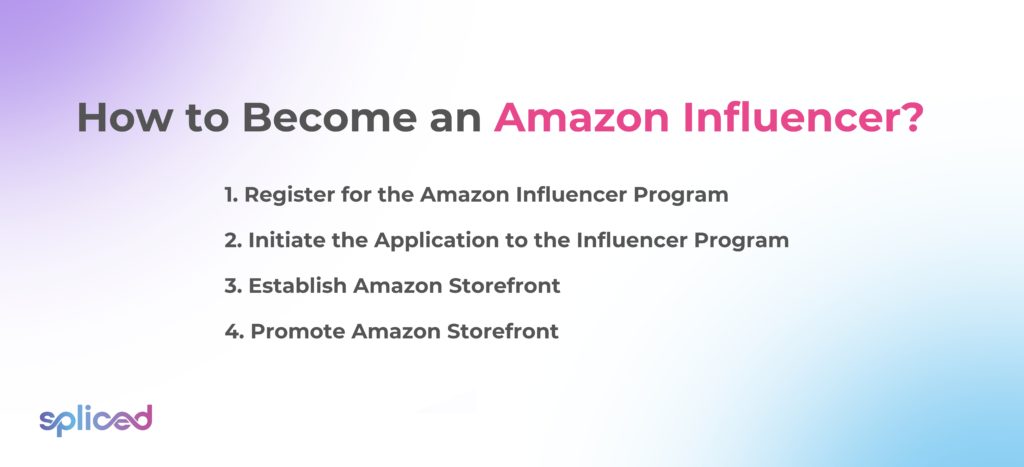
Four primary steps establish an Amazon Influencer presence. The process moves from account setup through storefront curation to active promotion across owned content channels. Each step builds on the previous to create a functioning influencer business model with trackable commission earnings.
- Register for the Amazon Influencer Program. Visit Amazon’s creator central and complete the influencer enrollment form using your social account with the largest engaged following. Approval typically occurs within 24 hours for YouTube and Facebook submissions, up to 5 days for Instagram applications.
- Submit Your Application with Required Information. Provide accurate audience metrics, content category focus, and links to your social profiles. Amazon evaluates engagement rates, content quality, and niche relevance. Applications require tax documentation and banking details for commission payouts.
- Build Your Amazon Storefront. After approval, design your storefront with a custom header image and profile photo reflecting your brand identity. Curate product selections by category that align with your content pillars and audience preferences. Organize items logically to improve browsing and discovery.
- Promote Your Storefront Across Channels. Create short-form video content, reviews, and recommendations featuring storefront products on TikTok, Instagram Reels, and YouTube Shorts. Use link-in-bio tools like Linktree or Later to direct traffic to your storefront. Track performance through Amazon’s affiliate dashboard and adjust content strategy based on sales data and audience engagement patterns.
1. Register for the Amazon Influencer Program
Registration unlocks access to Amazon’s creator dashboard, storefront builder, and commission tracking tools designed specifically for influencers. This initial step connects your social account to Amazon’s system, enabling the platform to verify audience size and engagement metrics. Registration takes approximately 10 minutes and requires your primary social media account credentials. Once submitted, Amazon reviews your profile against 2026 eligibility criteria, evaluating content quality, audience authenticity, and niche alignment with Amazon’s product catalog.
The registration process provides access to analytics dashboards that track clicks, conversions, and earnings from your storefront in real time. You gain the ability to monitor which product categories drive the most sales and adjust your content accordingly. Registration also enables direct brand partnership opportunities through Amazon’s creator network, connecting you with companies seeking influencers in your niche for sponsored campaigns beyond commission-based earnings.
Completing registration positions you for storefront creation and audience monetization. The step establishes your creator identity within Amazon’s ecosystem and signals your commitment to producing authentic, audience-first content. Early registration in your niche provides competitive advantage as the program grows in 2026, particularly for emerging creators with highly engaged but smaller followings who meet quality benchmarks.
2. Initiate the Application to the Influencer Program
Initiating the Application to the Influencer Program is the second critical step to becoming an Amazon Influencer. The procedure requires submitting accurate information and confirming eligibility against Amazon’s current standards. Aspiring influencers signal their commitment to the program by completing the application. Amazon evaluates each applicant to ensure alignment with program goals and content quality standards. Starting the application demonstrates a strategic approach to connecting with Amazon’s ecosystem and building an influencer presence. Success in this competitive field requires demonstrating serious intent through thorough application completion.
Candidates access the Amazon Influencer Program portal to begin the application process in 2026. The process involves submitting personal details, selecting the primary social media platform with the largest following, and accepting program terms. Accuracy and transparency in submissions establish the foundation for approval and successful partnership with Amazon. Applicants must demonstrate active engagement and content quality on their chosen platform, as these metrics significantly influence approval decisions. Submitting a complete application positions creators to access Amazon’s tools and begin building their storefront.
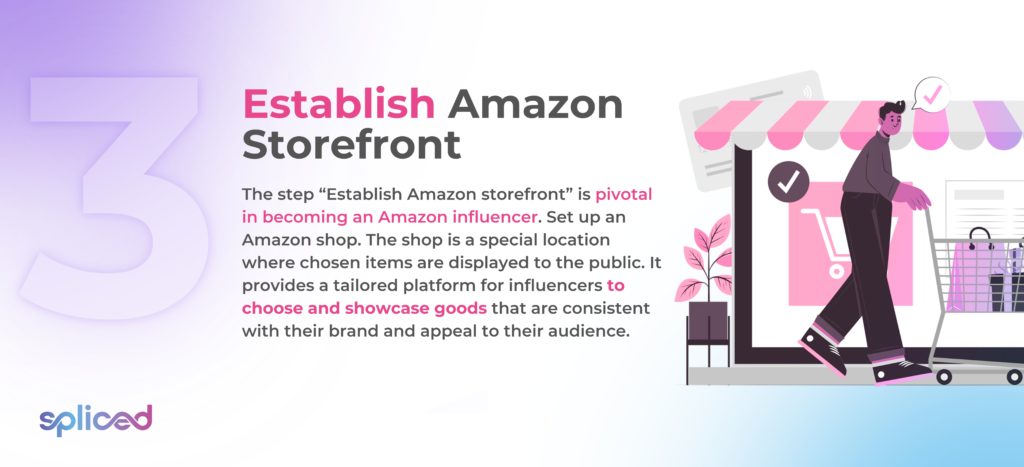
3. Establish Amazon Storefront
Establishing an Amazon Storefront is the third essential step in becoming an Amazon Influencer. The storefront functions as a dedicated storefront where curated items appear publicly. This platform allows influencers to select and feature products aligned with their brand identity and audience interests.
To create an Amazon Storefront, approved influencers access their Influencer account and navigate to the storefront creation tool. Customization includes uploading a branded header image and profile photo that reflect the influencer’s aesthetic. While customization options are limited compared to independent websites, these visual elements establish brand recognition and professional presentation.
Establishing the storefront improves the customer experience by presenting products in an organized, visually coherent layout. A well-curated storefront enhances credibility and makes browsing intuitive for followers. This structured presentation increases the likelihood that visitors explore multiple products and complete purchases.
The storefront enables influencers to feature products they genuinely use and recommend. Authentic product selection builds audience trust and increases conversion rates. Followers are more likely to purchase when they perceive recommendations as based on personal experience rather than sponsored promotion alone.
4. Promote Amazon Storefront
Promoting the Amazon Storefront is the final step to activating income potential as an Amazon Influencer. Active promotion across multiple channels drives traffic to the storefront and increases sales opportunities. Strategic promotion expands audience reach, drives engagement, and maximizes earning potential.
Traffic volume directly impacts earnings, as income derives from sales generated through the storefront. Influencers must actively encourage followers to visit the storefront, explore products, and make purchases through consistent, value-focused content. Effective promotion strategies include short-form video reviews, live Q&A sessions about featured products, and direct product recommendations in captions and stories.
Building audience trust accelerates long-term success. Influencers who deliver honest, helpful content establish reputations that drive repeat visits and purchases. Consistent delivery of authentic recommendations generates higher engagement rates and customer loyalty, which compound earnings over time.
What is an Amazon Influencer Program?
The Amazon Influencer Program is a platform that enables creators with engaged social media followings to earn commissions by curating and promoting Amazon products through personal storefronts. The program serves bloggers, content creators, and social media influencers who have built audiences on YouTube, Instagram, Facebook, and TikTok. Approved influencers gain access to storefront creation tools and can curate collections of Amazon products aligned with their brand. These storefronts function as dedicated shopping destinations where followers discover and purchase recommended items. The program allows influencers to monetize their audience through commission-based earnings on resulting sales. Influencers connect content creation with product recommendations through a seamless workflow that benefits both creator income and Amazon visibility. Joining the program requires meeting follower thresholds, maintaining active engagement, and complying with content policies.
How does an Amazon Influencer Program work?
The Amazon Influencer Program operates by connecting creators’ social media reach to Amazon’s product catalog and commission structure. Creators apply through Amazon’s official Influencer portal and, upon approval, receive access to storefront tools. Each approved influencer constructs a personal storefront that functions as a curated shopping destination. Storefronts display selected products from Amazon’s catalog organized by category or theme, allowing followers to browse and shop in a dedicated space.
Influencers earn commissions when followers purchase products through the storefront. The commission structure integrates with Amazon’s affiliate network and ranges from 1% to 10% depending on product category. Each purchase is tracked through the influencer’s unique storefront link, ensuring accurate attribution and payment.
Promotion occurs across the influencer’s owned channels, including Instagram, TikTok, YouTube, and personal blogs. Effective promotion uses short-form video content, product reviews, unboxing videos, and lifestyle content that incorporates featured items naturally. Link-in-bio tools like Koji or Linktree facilitate directing social followers to the Amazon Storefront, bridging platform gaps between content creation and shopping.
The program creates value for all parties. Influencers access income from authentic product endorsement. Amazon gains product visibility from trusted, niche-specific sources. Followers receive curated recommendations aligned with creators they follow. This mutual benefit structure sustains long-term partnerships and community engagement.
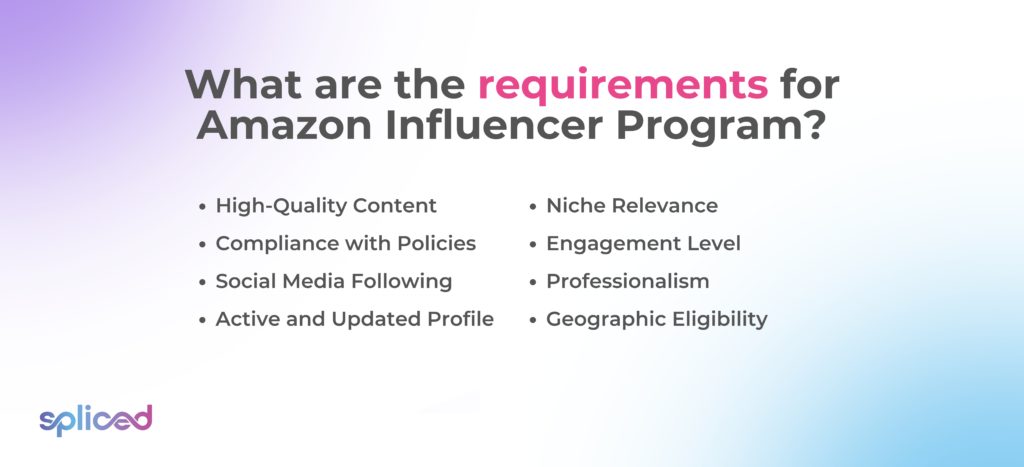
What are the requirements for Amazon Influencer Program?
The requirements for the Amazon Influencer Program in 2026 are listed below.
- High-Quality Content: Amazon seeks influencers who regularly produce original, high-quality material. This includes videos, written articles, blog posts, or other content formats that demonstrate production value and audience relevance.
- Policy Compliance: Influencers must adhere to Amazon’s content guidelines, which prohibit endorsing illegal material or violating community standards.
- Social Media Following: Maintain a sizable and active following on at least one social media platform including Facebook, Instagram, TikTok, or YouTube. Amazon does not publicly specify exact follower thresholds but evaluates engagement quality and audience authenticity.
- Active Profile Maintenance: Social media profiles must be actively updated with regular content. This includes posting consistently, responding to audience comments, and demonstrating ongoing community engagement.
- Niche Authority: Having a defined specialty or area of expertise that aligns with product categories on Amazon improves approval chances. This ensures product recommendations match audience expectations and needs.
- Engagement Metrics: Audience engagement rate matters more than follower count alone. High engagement rates (likes, comments, shares, click-through activity) signal an active, invested audience.
- Professional Conduct: Demonstrate professionalism in all interactions and content creation. This includes transparent communication about sponsored content and maintaining ethical standards in product endorsements.
- Geographic Availability: The Amazon Influencer Program operates in select countries and regions. Verify program availability in your location before applying.
Who can become an Amazon Influencer?
Individuals who become Amazon Influencers maintain substantial, engaged followings on platforms including YouTube, Instagram, Facebook, or TikTok. They produce high-quality content within niches aligned to Amazon’s product categories. Successful applicants follow Amazon’s content policies, maintain active profiles, and demonstrate professional communication standards. Amazon does not publish minimum follower requirements but prioritizes engagement authenticity and audience growth trajectory over raw follower counts.
The Amazon Influencer Program leverages social media influence to connect creators with commerce. Approved influencers create personalized Amazon Storefronts where they curate and promote products matching their audience interests. When followers purchase items through an influencer’s Storefront, the influencer earns commissions. The program integrates directly with Amazon’s affiliate commission structure, creating a direct incentive link between content quality and sales performance. This design benefits both influencers and Amazon by aligning content creation with measurable business outcomes.
Amazon Influencers gain access to tools that support storefront customization, audience analytics, and campaign tracking. These resources enable creators to optimize product selection based on audience data and performance metrics. Influencers monetize their reach through commission-based earnings on Storefront purchases. This performance-based model rewards consistency and audience trust, encouraging long-term partnership between influencers and the Amazon platform.
How long does it take to become an Amazon Influencer?
The approval timeline for Amazon Influencer Program applications varies by social media platform. YouTube and Facebook applications typically receive approval or rejection decisions within 1 to 3 business days. Instagram applications require up to 5 business days for review. Approval speed depends on profile completeness, audience metrics, and content quality verification. Applicants should use the social media account with the largest engagement rate, as platform algorithms now weigh engagement quality over follower count alone. Submission through the account with the strongest metrics increases approval likelihood and reduces decision time.
How can Amazon Influencers utilize Spliced to find brands to work with?
Amazon Influencers use Spliced to discover and secure brand partnerships that align with their audience and content strategy. Spliced is a creator partnership platform that connects influencers with brands seeking performance-driven campaigns. An influencer using Spliced completes a detailed profile including niche focus, audience demographics, platform presence, and engagement metrics. Spliced’s algorithm then surfaces brand opportunities that match these criteria. This data-driven matching reduces time spent searching for relevant partnerships and increases likelihood of collaboration success.
After creating a Spliced profile, influencers access a curated list of brand partnership opportunities organized by niche, campaign type, and compensation model. The platform includes filtering tools that enable creators to refine opportunities based on audience fit, campaign duration, and deliverable requirements. Spliced provides campaign analytics for each brand partnership opportunity, including brand reach, previous influencer collaborations, and audience overlap data. This transparency helps influencers evaluate which partnerships will drive the strongest results for both their audience and their earnings.
Spliced streamlines collaboration workflows by providing shared workspace for campaign agreements, content briefs, asset sharing, and performance reporting. The platform tracks campaign metrics such as link clicks, traffic generated, conversion rates, and attributed sales. For Amazon influencers specifically, Spliced connects brand partnerships with Storefront performance, showing which collaborations drive measurable sales and audience growth. This attribution data enables influencers to make data-driven decisions about future partnerships and optimize their content strategy for maximum revenue and audience trust.
How hard is it to become an Amazon Influencer?
Becoming an Amazon Influencer in 2026 requires meeting competitive standards that Amazon maintains to protect program credibility. Amazon seeks creators with substantial, active followings on YouTube, Instagram, Facebook, and TikTok. Building and sustaining an engaged audience demands consistent effort; creators must publish high-quality content regularly that resonates with followers and aligns with products sold on Amazon. Success requires originality, authenticity, and deep understanding of audience preferences.
Competition intensified throughout 2025 and continues into 2026. The Amazon Influencer Program attracts thousands of content creators competing for audience attention and program approval. Standing out in this market requires exceptional content, strategic branding, and sophisticated marketing techniques. Niche saturation varies by category; fashion, tech, and home categories see the highest competition while emerging niches like sustainable products and specialized hobbies face lower approval barriers.
Amazon policy compliance is mandatory. Violations result in account suspension or permanent removal. Influencers must maintain professional conduct, uphold ethical standards, and avoid promoting prohibited content. These combined requirements raise the barrier to entry. Creators who meet these standards can monetize their influence through commissions on purchases made via their curated Amazon Storefronts, with earnings typically ranging from $50 to $1,200 monthly for established influencers.
How many followers should an Amazon Influencer have on Instagram?
Amazon Influencer Program does not enforce a strict minimum follower count on Instagram. However, 10,000 followers serves as an effective benchmark in 2026 because this threshold unlocks Instagram Stories’ link sticker feature, allowing direct traffic to Amazon Storefronts and product pages. Creators with fewer followers can still qualify if engagement rates are high and content quality meets program standards. The shift toward engagement metrics means follower count matters less than audience interaction quality.
Engagement quality outweighs follower quantity in 2026 approval decisions. A focused audience of 5,000 active followers with 8 percent engagement rates generates stronger results than 50,000 inactive followers. Brands and Amazon evaluate likes, comments, shares, and saves when assessing creator viability. Amazon influencers should prioritize building authentic, engaged communities through consistent content delivery, genuine audience interaction, and niche relevance over pursuing follower count alone.
Sustained growth on Instagram requires publishing high-quality, original content three to five times weekly. Use carousel posts, Reels, and Stories to diversify content formats and increase discoverability. Tag products in posts to enable direct shopping; answer comments and direct messages promptly to strengthen community bonds. Creators using these tactics typically see follower growth of 15 to 30 percent quarterly and attract brand partnership opportunities within 6 to 12 months.
How many followers should an Amazon Influencer have on Youtube?
Amazon does not specify a minimum subscriber threshold for YouTube creators applying to the Influencer Program. Unlike Google AdSense, which requires 1,000 subscribers, Amazon prioritizes engagement, content quality, and audience loyalty over follower counts. Creators with 500 to 2,000 engaged subscribers who produce consistent, high-quality product reviews can qualify if approval reviewers verify steady audience growth and interaction patterns.
Micro-influencers and nano-influencers with small but dedicated audiences qualify in 2026 if viewer engagement is strong. YouTube considers average view duration, like-to-view ratios, and comment sentiment when assessing channel health. A creator with 800 subscribers and 40 percent average view duration performs better in approval assessments than a creator with 10,000 subscribers and 15 percent average view duration. Building a smaller, highly engaged subscriber base offers a faster approval path than pursuing vanity metrics.
How many followers should an Amazon Influencer have on Facebook?
Amazon does not publish a specific minimum follower requirement for Facebook-based applicants to the Influencer Program. The program requires a “significant” social media presence defined by consistent audience growth, regular content publication, and active community engagement rather than absolute follower numbers. Facebook applicants with 2,000 to 5,000 followers demonstrating 5 to 10 percent monthly growth and authentic audience interaction frequently achieve approval in 2026. Account activity and posting frequency matter more than audience size.
Can you be an Amazon Affiliate without being an Influencer?
Yes, anyone can join Amazon Associates without being an influencer. The Amazon Affiliate Program accepts bloggers, website owners, content creators, and businesses of all sizes. The program enables participants to earn commissions on sales generated through affiliate links or product promotions. Amazon Associates does not require social media following, audience size, or documented influence. Affiliates promote products through blogs, websites, email newsletters, niche forums, and other channels independent of social media presence. This accessibility makes the affiliate program available to publishers without audiences, enabling anyone with online content to participate and generate commissions from qualified purchases made through their referral links.
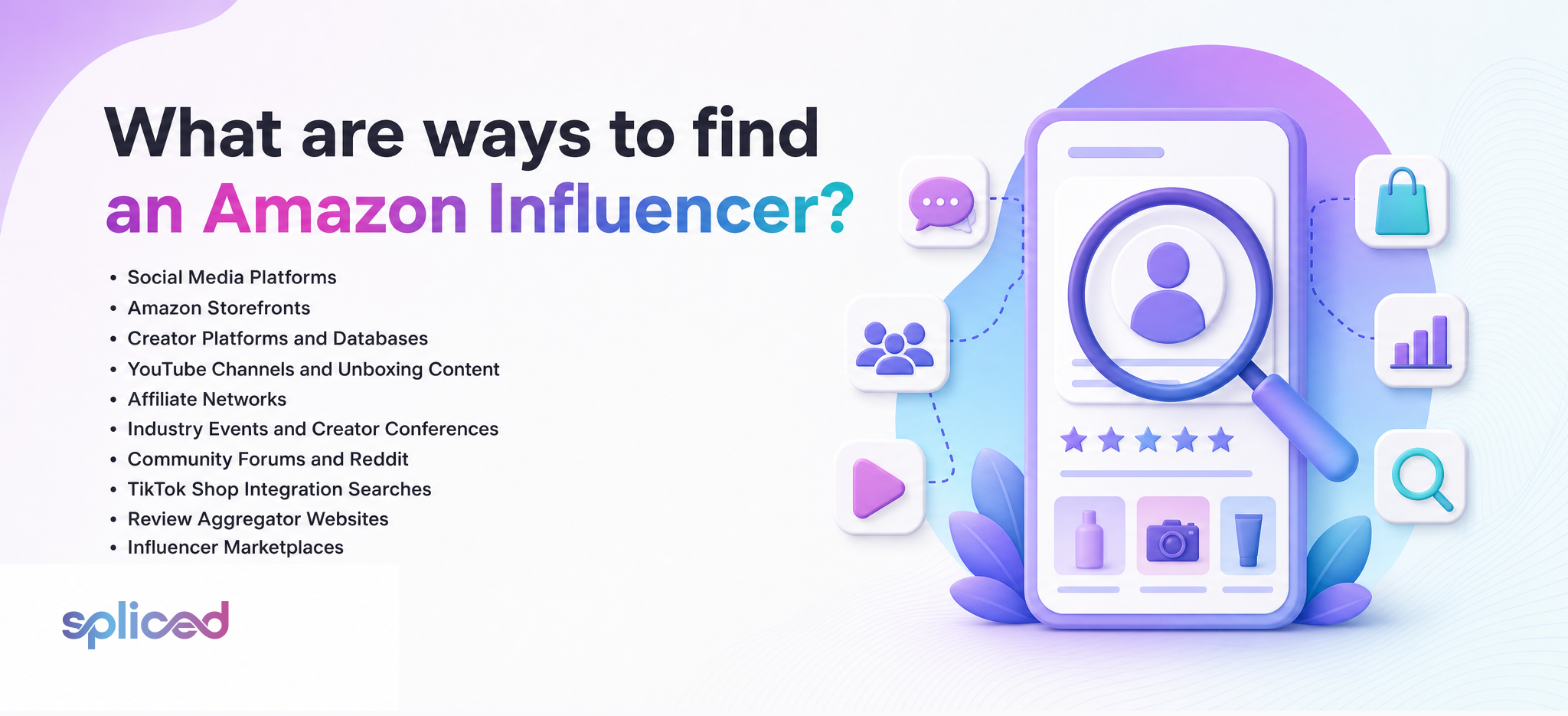
What are ways to find an Amazon Influencer?
Finding Amazon Influencers in 2026 requires strategic searches across multiple channels. Brands and marketers use these methods to identify creators with verified Amazon storefronts and active product curation.
- Social Media Platforms: Search Instagram, YouTube, Facebook, and TikTok for creators who consistently feature and review Amazon products. Use platform-specific hashtags such as #AmazonInfluencer, #AmazonFavorites, or category-focused tags to narrow results. Monitor engagement rates and audience demographics to assess influencer relevance.
- Amazon Storefronts: Visit amazon.com/influencers to browse active storefronts. This official directory displays curated collections, creator profiles, and follower counts. Filter by product category or niche to find influencers aligned with specific industries.
- Creator Platforms and Databases: Use platforms like Spliced, AspireIQ, or Upfluence that maintain searchable databases of verified influencers. These tools filter by niche, follower count, engagement rate, and platform to match brands with suitable partners for Amazon-focused campaigns.
- YouTube Channels and Unboxing Content: Search YouTube for unboxing videos, product reviews, and haul content. Creators frequently link to their Amazon storefronts in video descriptions and pinned comments. Review watch time and comment sentiment to assess audience trust and engagement.
- Affiliate Networks: Research networks such as Amazon Associates or third-party affiliate platforms. Many maintain searchable directories of active promoters with commission history and performance data available to verified partners.
- Industry Events and Creator Conferences: Attend influencer marketing conferences, creator summits, and networking events where Amazon influencers showcase portfolios. Direct conversations reveal campaign experience, niche expertise, and collaboration preferences.
- Community Forums and Reddit: Monitor subreddits such as r/InfluencerMarketing, r/AmazonInfluencers, and niche-specific communities where creators discuss strategies and collaborations. Review contributor history to identify active, credible voices.
- TikTok Shop Integration Searches: In 2026, TikTok Shop creators often crosslist products on Amazon. Search TikTok for creators with dual platform presence to find influencers reaching audiences across both discovery and commerce channels.
- Review Aggregator Websites: Platforms such as Trustpilot, ProductHunt, and Amazon’s customer reviews section identify prolific reviewers. Cross-reference their profiles on social media to find influencers with established audiences and documented expertise.
- Influencer Marketplaces: Platforms like Billo, GRIN, or Klear connect brands directly with creators. Filter by campaign type (product gifting, sponsored content, storefront promotion) and category alignment to streamline creator discovery.
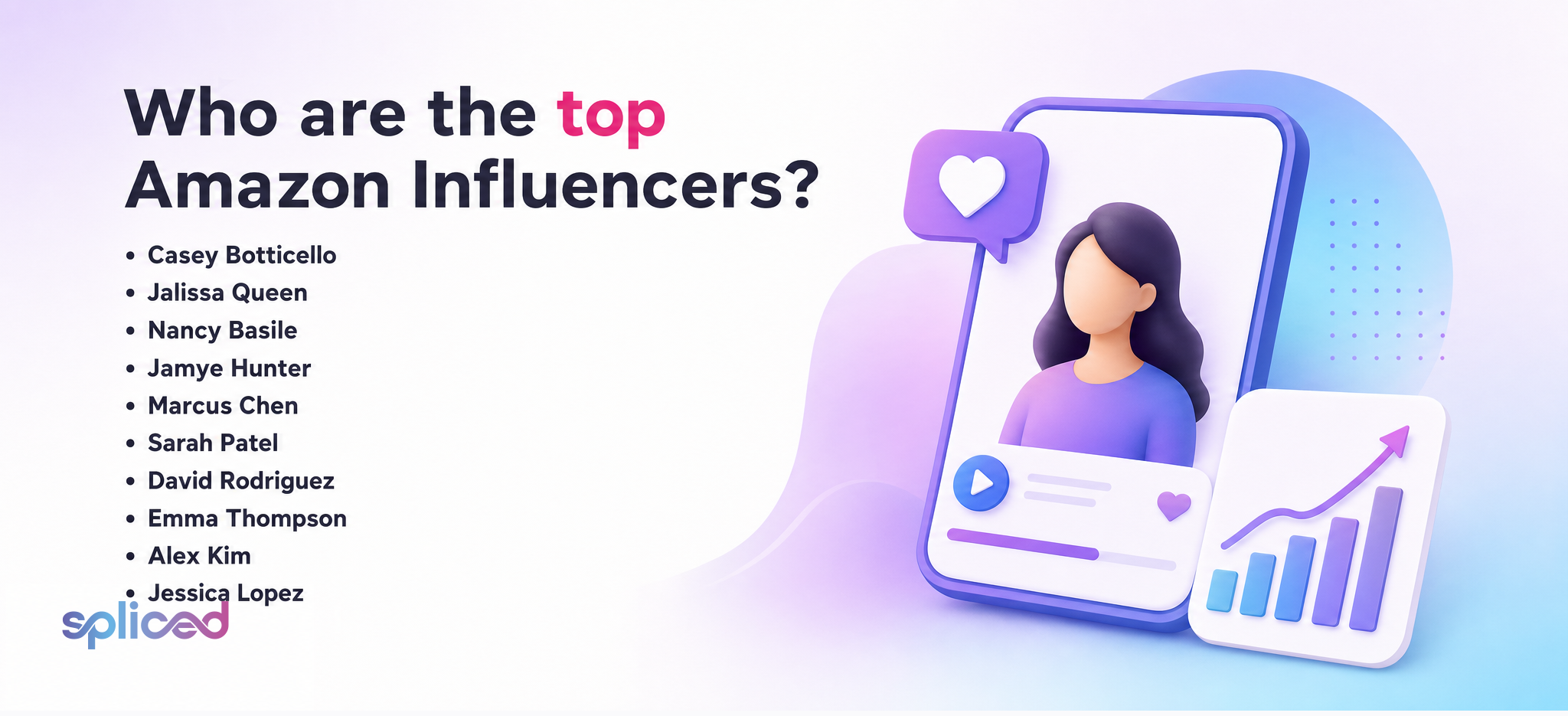
Who are the top Amazon Influencers?
Top Amazon Influencers in 2026 span multiple niches and platforms. These creators have demonstrated sustained audience growth, high engagement rates, and consistent product curation over multiple quarters.
- Casey Botticello: Casey Botticello operates a YouTube-focused Amazon storefront featuring tech and smart home products. His simplified four-step methodology for new influencers has attracted 15,000+ subscribers. Monthly earnings documented at over $2,200 demonstrate consistent performance and audience trust in product recommendations.
- Jalissa Queen: Jalissa Queen maintains a multi-platform presence across Instagram (47K followers), TikTok (32K followers), and YouTube. Her fashion, beauty, and tech reviews generate approximately 8 percent engagement rates. Recent collaborations include Amazon Fashion, Nike, and Photage in 2026.
- Nancy Basile: Nancy Basile’s Media Medusa platform (135K YouTube subscribers) specializes in entertainment, publishing, and lifestyle content. Her printables and curated collections have generated documented revenue exceeding $1,500 monthly. Cross-platform presence on TikTok reaches an additional 28K followers.
- Jamye Hunter: Jamye Hunter focuses on fitness equipment, military gear, and lifestyle products. Based in Chicago with 22K Instagram followers and growing TikTok presence (15K), Jamye documents transparent earnings ranging from $800 to $2,100 monthly depending on seasonal demand.
- Marcus Chen: Marcus Chen emerged in 2026 as a top tech and productivity influencer with 64K YouTube subscribers and 18K TikTok followers. His storefront focuses on workspace optimization and electronics, generating documented sales exceeding $3,500 in peak months. Engagement rate averages 6.2 percent.
- Sarah Patel: Sarah Patel operates a home organization and decluttering niche with 52K Instagram followers and 41K TikTok followers. Her Amazon storefront specializing in storage solutions and minimalist products grosses approximately $1,800 monthly. She actively partners with home goods brands through Spliced.
- David Rodriguez: David Rodriguez focuses on outdoor gear, camping equipment, and survival products. His YouTube channel (38K subscribers) and Instagram (29K followers) target adventurers and outdoor enthusiasts. Monthly earnings average $1,600 with seasonal spikes during summer and holiday periods.
- Emma Thompson: Emma Thompson curates beauty, skincare, and personal wellness products for an audience of 31K on Instagram and 24K on TikTok. Her transparent unboxing videos and honest reviews generate 7.1 percent engagement rates. Documented monthly revenue ranges from $1,200 to $2,400.
- Alex Kim: Alex Kim operates a gaming and electronics-focused storefront attracting 43K YouTube subscribers and 27K TikTok followers. His detailed product comparisons and benchmark testing establish authority in the tech niche. Monthly earnings documented between $1,900 and $3,200.
- Jessica Lopez: Jessica Lopez specializes in baby products, parenting resources, and family lifestyle content with 38K Instagram followers and 35K TikTok followers. Her storefront generated documented revenue of $2,100 in March 2026 during peak baby product season. Engagement rate consistently exceeds 6 percent.
How does Amazon pay Amazon Influencers?
Amazon pays influencers through commission-based revenue from transactions generated by their storefront and referral links. When followers purchase products through an influencer’s curated storefront or affiliate links, Amazon calculates the commission based on the product category, which ranges from 1% to 10%. The influencer receives this commission directly from Amazon, not from product sellers or brand partners.
Influencers earn through two mechanisms in 2026: product purchase commissions from their storefront and the Amazon Bounty Program, which rewards signups for Amazon Prime, Audible, and other Amazon services. Payment occurs monthly when the account balance reaches the minimum threshold and tax information is on file. Influencers can withdraw earnings via direct deposit (minimum $10), Amazon gift cards (minimum $10), or check (minimum $100 plus $15 processing fee). Amazon does not pay based on views, clicks, or impressions alone; only completed purchases and qualifying service signups generate revenue.
How much do Amazon Influencers get paid?
Amazon influencer earnings in 2026 range from $50 to $2,500 monthly for active creators with engaged audiences. Earnings depend directly on transaction volume through storefront referral links and audience size. Micro-influencers (under 50,000 followers) typically earn $50 to $300 monthly, while mid-tier influencers (50,000 to 500,000 followers) earn $300 to $1,500 monthly. Top-tier influencers with 500,000+ followers report earnings between $1,000 and $2,500 monthly. Commission rates vary by product category from 1% to 10%; electronics and home goods average 3 to 5%, while luxury items and subscriptions offer higher rates. Success requires consistent content creation, strategic product curation, and active audience engagement across multiple platforms including TikTok, YouTube, and Instagram. Earnings fluctuate based on seasonal demand, promotional periods, and follower conversion rates.
Do Amazon Influencers get free products?
Amazon influencers receive free products through two channels. First, brand partners send samples directly for product reviews and recommendations on their storefronts and social content. Second, influencers access Amazon’s Vine program, which provides early access to products in exchange for honest reviews. Free product seeding is a common arrangement where brands invest in influencer partnerships to gain authentic exposure. Influencers disclose these arrangements transparently to comply with FTC guidelines and maintain audience trust. In 2026, many influencers combine free product revenue with commission earnings to diversify income; free products provide testing inventory for storefront curation while commissions generate recurring revenue from sales.
What is the difference between Amazon Influencers and Amazon Affiliates?
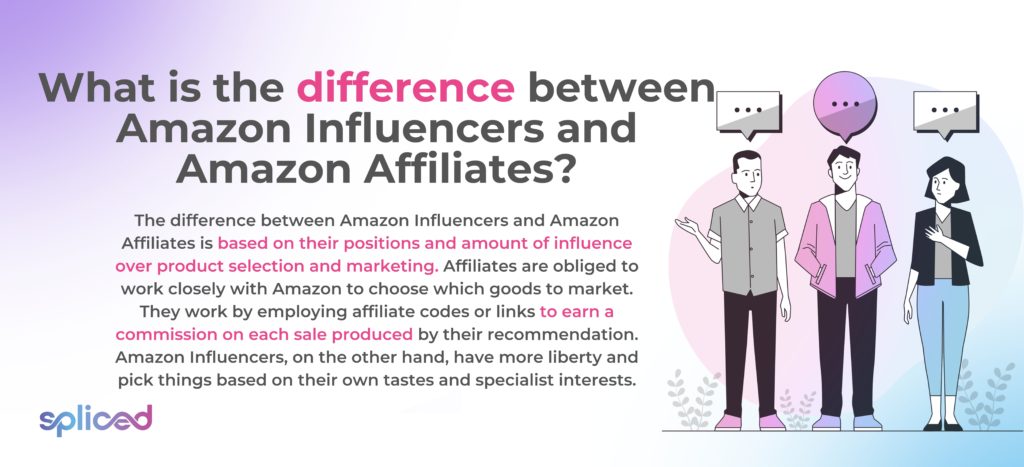
Amazon Influencers and Amazon Affiliates differ in platform access, audience focus, and content requirements. Influencers create custom storefronts within Amazon’s ecosystem, curate product collections, and build personal brands around specific niches. Affiliates promote products through their own websites, blogs, email lists, or social channels without a dedicated Amazon storefront, earning commissions through affiliate links placed in external content. Influencers require minimum follower counts and active social media presence, while affiliates can begin with minimal audience requirements.
Content strategy distinguishes these two roles. Influencers create lifestyle content, reviews, and recommendations that reflect their personal brand and audience preferences. Affiliates focus on driving conversions through strategic link placement, often writing detailed product comparisons, buying guides, or tutorials. Influencers monetize primarily through storefront sales commissions, while affiliates earn through direct product purchase referrals and service signups across multiple Amazon properties.
Both programs use the same underlying commission structure (1% to 10% by product category), but influencers benefit from Amazon’s built-in discovery features and storefront traffic. Affiliates must drive their own traffic through external channels. In 2026, many creators leverage both programs simultaneously; they maintain affiliate links in blog content and email marketing while also running Amazon Influencer storefronts to capture engaged followers in a single curated destination.