Becoming an influencer requires building credibility and trust within a specific niche, then leveraging that authority to shape the beliefs and purchasing decisions of your followers. Influencers develop their authority primarily through consistent, authentic engagement on social media platforms and digital channels where they create specialized content aligned with their expertise. In 2026, influencer marketing has matured into a $40 billion industry, with brands prioritizing creators who demonstrate measurable engagement and audience trust over vanity metrics like follower counts alone.
Influencer careers generate revenue through sponsored posts, affiliate marketing, brand partnerships, product endorsements, and proprietary product lines. To understand the full scope of monetization opportunities available, explore how influencers make money. Long-term success requires adapting to platform algorithm changes, maintaining audience interest through value-driven content, and developing multiple income sources rather than depending on a single revenue stream.
The following 15 tips provide actionable strategies for building influence in 2026, focusing on niche authority, consistent value delivery, and business fundamentals rather than follower count alone. These strategies apply whether you aim to become a nano-influencer with 1,000 to 10,000 followers, a micro-influencer with 10,000 to 100,000 followers, or a larger creator with broader reach. Understanding the distinct characteristics, earning potential, and optimal use cases for types of influencers helps you set realistic growth targets and identify which tier aligns with your current capabilities and niche.
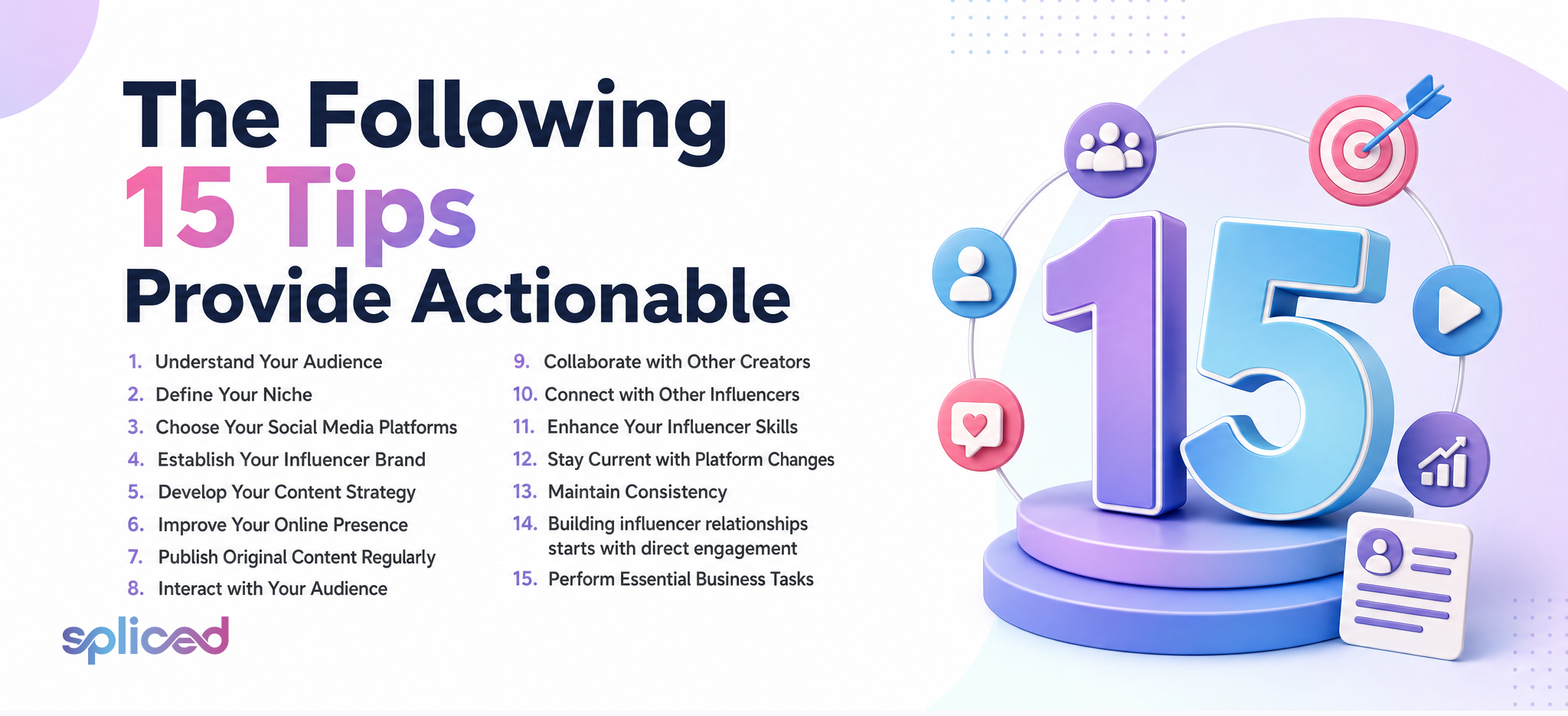
The following 15 tips provide actionable strategies for building influence in 2026, focusing on niche authority, consistent value delivery, and business fundamentals rather than follower count alone.
- Understand Your Audience: Research demographic data, behavioral patterns, and preferences through platform analytics and direct feedback. Creating content that addresses specific audience needs and interests builds loyalty faster than broad, generic posts.
- Define Your Niche: Selecting a focused specialty with lower competition allows you to build deeper authority and attract a more engaged audience. Niche creators report higher engagement rates than generalists across all platforms in 2026.
- Choose Your Social Media Platforms: Match platforms to audience location and content format. LinkedIn hosts underutilized B2B niches with lower competition and higher engagement. TikTok rewards early engagement within the first hour. Instagram remains the top platform for 72% of marketers in 2026.
- Establish Your Influencer Brand: Develop a distinctive visual identity, consistent tone of voice, and clear values. A recognizable brand differentiates you and builds trust with both audiences and potential brand partners.
- Develop Your Content Strategy: Plan content themes, publishing frequency, and engagement methods aligned with your niche and audience. A documented strategy maintains consistency and helps you measure what resonates with followers.
- Improve Your Online Presence: Optimize profile bios and descriptions for searchability. Engage actively across platforms where your audience spends time. Consistent posting and community interaction increase visibility and credibility signals to algorithms.
- Publish Original Content Regularly: Consistent posting keeps you visible in algorithmic feeds. Reply to every comment within the first hour of posting in early growth phases; this signals engagement to platforms and prioritizes your content in followers’ feeds.
- Interact with Your Audience: Respond to comments, messages, and feedback promptly. Direct engagement builds loyalty and provides insights into audience preferences, enabling you to refine content based on real feedback rather than assumptions.
- Collaborate with Other Creators: Partnerships expose you to new audiences and add credibility through association. Choose collaborators whose niche and audience align with yours to maximize mutual benefit.
- Connect with Other Influencers: Build relationships with creators at your tier. Peer networks provide learning opportunities, collaboration possibilities, and shared visibility within your niche.
- Enhance Your Influencer Skills: Improve content production quality, photography, videography, editing, and communication. Higher-quality content increases engagement rates and attracts brand partnerships at better rates.
- Stay Current with Platform Changes: Follow algorithm updates and trend shifts on your chosen platforms. Early adoption of new formats and features gives you visibility advantages before saturation occurs.
- Maintain Consistency: Consistent posting schedules, messaging, and visual identity build predictability and trust. Audiences follow creators they recognize and can rely on.
- Track Key Metrics: Monitor engagement rate, reach, click-through rates, and conversion data using platform analytics. Data-driven iteration identifies what works and guides strategic adjustments faster than intuition alone.
- Build Business Systems: Operate as a business owner, not a hobbyist. Manage contracts, track earnings, set aside taxes, negotiate payment terms, and document partnership agreements. Mature creators build funnels with multiple monetization paths (sponsored content, affiliate links, digital products, courses) to create sustainable income beyond single brand deals.
1. Understand Your Audience
Understanding your audience means identifying their demographics, interests, pain points, and online behavior to create content that resonates with them. This foundational step determines which topics, formats, and messaging will generate engagement and loyalty. Successful influencers in 2026 invest time in audience research through social media analytics, direct surveys, and comment analysis rather than assuming what their followers want.
Audience understanding informs every content decision. When you know your audience’s values, lifestyle, and preferences, you craft material that feels personally relevant to them. This specificity builds trust and increases the likelihood they will take action such as purchasing products, sharing content, or becoming repeat viewers. Influencers who skip this step waste effort creating content that audiences ignore.
The process starts with collecting demographic data such as age, location, and gender alongside psychographic insights like hobbies, values, and aspirations. Social media platforms provide built-in analytics tools that show who engages with your content most consistently. Review which posts receive comments, shares, and saves, then identify patterns in those high-performing pieces. Direct audience engagement through DMs and comments reveals what questions and problems matter most to your followers.
Understanding your audience delivers measurable benefits. Content created with audience insights achieves higher engagement rates, lower follower drop-off, and stronger brand partnerships. Brands pay more for influencers who demonstrate deep knowledge of their audience because it signals the partnership will reach the right buyers. You avoid creating content that alienates followers or damages credibility by misunderstanding what they value.
The challenge is that audience preferences shift and data collection requires ongoing effort. Audience research is not a one-time task completed at the start. You must refresh your understanding quarterly or when major platform algorithm changes occur. Additionally, over-focusing on a single audience segment may blind you to adjacent markets or growth opportunities that emerge over time.
2. Define Your Niche
Defining your niche means choosing a specific topic, industry, or audience segment where you will build authority and create content. A niche is narrow enough to differentiate you from competitors yet broad enough to sustain multiple content ideas and brand partnerships. Successful influencers in 2026 choose niches based on genuine expertise and passion rather than following trends.
A clearly defined niche builds audience loyalty and attracts higher-paying brand deals. When followers know you specialize in a specific area such as sustainable fashion, productivity tools, or B2B software, they return to you as a trusted authority. Brands seek influencers with niche focus because it ensures their message reaches a qualified, interested audience. Nano-influencers with 1,000 to 10,000 followers in a tight niche often negotiate better rates than broader creators with larger but less engaged followings.
Select your niche by assessing your skills, interests, and audience needs. Research competitor influencers in potential niches to identify gaps where you offer something different. Look for intersections between what you know deeply, what you enjoy creating, and what your audience actively searches for. Test niche ideas by posting 10 to 20 pieces of content and measuring which topics generate the highest engagement rates.
A strong niche creates multiple advantages. You spend less time brainstorming because your content themes stay consistent. Audience growth accelerates because followers find you more easily through niche-specific searches and hashtags. Brand partnerships become more valuable because you attract companies selling products directly to your niche. You establish credibility faster by becoming known for depth in one area rather than surface-level content across many topics.
The drawback is that niche selection limits your total addressable audience. If your niche becomes less popular or trends shift away from your content area, growth may stall. Shifting to a new niche after building an audience in your original one creates friction and may cause follower loss. Balance niche specificity with enough flexibility to adapt as your interests evolve or market conditions change.
3. Choose Your Social Media Platforms
Choosing platforms means selecting where to concentrate your content creation effort based on where your audience spends time and which platforms suit your content format. Different platforms serve different audiences and reward different content types. Instagram remains the top platform for visual influencers with 72% of marketers using it in 2026, while TikTok leads for short-form video and younger demographics. LinkedIn has emerged as an underutilized channel for B2B influencers with lower competition and higher engagement in niches such as software, marketing, finance, and recruiting.
Platform selection determines how efficiently you build an audience. Posting identical content across five platforms spreads your effort too thin and underperforms on each one. Instead, identify the 1 to 3 platforms where your target audience is most active and where you can create content consistently. Success on one platform often generates momentum on secondary platforms through cross-promotion and algorithmic discovery.
Research where your audience congregates by examining your competitors and analyzing platform demographics. If your niche skews toward visual storytelling such as fitness or fashion, prioritize Instagram and TikTok. If you create educational content for professionals, LinkedIn deserves primary focus. Test content on a secondary platform to validate audience interest before committing full effort. Track engagement metrics across platforms for 4 to 8 weeks to see where your content performs best relative to platform averages in your niche.
Focused platform strategy delivers concrete advantages. You create higher quality content because you develop platform-specific skills rather than diluting effort. The algorithm favors accounts that post consistently within a platform, so concentrating effort boosts your visibility. You build deeper community relationships because you engage more actively with followers on fewer platforms. Early-hour engagement matters significantly in 2026; replying to comments in the first 60 minutes signals to algorithms that your content sparks conversation and increases its distribution.
The risk is missing audiences on platforms you exclude. Social media trends change and algorithm updates can shift platform viability. Dependence on one platform exposes you to policy changes that damage reach or monetization. Additionally, platform-specific content requires learning each platform’s best practices, which takes time before you see results.
4. Establish Your Influencer Brand
Establishing your influencer brand involves creating a distinctive personal identity that reflects your core values, expertise, and unique perspective within your chosen field. Your brand becomes the lens through which your audience recognizes and remembers you across all platforms. It shapes how you present yourself in partnerships, content creation, and audience interactions.
A strong influencer brand builds credibility and trust with your audience. It increases your recognizability in a saturated digital landscape. Your brand guides content decisions and business choices, ensuring alignment with your core values and long-term objectives.
Building your brand starts with self-reflection to identify what makes you distinctive. Consider your interests, skills, values, and the specific perspective you bring to your niche. Then choose a cohesive visual aesthetic, consistent tone of voice, and recurring content themes that align with your authentic self and resonate with your intended audience. Consistency across platforms creates a unified, recognizable identity that audiences trust.
A well-established brand attracts loyal followers and draws brand partners who share your values. It provides direction for content creation and business decisions, increasing focus and work quality. In 2026, audiences reward authenticity over perfected personas, making genuine brand alignment particularly valuable.
Brand building requires significant time and resources to maintain consistency. Over-specialization into a narrow persona can limit your ability to adapt to trends. Excessive focus on branding sometimes diminishes the authenticity and relatability that audiences seek from creators.
5. Develop Your Content Strategy
Developing your content strategy means planning how you will create, distribute, and promote content that aligns with your goals and engages your target audience. Your strategy outlines what types of content you will produce, how often you will publish, which platforms you will prioritize, and how you will measure success. This roadmap ensures your content serves a clear purpose.
A documented content strategy provides direction and prevents scattered effort. It ensures your content consistently delivers value to your audience while supporting specific objectives such as audience growth, engagement, or monetization. Without strategy, content creation becomes reactive and inefficient.
Start by understanding your audience’s preferences and defining your goals. Identify content categories that resonate with your niche and align with your brand values. Select topics, publishing schedules, and formats (written articles, short-form videos, carousels, reels) that balance audience demand with your production capacity. In 2026, early engagement signals matter; reply to comments within the first hour of posting to improve algorithmic performance. Analyze results regularly to refine your approach.
A clear content plan keeps your audience engaged through consistent, relevant material. It ensures efficient resource allocation toward high-performing formats. Strategic planning builds a recognizable brand voice and strengthens audience trust over time.
Maintaining a content strategy demands sustained effort and creativity. Evolving audience preferences require regular strategy adjustments. Overly rigid planning can stifle spontaneity and authenticity, making content feel formulaic rather than genuine.
6. Improve Your Online Presence
Improving your online presence means taking deliberate steps to enhance your visibility, credibility, and reputation across digital platforms. This includes creating quality content, optimizing your profiles for search and discoverability, engaging actively on social media, monitoring mentions and feedback, and maintaining a professional image across all channels. The goal is to increase traffic, engagement, and conversions with your target audience.
A strong online presence is essential in 2026 because audiences use digital channels to discover, evaluate, and follow creators. Your online presence establishes credibility, builds trust, and positions you competitively within your niche. It enables direct connection with your audience and generates valuable feedback for improvement.
Improve your presence by creating and sharing high-quality, niche-relevant content consistently. Optimize profile information with clear bios and keyword-rich descriptions. Engage actively with your audience through comments, direct messages, and community interactions. Monitor what people say about you and respond professionally to feedback, both positive and critical. In 2026, LinkedIn represents an underused channel for B2B influencers in software, marketing, finance, and recruiting. These niches experience lower competition and higher engagement on LinkedIn than other platforms.
A strong online presence increases visibility and reach. It builds brand awareness and improves audience engagement. It positions you as a credible authority and creates opportunities for partnerships and income generation. Audiences value creators who are responsive and accessible.
Maintaining presence requires time, resources, and sometimes paid promotion. Managing negative feedback and online reputation can be challenging and stressful. Platform algorithms and policies change frequently, making sustained visibility unpredictable and demanding continued adaptation.
7. Publish Original Content Regularly
Publishing original content regularly means generating and sharing fresh material across multiple platforms including blogs, social media, websites, and other digital channels. Content reaches a target audience through various formats such as blog articles, infographics, posts, videos, and podcasts. A consistent publishing schedule ensures the audience consistently receives engaging and valuable material.
Regular content publication builds trustworthiness, authority, and loyal followings within specific niches. Originality and relevance matter most. Maintaining a schedule and producing content that resonates with the target audience proves essential. The strategy delivers useful information, solutions, or entertainment while advancing core objectives.
Consistent publication requires a methodical process spanning research, ideation, creation, editing, and promotion. The sequence begins with audience research into interests and demands, then identification of appropriate topics. Content creation follows, including editing and optimization for both social media and search engines. Written articles, videos, and podcasts all apply. The final step involves posting on relevant platforms and promoting to reach intended audiences.
Regular original content establishes and maintains digital presence, fostering credibility and confidence within specific domains while enabling audience interaction. Consistent publication improves search engine optimization since search engines reward fresh content. Influencers remain visible to audiences, promote loyalty and return visits, and generate higher traffic, conversion rates, and brand awareness.
Benefits include improved search rankings, increased online visibility, enhanced engagement, and loyal audience retention. Monetization occurs through advertising, affiliate marketing, and product sales. High quality content production maintains competitive advantage in markets and niches.
Disadvantages exist when releasing fresh content regularly. Maintaining consistent content flow requires significant time, effort, and creativity. Finding fresh and relevant topics proves difficult, and deadline pressure leads to burnout and quality decline. Not all content resonates with intended audiences. Achieving measurable traffic or conversion increases takes considerable time to materialize.
8. Interact with Your Audience
Interacting with your audience means actively engaging and connecting with individuals and communities interested in your brand, content, or online presence. Interaction occurs across social media, email, blog comments, events, webinars, and other channels. This includes responding to questions and feedback while proactively initiating discussions and fostering community connection.
Key engagement aspects include active conversation participation, timely responses to comments and questions, and providing helpful information. Communication flows bidirectionally, aiming to establish positive relationships, build trust, and cultivate loyalty while gathering insights about audience needs and preferences.
Audience interaction involves monitoring and managing multiple communication channels. The process begins with attentive listening to audience discourse including praise, criticism, questions, and suggestions. Response and conversation follow, addressing concerns, sharing information, or expressing gratitude. The goal establishes constructive digital presence that fosters continuous participation and meaningful discourse.
Engagement creates inclusive environments and establishes genuine connections. Audiences value brands and individuals displaying approachability and responsiveness, building trust and credibility. Effective communication enables feedback collection and content customization aligned with audience requirements. Satisfied and engaged audiences become loyal followers, promoters, and clients, advancing growth and success.
Advantages include developing solid connections and loyalty, gathering insights for improvement, promoting favorable brand image, and increasing engagement levels. Happy audiences generate increased word-of-mouth advertising as they share positive experiences.
Challenges require consideration before implementation. Social media success demands constant and sincere interaction, which proves time-consuming with large engaged followings. Managing negative feedback and meeting all audience expectations present obstacles.
9. Collaborate with Other Brands
Collaborating with other brands means forming strategic alliances and partnerships with complementary companies to execute joint campaigns, co-branded products, or shared events. Successful brand collaborations require identifying partners whose values, audience, and objectives align with your own. The goal is to combine resources, expand market reach, and create mutual value for both parties involved.
Effective brand collaboration depends on clear communication, shared objectives, defined roles, and mutual benefit. Brands succeed when they identify complementary strengths, non-overlapping customer bases, and opportunities to serve each other’s audiences in new ways. In 2026, brands increasingly look for influencers who can deliver measurable impact beyond vanity metrics, making documented collaboration results valuable for future negotiations.
The collaboration process starts with identifying relevant partners and establishing a written agreement outlining expectations, deliverables, timelines, and compensation. Both parties clarify roles, set performance targets, and agree on content approval processes. After launch, tracking metrics such as engagement rate, click-through rate, and conversion data demonstrates the value each partner brings to the table.
Brand collaboration unlocks access to new audiences, increases credibility through association, and generates fresh content ideas. Influencers gain negotiating power when they can prove past collaborations drove measurable sales or engagement lift. Brands benefit from authentic endorsements and access to the influencer’s engaged community. Strategic partnerships reduce individual marketing costs and share risk across multiple parties.
Successful brand collaborations expand audience reach, tap into new customer segments, combine complementary expertise, and create differentiated offerings in the market. Joint efforts produce authentic content that resonates better than isolated promotional campaigns. When both parties benefit equally, repeat collaborations strengthen long-term business relationships.
Brand collaboration risks include misaligned expectations, communication breakdowns, and reputation damage if the partner brand faces controversy. Influencers must vet partners carefully, define success metrics upfront, and maintain the ability to exit if brand values diverge. Over-relying on a single brand partnership creates income vulnerability.
10. Connect with Other Influencers
Connecting with other influencers means building genuine professional relationships with creators who have established audiences and credibility in your niche or adjacent spaces. Influencers with compatible audiences create opportunities for cross-promotion, collaboration, skill-sharing, and mutual growth. Strategic peer relationships amplify reach and strengthen credibility within your community through co-created content, shoutouts, and shared projects.
Successful influencer connections require identifying creators whose audience composition and values align with yours, initiating authentic outreach, and demonstrating mutual value. Networking within the influencer community works best when based on genuine interest, not transactional thinking. The strongest connections emerge from shared passion for the niche, willingness to collaborate generously, and consistent engagement with peers’ content over time.
Building influencer relationships starts with direct engagement: comment meaningfully on peers’ content, attend industry events and creator conferences, and send personalized collaboration proposals via social media or email. Strong connections depend on regular communication, transparency about expectations, and genuine interest in helping peers succeed. The best collaborations happen when both creators actively promote each other and share resources or audience insights.
Influencer connections accelerate visibility within your niche, provide access to proven tactics and insider knowledge, and create partnership opportunities that benefit both parties. Peer relationships offer accountability, motivation during slow growth periods, and emotional support in a competitive environment. Collaborations with established influencers boost credibility with brands evaluating future partnerships, as brands see proof of industry recognition and respect.
Benefits of peer connections include expanded reach to fresh audiences, enhanced credibility through industry association, collaborative content opportunities, and access to mentorship and shared expertise. Joint projects generate content ideas faster, reduce production burden through shared effort, and often outperform solo content in audience response. Supportive influencer networks provide emotional resilience during algorithm changes or audience fluctuations.
Building genuine influencer relationships requires significant time investment and produces results slowly. Not all attempted collaborations succeed due to misaligned audiences, scheduling conflicts, or differing content quality standards. Some influencers view others as competitors rather than collaborators, making authentic peer relationships difficult in oversaturated niches.
11. Enhance Your Influencer Skills and Approach
Enhancing your influencer skills means deliberately improving your ability to create compelling content, communicate authentically, and influence audience behavior across platforms including TikTok, Instagram, LinkedIn, and YouTube. Skill development covers content production quality, storytelling technique, audience psychology, platform-specific optimization, and business acumen. As competition intensifies in 2026, creators who invest in continuous improvement differentiate themselves through superior execution and deeper audience understanding.
Skill enhancement happens through deliberate practice, feedback integration, trend analysis, format experimentation, and measurable performance tracking. Creators who consistently test new content types, study what resonates with their specific audience, and adapt quickly to platform algorithm changes maintain influence longer than those who rely on static approaches. Personal development investments, whether through courses, mentorship, or peer learning, directly correlate with audience growth and brand deal quality.
Practical skill-building includes attending creator workshops and conferences, studying your analytics to identify top-performing content patterns, requesting honest feedback from trusted peers, and deliberately practicing high-value skills like videography, editing, or copywriting. Document what works through A/B testing and iteration. Track metrics such as engagement rate, watch time, and conversion rates to measure skill improvement objectively. Use creator tools like TikTok analytics and Instagram Insights to identify audience preferences and optimize future content accordingly.
Continuous skill improvement maintains relevance as audience preferences shift and platforms evolve. Creators who master emerging formats like short-form video, live streaming, or interactive content command higher brand deal rates and negotiate from stronger positions. Brands increasingly measure creator value through engagement quality, audience trust, and proven ability to drive measurable outcomes. Higher skill levels expand monetization options and increase resilience against platform changes.
Skill development advantages include sustained competitive advantage, deeper audience connection through authentic storytelling, increased influence and negotiating power, and ability to adapt to shifting platform dynamics. Creators known for superior execution and innovation become trusted advisors to their communities and attract higher-value brand partnerships. Mastering business skills like contract negotiation and financial planning strengthens long-term sustainability.
Continuous improvement requires significant time and sometimes financial investment. Experimentation carries risk of temporary performance dips when testing new approaches. Balancing skill-building with content consistency challenges many creators, as failed experiments can temporarily lower engagement or audience confidence.
12. Stay Up-To-Date
Staying up-to-date in 2026 means consistently gathering the most recent information, expertise, and advancements within your niche or industry. Influencers track news, algorithm changes, platform updates, and trending topics to remain relevant and visible. Knowledge becomes outdated quickly in social media, where platform shifts can reshape audience behavior and content performance within weeks.
Lifelong learning requires access to reliable sources and regular knowledge updates. TikTok’s algorithm in 2026 prioritizes early engagement; Instagram emphasizes video content; LinkedIn platforms B2B influencer opportunities with significantly lower competition than consumer-focused channels. Being proactive about industry changes and platform developments directly affects your content reach and earning potential.
Effective strategies include following industry-specific communities, reading platform announcements, attending webinars, reviewing trending content in your niche, and connecting with other creators who share insights. Analyze what content performs best on each platform monthly. Join creator networks where influencers discuss algorithm changes and monetization updates. Subscribe to platform creator blogs and follow competitor content to spot emerging patterns before they become saturated.
Staying current maintains your competitive edge and credibility. Influencers who adapt quickly to platform changes capture early adopter audiences. Those informed about trending topics can create timely content that gains algorithmic boost. Updated knowledge helps you identify new monetization channels, partnership opportunities, and audience preferences before competitors notice them. In 2026, nano-influencers with 2.71 percent Instagram engagement and 15.2 percent TikTok engagement often outperform larger creators who ignore platform shifts.
Benefits include enhanced decision-making, faster adaptation to platform changes, improved problem-solving, and sustained competitive advantage. You become a trusted source within your niche because your content reflects current information and trends. Early adoption of new features such as TikTok Shop integration or LinkedIn creator monetization positions you for partnership deals before saturation occurs.
Challenges include time investment needed to filter signal from noise, information overload causing burnout, and difficulty verifying credible sources. Not all trending content deserves your attention; focus on updates directly relevant to your niche, audience, and platform distribution strategy. Allocate specific times for research rather than constant scrolling to avoid distraction from content creation.
13. Maintain Consistency
Maintaining consistency means publishing content on a regular schedule, using a recognizable visual style, and delivering the same tone and messaging across all platforms. Consistency builds audience trust because followers know when to expect new content and what kind of material you produce. Algorithms on Instagram, TikTok, and YouTube reward consistent posting; gaps in activity reduce your visibility and engagement reach.
Core consistency includes posting frequency, visual branding, voice and messaging, and engagement response time. Set a publishing schedule you can sustain year-round, even when motivation dips. Use the same color palette, font style, and format across content. Respond to comments within the first hour on TikTok to signal engagement to the algorithm. Consistency does not mean rigidity; it means reliable quality and predictable presence.
Establish a content calendar outlining topics, posting dates, and platform-specific formats. Create templates for graphics, captions, and video structures to speed production without losing quality. Use scheduling tools to maintain posting frequency even during busy periods. Document your brand guidelines (colors, fonts, tone) and apply them consistently. Build systems that sustain consistency without requiring constant decision-making or creative effort for basic execution.
Consistency directly builds credibility and audience loyalty. People subscribe to creators they can rely on. Consistent content signals professionalism to brands considering partnerships. Predictable posting patterns encourage algorithm recommendations because platforms reward creators who maintain steady engagement signals. Long-term audience growth comes from consistency over months and years, not viral spikes.
Benefits include increased trust and credibility, improved algorithm performance, higher audience retention, stronger brand identity, and better partnership eligibility. Consistent influencers attract better brand deals because companies know your audience expects regular content and will see sponsored posts. Consistency enables you to measure which content types work best by comparing consistent variables across time.
Challenges include preventing routine from feeling repetitive to your audience, avoiding burnout from rigid schedules, and balancing consistency with the spontaneity that audiences value. Adapt your strategy when audience preferences shift rather than forcing outdated content formats. Build flexibility into your consistency; maintain posting frequency and visual style while refreshing content themes and creative execution seasonally.
14. Monitor Your Progress
Monitoring your progress means tracking specific metrics to measure whether your influencer strategies work. Define clear goals such as 10,000 followers in 6 months or 5 percent engagement rate, collect data on actual performance, and compare results against targets monthly. Progress monitoring reveals which content types, posting times, and strategies generate the strongest audience response and business outcomes.
Essential monitoring includes setting key performance indicators (KPIs) aligned with your goals, gathering data consistently, analyzing trends, and adjusting tactics based on results. Track metrics such as engagement rate, follower growth, click-through rates, conversion rates (for affiliate links or store sales), and audience demographics. Different platforms require different KPIs; TikTok early engagement within the first hour signals algorithmic success, while Instagram Reels measure save rate and share rate.
Create a monthly progress dashboard using platform analytics tools such as Instagram Insights, TikTok Analytics, and YouTube Analytics, or third-party apps. Document which content types generate highest engagement, which posting times reach your audience, and which collaborations drive traffic. Compare quarter-over-quarter growth to spot trends and seasonal patterns. Use tools like Sprout Social or Hootsuite to track metrics across multiple platforms simultaneously. Share data with brand partners to demonstrate ROI from sponsored posts.
Monitoring progress builds accountability and informs better decisions. Data reveals what actually works rather than what feels productive. Early warning signs appear through metrics; declining engagement signals algorithm changes or audience fatigue, allowing time to adjust content before followers drop significantly. Progress tracking proves your value to brands; influencers showing measurable results such as affiliate sales or store traffic negotiate higher fees. In 2026, brands increasingly tie compensation to demonstrated performance rather than follower count alone.
Benefits include accountability, early problem detection, improved decision-making backed by data, ability to optimize strategies for better outcomes, and proof of performance for brand negotiations. Tracking shows you which niches and content styles generate sustainable growth. Progress monitoring helps you celebrate wins and build momentum when growth compounds over time.
Challenges include time spent analyzing data, difficulty determining which metrics matter most, frustration if progress lags behind expectations, and the need for consistency in measurement methodology to compare data accurately over time. Not all metrics correlate with long-term success; high engagement might not convert to revenue. Focus on KPIs directly connected to your business goals rather than vanity metrics.
15. Perform Essential Business Tasks
Performing essential business tasks involves executing fundamental operations necessary for effective business management and growth. These responsibilities span financial management, contract negotiation, tax compliance, customer service operations, marketing execution, and administrative oversight. New influencers in 2026 operate as business entities; managing invoices, tracking payments from brand deals, and documenting affiliate commissions directly affects profitability and legal compliance.
Influencers who transition from content creators to business operators must establish systems for revenue tracking, expense management, and performance analytics. These tasks determine whether influencer income streams compound over time or plateau. Effective business operations include maintaining separate accounting records, honoring contractual obligations with brands, and managing intellectual property rights related to content created.
Setting up business infrastructure requires establishing clear processes for contract review, payment collection, and tax withholding. Many influencers file as self-employed or form LLC structures to protect personal assets and optimize tax treatment. Using tools like accounting software, project management platforms, and legal templates reduces administrative burden while maintaining compliance with state and federal requirements.
The financial stability of an influencer career depends on consistent execution of business fundamentals. Neglecting invoicing, tax planning, or contract terms results in payment delays, legal disputes, or tax penalties that erode earnings. Influencers who treat their work as a professional business rather than a hobby maintain clearer income records, negotiate stronger brand deals, and build sustainable revenue growth.
Advantages of maintaining strong business practices include accurate financial visibility, legal protection, professional credibility with brands, and simplified tax filing. Organized influencers unlock opportunities to scale through multiple revenue streams, reinvest profits into equipment or education, and transition from part-time to full-time creator status.
Challenges include time spent on administrative tasks, ongoing learning about tax regulations, and balancing compliance with creative work. Many new influencers underestimate these demands and experience cash flow problems or missed tax obligations.
What is an Influencer?
An influencer is a person who holds recognized authority, credibility, or relatability within a specific niche or industry and shapes the beliefs, actions, and purchasing decisions of their followers. Influencers maintain engaged audiences across social media platforms, blogs, YouTube, podcasts, and other digital channels. They create and distribute specialized content such as product reviews, tutorials, lifestyle recommendations, and educational material aligned with their niche expertise.
Influencers drive customer behavior and brand perception through authentic relationships with their audience. Brands partner with influencers to reach target demographics through trusted recommendations rather than traditional advertising. In 2026, influencer marketing has matured into a $40 billion industry, with brands prioritizing influencers who demonstrate measurable engagement and audience trust over vanity metrics like follower counts alone.
Evaluating influencer effectiveness requires analyzing engagement rates, audience quality, content relevance, and ability to drive measurable outcomes such as sales or brand awareness. Influencers function as bridges between brands and consumers by delivering personalized, credible recommendations that traditional advertising cannot replicate. Their value is determined not by follower quantity but by audience loyalty, niche authority, and demonstrated influence over purchasing behavior.
What does an Influencer do?
Influencers create and distribute specialized content suited to their niche across multiple platforms including Instagram, TikTok, YouTube, LinkedIn, and blogs. They build engaged communities through consistent, high-quality content and direct interaction with followers. Influencers monetize through sponsored posts from brands, affiliate commissions from product recommendations, and proprietary revenue streams such as digital products or services.
The primary goal is establishing genuine trust with the audience and motivating specific actions such as purchases, trial of services, or advocacy of causes. Influencers achieve this through authentic voice, demonstrated expertise, relatable storytelling, and timely audience engagement. In 2026, successful influencers reply to audience comments within the first hour of posting to signal algorithm-friendly engagement, particularly on TikTok where early interaction boosts content distribution.
Influencers leverage the trust they have built with their audience to drive measurable business outcomes for brands. They serve as strategic partners in commerce campaigns, connecting brand products with consumers who already follow them. By functioning as content creators, community managers, and sales partners simultaneously, influencers create value that traditional advertising channels cannot deliver.
What is the Importance of Influencers in Influencer Marketing?
Influencers are essential to modern marketing strategy because they deliver credible endorsements within trusted communities. The influencer marketing industry reached $24 billion in 2024 and is projected to exceed $40 billion by 2026, reflecting brands’ shift from traditional advertising to creator-driven commerce. Influencers serve as effective intermediaries between brands and precisely targeted audience segments.
Influencers possess established credibility and audience trust within their niches, creating persuasive endorsement opportunities that conventional advertising cannot match. Their recommendations carry weight because audiences perceive them as authentic peers rather than paid marketers. This relatability generates higher engagement rates and stronger conversion outcomes compared to brand-owned content.
Influencers enable granular targeting by niche, audience demographics, and platform preference, allowing brands to reach specific market segments efficiently. They contribute personalized, context-appropriate messaging to campaigns, increasing engagement and memorability. For aspiring influencers, this market growth creates partnership opportunities with brands actively seeking creators in growing niches. Nano-influencers with 1,000 to 10,000 followers generate engagement rates of 2.71 percent on Instagram and 15.2 percent on TikTok, often outperforming larger accounts and securing premium brand partnerships.
How New Influencers Build Creator Value and Monetize
New influencers build creator value by demonstrating measurable engagement, audience loyalty, and ability to drive tangible business outcomes for brands. Unlike vanity metrics based on follower counts, real creator value emerges from engagement rates, audience quality, niche authority, and conversion performance. Brands in 2026 prioritize influencers who can prove their content translates to sales, traffic, or meaningful engagement rather than passive reach.
Building measurable value starts with understanding what brands actually pay for and how they measure return on investment. Brands evaluate influencers through engagement rate (the percentage of followers who interact with content), audience demographics (whether followers match the brand’s target customer), content relevance (alignment between influencer niche and brand products), and conversion ability (demonstrated sales impact through affiliate links or commerce attribution). Nano-influencers averaging 2.71 percent Instagram engagement or 15.2 percent TikTok engagement often command higher per-engagement rates than larger creators because their audiences are more qualified and attentive.
Monetization pathways for new influencers include affiliate marketing (earning commissions when followers purchase through creator links), sponsored content (brands paying for posts featuring their products), brand partnerships (ongoing relationships as official advocates), and owned products (digital courses, merchandise, or community memberships). The most sustainable influencers diversify across all four channels rather than depending on a single income source. Tracking which content drives affiliate sales versus which builds brand awareness helps creators optimize their monetization mix and negotiate stronger rates with brands.
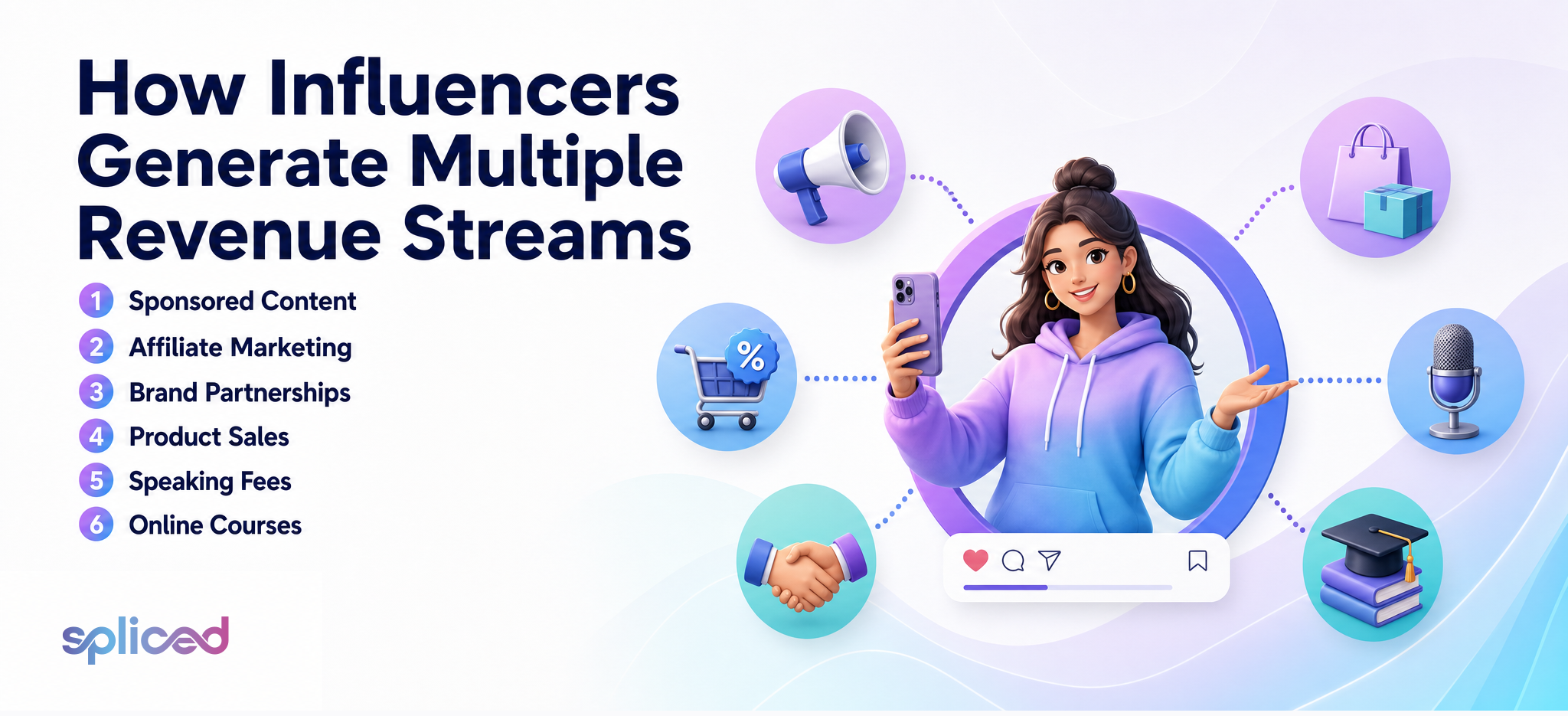
How Influencers Generate Multiple Revenue Streams in 2026
Influencers earn through sponsored content, affiliate marketing, brand partnerships, and product sales. Sponsored content involves brands paying creators to promote products or services in posts or videos. Affiliate marketing pays a percentage commission when audience members purchase through creator links. Brand partnerships are ongoing relationships where influencers become official advocates. Product sales, speaking fees, and online courses provide additional income sources.
Influencer earnings vary widely based on niche, follower count, engagement rate, and negotiation skill. Nano-influencers with 1,000 to 10,000 followers earn $100 to $500 per post in 2026. Micro-influencers with 10,000 to 100,000 followers command $500 to $5,000 per campaign. Mid-tier influencers with 100,000 to 1 million followers charge $5,000 to $50,000. Macro and mega-influencers with over 1 million followers earn $50,000 to $500,000 or more per campaign.
Engagement rate now matters more than follower count in 2026. Nano-influencers average 2.71 percent engagement on Instagram and 15.2 percent on TikTok, often outperforming larger creators. Brands prioritize engaged audiences over raw reach because conversion and sales matter more than impressions. Successful creators diversify income across affiliate programs, sponsorships, and owned products rather than relying on a single revenue source.
Non-monetary benefits supplement creator income. Brands offer free products, travel, event access, and collaboration opportunities that extend career value beyond cash payments. The influencer marketing industry reached $24 billion in 2024 and projects $40 billion by 2026, creating more brand budget for creator partnerships. Creator income ultimately depends on niche demand, audience quality, and the value demonstrated through affiliate links, commerce data, and measurable sales impact.
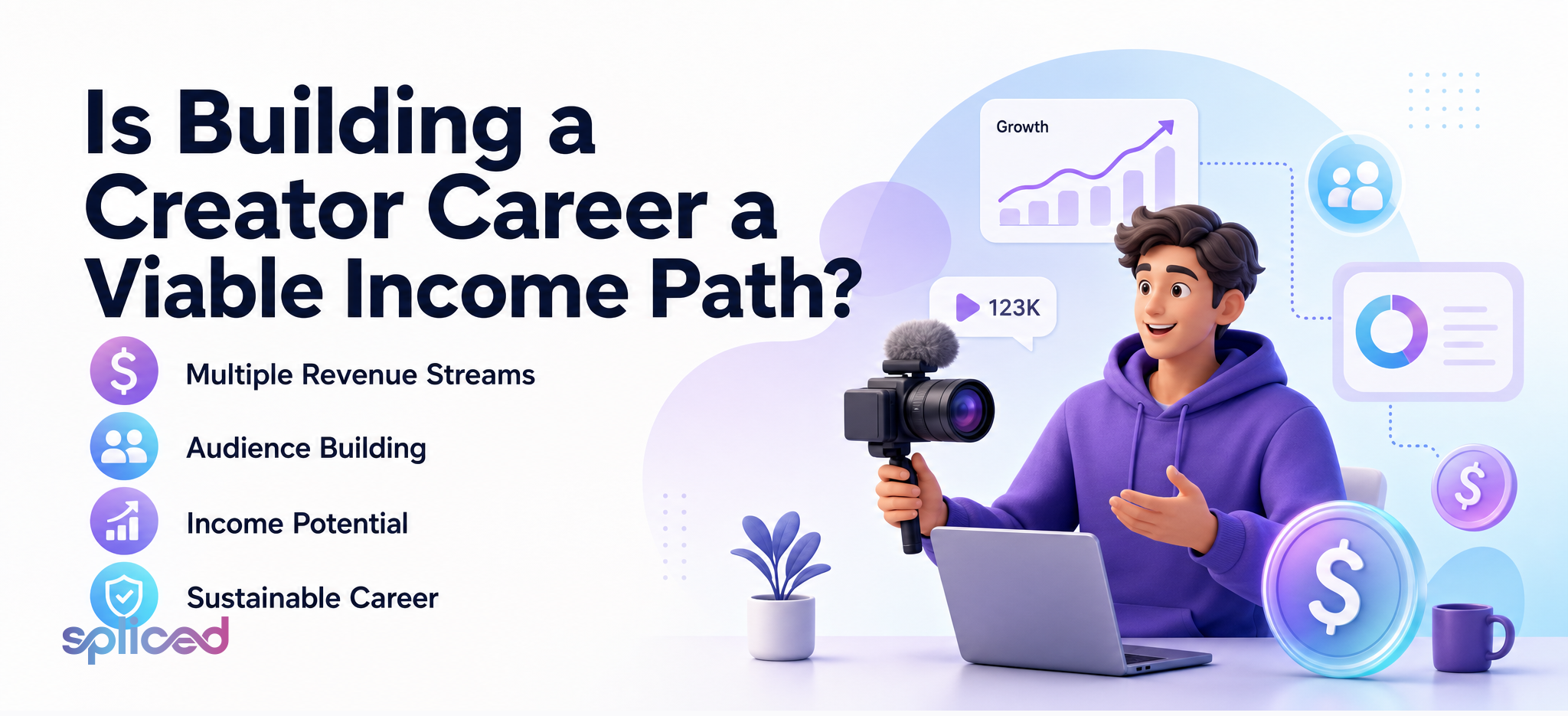
Is Building a Creator Career a Viable Income Path?
Yes, becoming a creator offers genuine income potential for individuals with authentic passion, consistent output, and business discipline. Successful creators earn substantial revenue through multiple channels and maintain flexibility absent in traditional employment. The creator economy expanded significantly through 2025 and continues growing as brands allocate larger budgets to influencer partnerships.
The challenge lies in execution. Building meaningful audience engagement takes sustained effort over months or years. Competition intensifies as more creators enter the market, requiring differentiation and niche focus. Income fluctuates seasonally and depends on platform algorithm changes, brand demand in your niche, and audience retention. Many aspiring creators underestimate the consistency required or fail because they focus on follower vanity metrics instead of engagement and sales impact.
Creator careers work best as business operations, not hobbies. Successful creators treat their work like entrepreneurs: they track performance metrics, build systems, manage finances conservatively, and adapt to platform changes. They understand that brands pay for results (sales, conversions, traffic), not just visibility. Financial stability requires income diversification, expense management, and long-term planning for income volatility. For creators willing to work strategically and think like CEOs, building a sustainable income is achievable in 2026.
Is Being an Influencer a Sustainable Career?
Yes, being an influencer qualifies as a sustainable career when built on multiple revenue streams and audience loyalty. Long-term viability in 2026 depends on building a dedicated following, diversifying income sources, and adapting to platform algorithm changes.
Successful influencers maintain sustainability by establishing affiliate partnerships, securing brand deals, and creating products or services. They retain influence over time by adjusting content to reflect audience preferences and industry trends. The influencer market remains competitive; many creators fail to reach the follower thresholds or engagement rates required for income stability.
Sustainability depends directly on financial planning. Influencers operate as business owners managing variable income, contract negotiations, and tax obligations. Revenue fluctuates seasonally and with algorithm changes, requiring emergency savings and expense discipline. Successful long-term influencers treat their work as an operating business with multiple revenue channels rather than relying on a single sponsorship or platform.
In 2026, micro-influencers with 10,000 to 100,000 followers report more consistent income stability than newer creators because they have established relationships with brands and lower audience volatility. Diversification beyond sponsored posts—such as affiliate commissions, digital products, consulting, and community memberships—increases the likelihood of career sustainability.
Are Influencers the Same as Social Media Influencers?
Influencers and social media influencers are related but distinct. All social media influencers qualify as influencers; not all influencers work primarily through social media platforms.
Influencers hold credibility and reach across multiple channels including blogs, YouTube, TikTok, Instagram, LinkedIn, podcasts, newsletters, and in-person speaking. They influence audience opinions through diverse content formats and platforms. Social media influencers concentrate their presence and audience interaction on platforms such as TikTok, Instagram, YouTube, and Twitter, using these as their primary communication channels.
In 2026, the distinction matters for brand partnerships. A business executive with 50,000 LinkedIn followers operates as an influencer in B2B spaces; they may have minimal social media presence elsewhere. A lifestyle creator with 200,000 TikTok followers functions as a social media influencer. The term influencer encompasses broader reach and credibility, while social media influencer specifies platform dependency.
How Long Does It Take for Someone to Become an Influencer?
Timeline to influencer status varies widely based on niche competition, content quality, posting consistency, and audience engagement strategy. Building a sizable following typically requires 6 to 24 months of consistent content production, though some creators reach 10,000 followers in 3 to 6 months.
Less saturated niches like B2B software, finance, or recruiting on LinkedIn show faster growth because competition from established influencers is lower. Highly competitive niches such as fitness, beauty, or general lifestyle require longer timelines and more distinctive content. Early engagement matters significantly; creators who reply to every comment within the first hour of posting see faster algorithm visibility on TikTok and Instagram in 2026.
Growth accelerates through collaborations with creators of similar size, strategic hashtag use, platform-specific optimization, and audience research. Nano-influencers (1,000 to 10,000 followers) can monetize within 6 to 12 months through affiliate marketing and micro-brand deals. Micro-influencers (10,000 to 100,000 followers) typically require 12 to 36 months to establish consistent brand partnership income.
Can Anyone Become an Influencer?
Anyone can become an influencer, but success depends on commitment, content quality, niche selection, and audience connection. There is no educational requirement, startup cost barrier, or credential threshold to begin building influence in a specific field or topic.
Success factors include choosing a niche aligned with genuine expertise or passion, producing original and valuable content consistently, engaging authentically with followers, and adapting to platform algorithm changes. Standing out requires either deep specialization, unique perspective, exceptional production quality, or authentic personality that resonates with a specific audience segment.
The practical barriers are time investment and sustained effort through initial growth phases when follower counts are small and engagement feels slow. Many aspiring creators abandon their channels within 3 to 6 months before establishing momentum. Realistic expectations, patience through early phases, and willingness to learn platform mechanics increase the probability of reaching influencer status.
What Should Be the Motivation to Become an Influencer?
Sustainable influencer careers are built on intrinsic motivation aligned with a specific field, topic, or audience need. The strongest motivation combines genuine passion for the subject, desire to help or educate an audience, and authentic personal interest in building community around that topic.
Successful influencers in 2026 report that their primary drivers include sharing expertise they have developed, creating content around problems they have solved personally, educating others in underserved niches, and building communities of like-minded individuals. Revenue follows from authentic audience loyalty; creators who prioritize follower counts or sponsorship income over genuine connection typically experience burnout and audience churn.
Secondary motivations include professional credibility building, brand positioning in a B2B or specialized field, creative expression, and financial income. These serve as reinforcement once an audience is established. The foundational motivation must answer why this specific creator and this specific topic matter to an audience that could choose infinite other content sources. Authenticity and purpose are non-negotiable for building the trust required for sustainable influence.
Why is Being an Influencer So Popular?
Being an influencer is popular in 2026 because it offers creative expression, financial opportunity, and direct audience connection. The influencer marketing industry reached $24 billion in 2024 and is projected to hit $40 billion by 2026, making it an established career path rather than a passing trend.
Influencers gain flexibility and autonomy unavailable in traditional employment. They build personal brands, control their content direction, and monetize through sponsored partnerships, affiliate commissions, and product sales. Unlike corporate jobs, influencer work allows creators to work on topics they genuinely care about and build communities around shared interests.
The role provides measurable impact. Influencers see direct feedback through engagement metrics, comments, and sales attribution. Many find satisfaction in guiding their audience toward better purchasing decisions or supporting causes they believe in. The combination of creative freedom, income potential, and meaningful audience relationships makes influencing an appealing alternative to conventional careers.