
Macro-influencers represent one of the most visible and powerful segments of the influencer marketing ecosystem, commanding audiences that typically range from 100,000 to 1 million followers across platforms like TikTok, Instagram, YouTube, and Amazon Live. These content creators have transcended niche status and established themselves as recognizable public figures within their industries, whether in fashion, fitness, technology, beauty, or lifestyle categories. For brands operating on platforms like Amazon and TikTok Shop, macro-influencers offer the potential to reach massive audiences, build credibility through association, and drive significant conversion volume through sponsored content and affiliate campaigns.
The role of macro-influencers in modern influencer marketing has evolved substantially as the creator economy has matured. Unlike smaller creators who thrive on authenticity and micro-community engagement, macro-influencers operate at the intersection of celebrity culture and digital content creation. They possess professional production capabilities, established brand partnerships, media training, and sophisticated audience analytics. This distinction matters significantly when planning campaigns for e-commerce brands, as macro-influencers bring production quality and reach that can amplify product launches, build brand awareness at scale, and establish trust with mainstream consumer segments.
Understanding when and how to deploy macro-influencers requires clear knowledge of their definition, structural role in campaign architecture, practical recruitment strategies, and measurable benefits. This guide equips brands with actionable frameworks for identifying the right macro-influencers, structuring partnerships effectively, and integrating them into broader marketing campaigns on Amazon and TikTok Shop.
What Are Macro-Influencers: Definition and Core Characteristics
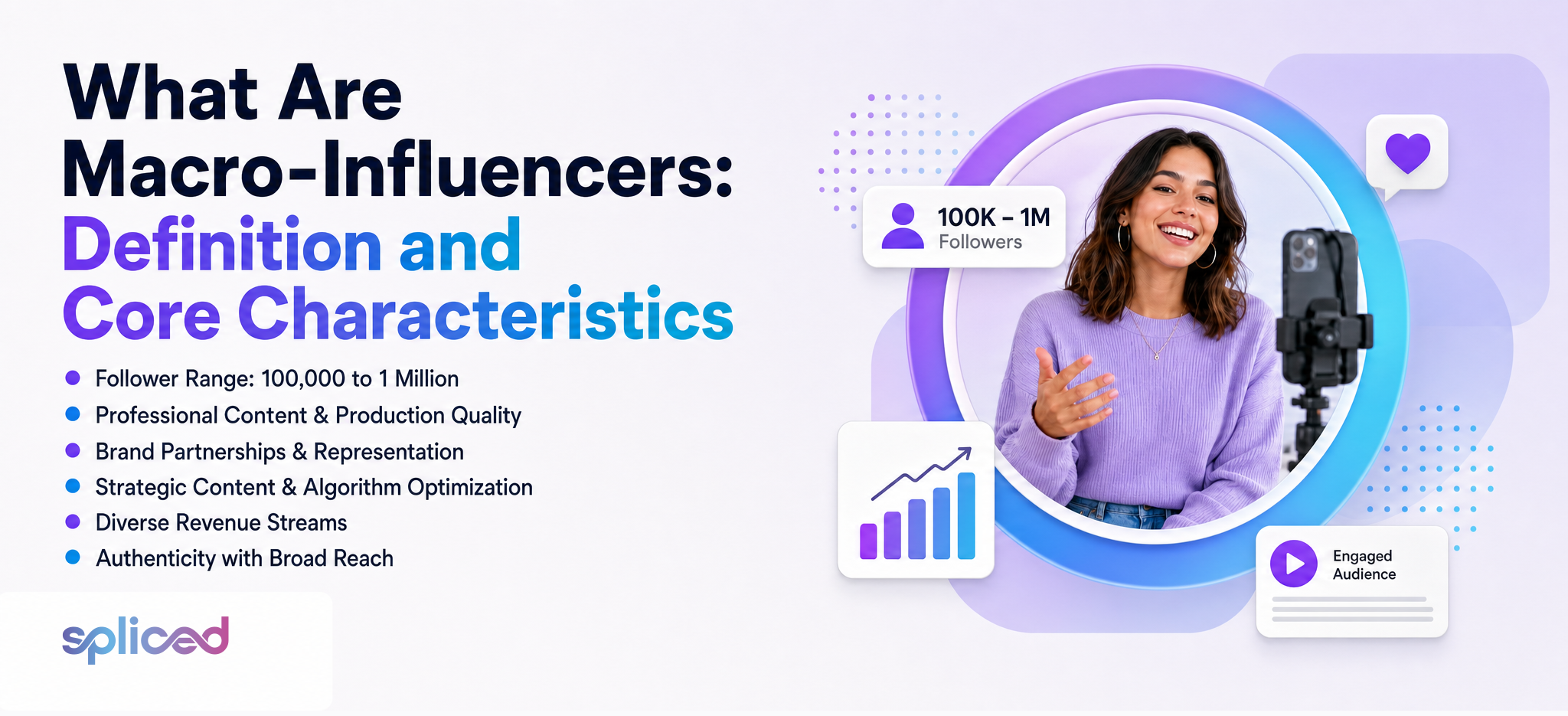
Macro-influencers are content creators with follower counts typically ranging from 100,000 to 1 million across social media platforms. This follower range places them above mid-tier influencers but below celebrity tiers, creating a unique positioning that combines significant reach with relative accessibility for brand partnerships. The definition is not absolute—platform differences, engagement rates, and audience quality all factor into whether a creator qualifies as truly “macro,” but the 100,000+ follower threshold serves as the industry standard benchmark.
The core characteristics of macro-influencers extend far beyond follower counts. These creators typically possess professional-grade production equipment, post with consistent schedules, maintain polished visual aesthetics, and have established relationships with brands and PR agencies. They often employ managers or representatives who handle brand negotiations, contract terms, and campaign logistics. Their content is strategically designed for maximum reach and shareability, frequently incorporating trending sounds, hashtags, and formats optimized for algorithmic distribution. Many macro-influencers have diversified income streams, including brand sponsorships, affiliate commissions, digital products, merchandise lines, and subscription services.
A critical distinction exists between macro-influencers and celebrities. While both command large audiences, macro-influencers typically built their followings through consistent content creation on social platforms rather than through traditional media exposure. This origin story matters because audiences often perceive macro-influencers as more accessible and relatable than traditional celebrities, even though their production values rival or exceed professional media standards. For brands, this positioning creates a sweet spot: the reach and polish of celebrity endorsement combined with the perceived authenticity and creator credibility that built their platforms.
Follower Range, Engagement Rates, and Performance Metrics
Macro-influencers occupy the 100,000 to 1,000,000 follower range, but this metric alone does not determine campaign success. Engagement rate—the percentage of followers who actively interact with content through likes, comments, shares, and link clicks—varies significantly among macro-influencers. Industry standards suggest macro-influencers typically achieve 1–3% engagement rates, though creators in highly engaged niches may exceed 5%, while others may fall below 1%. This variance underscores why follower count alone fails as a performance predictor.
Several other metrics determine macro-influencer effectiveness for specific campaigns. Reach per post indicates the total number of unique users exposed to content, which may substantially exceed follower counts due to algorithmic distribution and resharing. Impression count tracks total content views regardless of uniqueness. Click-through rate (CTR) measures how many engaged users click affiliate links or discount codes provided in captions, critical for evaluating conversion potential on Amazon and TikTok Shop. Video completion rate (VCR) indicates what percentage of users watch entire videos, essential for assessing content resonance on short-form video platforms where skipping is frictionless.
Audience demographics and location provide another essential metric layer. A macro-influencer with 500,000 followers may be entirely irrelevant if their audience skews to a geographic region outside the brand’s target market or demographic profile misaligns with product category. For US-based brands, identifying macro-influencers whose audiences are predominantly United States-based prevents spending budget reaching audiences unable to purchase on Amazon or TikTok Shop. Audience composition by age, gender, income level, and interest categories should align with brand target customer profiles.
Authenticity metrics assess how aligned an influencer’s existing brand partnerships and content themes are with potential new sponsorships. Macro-influencers who constantly promote disparate product categories signal lower audience trust in their recommendations, as followers perceive partnerships as purely transactional. Conversely, influencers who carefully curate partnerships within logical niches maintain perceived authenticity and likely drive better conversion rates despite potentially lower raw reach.
How Macro-Influencers Differ From Other Influencer Tiers
The influencer marketing landscape comprises distinct tiers, each with unique characteristics, audience dynamics, and campaign economics. Understanding these differences enables brands to deploy the right influencer tier for specific objectives. types of influencer marketing campaigns and their strategic applications are detailed in 5 Types of Influencers in 2026: Tiers, Rates, and When to Use Each provides detailed comparison frameworks, but macro-influencers occupy a specific strategic position worth examining.
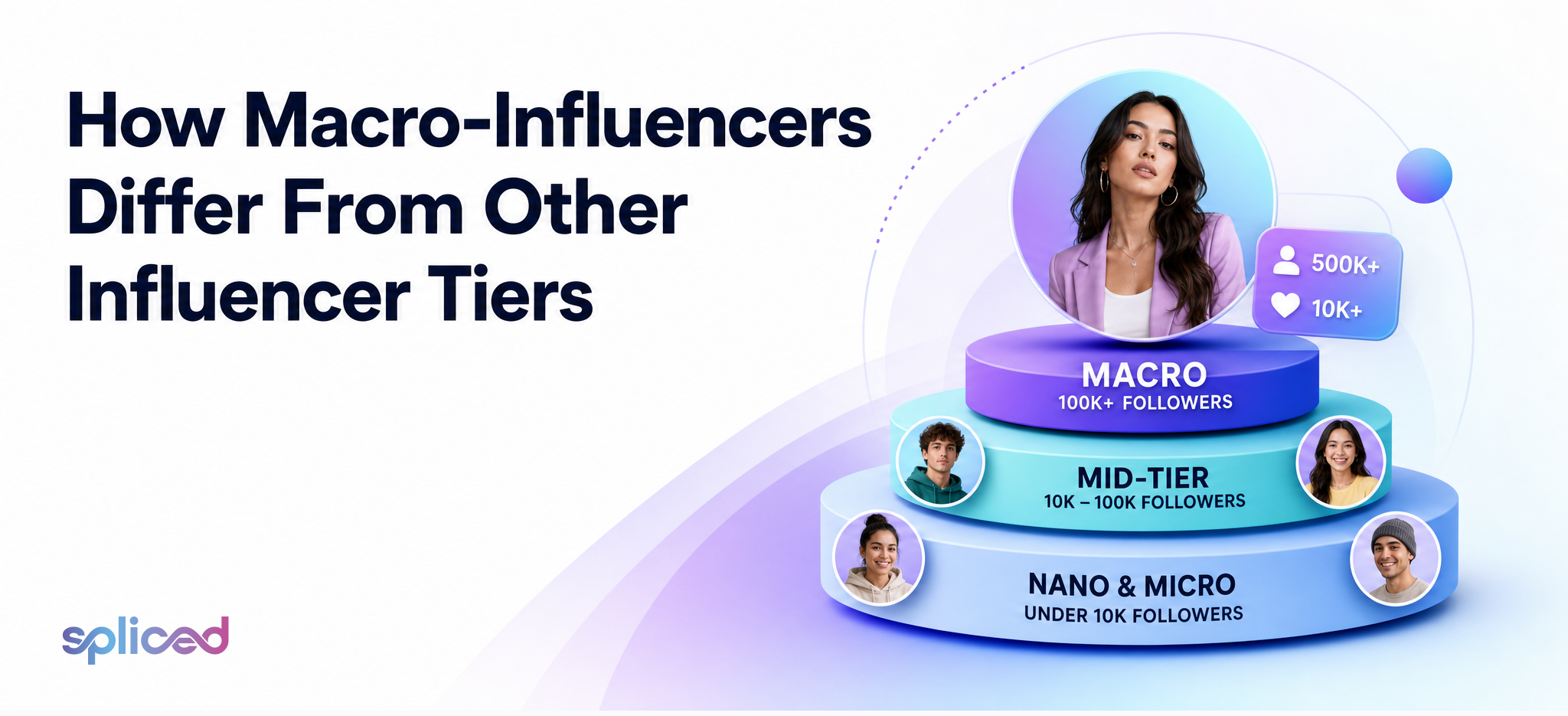
Nano-influencers and micro-influencers (categories covered in detail in Nano-Influencers: What Does It Mean, How To Find Them, and Who Are They and micro-influencer marketing guide) operate with follower bases under 100,000. Their primary advantage lies in exceptional audience engagement, niche authority, and perceived authenticity. These smaller creators often respond to brand partnership requests directly, negotiate rates flexibly, and maintain conversational relationships with followers who perceive them as peers rather than celebrities. For affiliate marketing campaigns on Amazon, micro and nano-influencers frequently achieve higher conversion rates relative to budget spend because their recommendations carry peer-level weight.
Mid-tier influencers, examined thoroughly in Mid-Tier Influencers: Definition, Guide, Benefits, and Downsides, bridge the gap between micro and macro categories, typically commanding 10,000–100,000 followers. This tier combines meaningful reach with substantial engagement rates and remains accessible for budget-conscious brands. Mid-tier influencers occupy a strategic middle ground where production quality exceeds micro-influencers but costs remain manageable and audience engagement typically exceeds macro-influencer percentages.
Macro-influencers sacrifice some engagement rate percentage in exchange for absolute reach volume. A macro-influencer with 500,000 followers and 2% engagement rate generates 10,000 engagements per post. A micro-influencer with 50,000 followers and 8% engagement rate generates only 4,000 engagements. For brand awareness campaigns targeting maximum impressions, macro-influencers deliver unmatched scale. For conversion-focused campaigns where engagement quality matters more than raw numbers, smaller influencer tiers often outperform.
Cost structures differ dramatically across tiers. Nano and micro-influencers may accept $100–$1,000 partnerships, while mid-tier creators typically charge $1,000–$10,000. Macro-influencers command $5,000–$50,000+ per post depending on platform, niche, and audience size. Celebrity influencers with 1M+ followers often charge $50,000–$500,000+. These cost multipliers must be justified by proportional reach expansion and conversion contribution.
The Role of Macro-Influencers in Modern Influencer Marketing Strategies
Macro-influencers serve distinct strategic functions within comprehensive influencer marketing campaigns. Understanding these roles prevents brands from treating macro-influencers as simply “bigger versions” of micro-influencers, leading to ineffective deployment and poor return on investment.
Brand awareness and reach represent the primary strategic role for macro-influencers. When a brand launches a new product or enters new market segments, macro-influencer partnerships expose the offering to audience sizes that traditional advertising would require substantial media budgets to achieve. A single macro-influencer post can generate millions of impressions, creating awareness among potential customers who have never encountered the brand. For Amazon product launches, macro-influencer posts can dramatically increase search volume, product page traffic, and new customer acquisition. This awareness-building role is particularly valuable for emerging brands lacking established market presence.
Credibility and third-party validation constitute another critical macro-influencer function. When a well-established macro-influencer publicly endorses a product, audiences perceive this as external validation of quality and value. This credibility transfer is especially potent for categories where consumer trust is high-stakes, such as health, fitness, skincare, or technology. A macro-influencer’s endorsement can overcome skepticism and reduce purchase friction, functioning as a virtual seal of approval.
Content production and professional polish represent a practical operational role. Macro-influencers produce high-quality video content optimized for platform algorithms, with professional cinematography, editing, trending audio, and strategic caption optimization. Brands can leverage this content across owned channels, repurposing macro-influencer videos in paid social campaigns, email marketing, and website hero sections. The production value exceeds what most brands could generate internally at equivalent cost per content piece.
Influencer marketing stratification is a sophisticated tactic where brands layer multiple influencer tiers into coordinated campaigns. Macro-influencers handle top-of-funnel awareness, mid-tier influencers drive engagement and consideration, and micro-influencers close conversions through perceived peer recommendations. This orchestrated approach maximizes reach while maintaining engagement quality, a strategic principle detailed in 11 Proven Influencer Marketing Strategies for 2026.
Identifying and Recruiting Macro-Influencers: Practical Approaches
Recruiting macro-influencers requires different methodologies than smaller creators. Direct outreach through DMs often goes unread because macro-influencers receive dozens of partnership requests daily. Professional talent management, influencer marketplaces, and intermediary agencies have become standard recruitment channels. 8 Ways to Find Influencers Effectively outlines comprehensive discovery methods, but macro-influencer recruitment warrants specific focus.
Influencer marketplaces and platforms specializing in creator discovery provide database access to macro-influencers with verified follower counts, engagement metrics, audience demographics, and historical brand partnerships. These platforms, discussed in detail in 17 Best Influencer Marketing Platforms for 2026 Campaigns, streamline identification of relevant macro-influencers within specific niches and audience segments. Most premium platforms allow filtering by follower range, engagement thresholds, audience location, and content category, enabling precise targeting of macro-influencers most likely to align with brand objectives.
Agency partnerships represent another primary macro-influencer recruitment channel. Influencer marketing agencies maintain existing relationships with macro-creators, negotiate rates on behalf of brands, and manage campaign execution. While agency partnerships increase per-partnership costs due to service fees, they provide institutional knowledge of creator preferences, contract terms, and performance expectations. Agencies also serve as intermediaries that buffer negotiations, reducing potential friction.
Direct talent representation through managers or agents specializing in specific influencers offers a direct channel when brands identify particular macro-influencers as ideal partners. Manager contact information is often listed in influencer bios or discoverable through LinkedIn. Direct manager engagement bypasses intermediary costs but requires brands to negotiate from scratch without agency support.
Social listening and organic discovery identify macro-influencers already discussing or recommending relevant product categories. Tools monitoring brand mentions, hashtag conversations, and category discussions surface creators already talking about product types your brand offers. These organically engaged macro-influencers are potentially more authentic partners than those purely motivated by compensation, though authenticity must be verified rather than assumed.
Vetting macro-influencers before engagement demands rigorous evaluation beyond follower metrics. Examining recent content identifies whether creative direction aligns with brand voice and aesthetic. Reviewing historical brand partnerships reveals any conflicting endorsements, concerning associations, or patterns of generic promotions suggesting low selectivity. Analyzing audience comments and sentiment from recent posts indicates audience perception and engagement quality. Checking for verified audience data through third-party analytics platforms confirms that followers are real accounts from target geographies rather than bot networks inflating follower counts artificially.
Partnership Structure and Compensation Models
Macro-influencer compensation varies based on deliverable type, engagement guarantees, exclusivity terms, and campaign duration. Flat-fee sponsorships represent the most common model, where brands pay fixed amounts ($5,000–$50,000+ per post) regardless of performance metrics. This model provides budget certainty but shifts performance risk entirely to the brand. Flat-fee arrangements should specify exact deliverables: number of posts, content format, posting timeline, caption requirements, hashtag inclusion, and minimum post duration for video content.
Performance-based compensation ties macro-influencer payment to measurable results like affiliate commissions, click-through rates on provided links, or product sales attributable to influencer promotion. This model aligns influencer incentives with brand outcomes and justifies larger budgets when results materialize. However, macro-influencers with established income streams often resist pure performance-based models, preferring guaranteed compensation with potential performance bonuses.
Hybrid models combining guaranteed base payments with performance bonuses offer compromise positions. A macro-influencer might receive $10,000 guaranteed for content creation plus 5–10% commission on attributed sales. This structure preserves budget predictability while incentivizing promotional effort and authentic recommendation.
Product seeding provides free products to macro-influencers in exchange for potential organic promotion. While lower-cost than paid partnerships, product seeding rarely guarantees content creation or posting timeline. Additionally, audiences may perceive unpaid promotions as inauthentic commercial activity, potentially damaging influencer credibility. Product seeding is most effective as a no-expectations gesture to influential figures already interested in product categories, rather than as primary campaign mechanism.
Exclusivity clauses in macro-influencer partnerships prevent influencers from promoting competing brands during contracted periods. Broader exclusivity windows command premium rates but may be unreasonable for macro-influencers whose diverse brand partnerships comprise significant income. More realistic exclusivity clauses prevent promotion of direct competitors within narrow product categories rather than entire industries.
Contract terms should specify content approval processes, revision rights, usage rights for repurposed content, minimum posting timelines, and early termination conditions. Macro-influencers with professional representation expect formalized contracts protecting both parties rather than informal agreements via email or DM. Establishing clear expectations prevents disputes and enables professional partnership scaling.
Macro-Influencers for Amazon Product Launches and Sales
Amazon-focused brands derive specific value from macro-influencer partnerships structured around product discovery and conversion. How to Become an Amazon Influencer in 2026: Step-by-Step Guide outlines influencer pathway opportunities, and Launching Amazon Products: Effective Influencer Strategies for 2026 details product launch strategies, both of which intersect with macro-influencer deployment.
Macro-influencers with established Amazon storefronts (described in How to Create Amazon Storefront as Influencer in 2026) provide direct conversion pathways. When these creators promote products through their storefronts or direct affiliate links, attribution becomes clear and affiliate commissions flow automatically. Brands should verify that target macro-influencers maintain active, organized storefronts rather than abandoned accounts, as storefront quality reflects on brand presentation.
Affiliate commission structures work particularly well with macro-influencers for Amazon campaigns. Rather than fixed sponsorship fees, brands can offer 10–20% affiliate commissions on Amazon sales attributed through influencer links. This approach scales with performance and often costs brands less than flat-fee sponsorships while ensuring influencers benefit from driving actual sales. For products with high margin potential, affiliate partnerships justify significant promotional effort from macro-influencers motivated by commission potential.
Product integration within existing macro-influencer content creates authentic promotional context. Rather than dedicated sponsored posts, products appear naturally within haul videos, lifestyle content, or category reviews. This integration approach maintains audience trust by avoiding perception of purely transactional promotion. However, it requires macro-influencers with content calendars and production schedules accommodating product inclusion, often necessitating longer lead times and early product seeding.
TikTok Shop considerations parallel but diverge from Amazon strategies. TikTok Shop’s short-form video focus and live shopping capabilities create unique macro-influencer opportunities. Live Shopping: What is it, How it Works, and Components explores this modality, which macro-influencers can execute effectively to drive conversions during contained time windows.
Benefits and Advantages of Macro-Influencer Partnerships
Macro-influencers deliver measurable benefits that justify premium partnership costs when deployed strategically. Understanding these advantages enables brands to evaluate whether macro-influencer investment aligns with specific campaign objectives.
Unmatched reach represents the primary macro-influencer advantage. A single macro-influencer post reaches audiences comparable to six-figure paid social media budgets. For brand awareness campaigns requiring rapid market presence establishment, macro-influencers compress timelines and achieve scale impossible through micro-influencer aggregation. While ten micro-influencers might collectively reach 500,000 people, a single macro-influencer with equivalent followers delivers the same reach with unified brand messaging and coordinated timing.
Professional content production creates lasting brand assets. Macro-influencers produce polished video and still content repurposable across owned channels, paid campaigns, and website presentations. Brands can license this content for extended use, multiplying value beyond the original influencer post. This secondary content utility often justifies macro-influencer costs that appear excessive when calculating ROI based solely on direct influencer post performance.
Credibility transfer and social proof operate powerfully when macro-influencers with established authority recommend products. Audiences perceive endorsements from trusted creators as independent validation rather than transactional advertising. This credibility boost is particularly valuable for new brands or products entering unfamiliar categories, where consumer skepticism is highest. A macro-influencer endorsement can be worth months of owned-channel brand building.
Media amplification extends macro-influencer reach beyond organic followers. Journalists, bloggers, and other media professionals monitor macro-influencers for story ideas and cultural trends. Macro-influencer posts frequently generate secondary press coverage, multiplying initial reach. Products promoted by macro-influencers often trend on social platforms, generating algorithm-driven visibility beyond paid reach.
Professional relationship management reduces friction and improves campaign execution. Macro-influencers with agents and managers have established communication protocols, contract templates, and performance standards. This professionalism ensures campaigns run smoothly, deliverables meet specifications, and disputes are resolved through established channels. Compared to micro-influencers who may be learning creator business fundamentals, macro-influencers bring institutional knowledge reducing coordination overhead.
Performance consistency and reliability result from macro-influencers’ dependence on brand partnerships for income. Unlike smaller creators balancing influencer work with day jobs, macro-influencers are professional content creators whose livelihoods depend on reliable performance and brand satisfaction. This incentive structure drives on-time delivery, honest audience metrics, and responsiveness to brief requirements.
Limitations, Challenges, and Strategic Considerations
While macro-influencers offer substantial benefits, strategic limitations and challenges require careful consideration to avoid misspending budgets on ineffective partnerships.
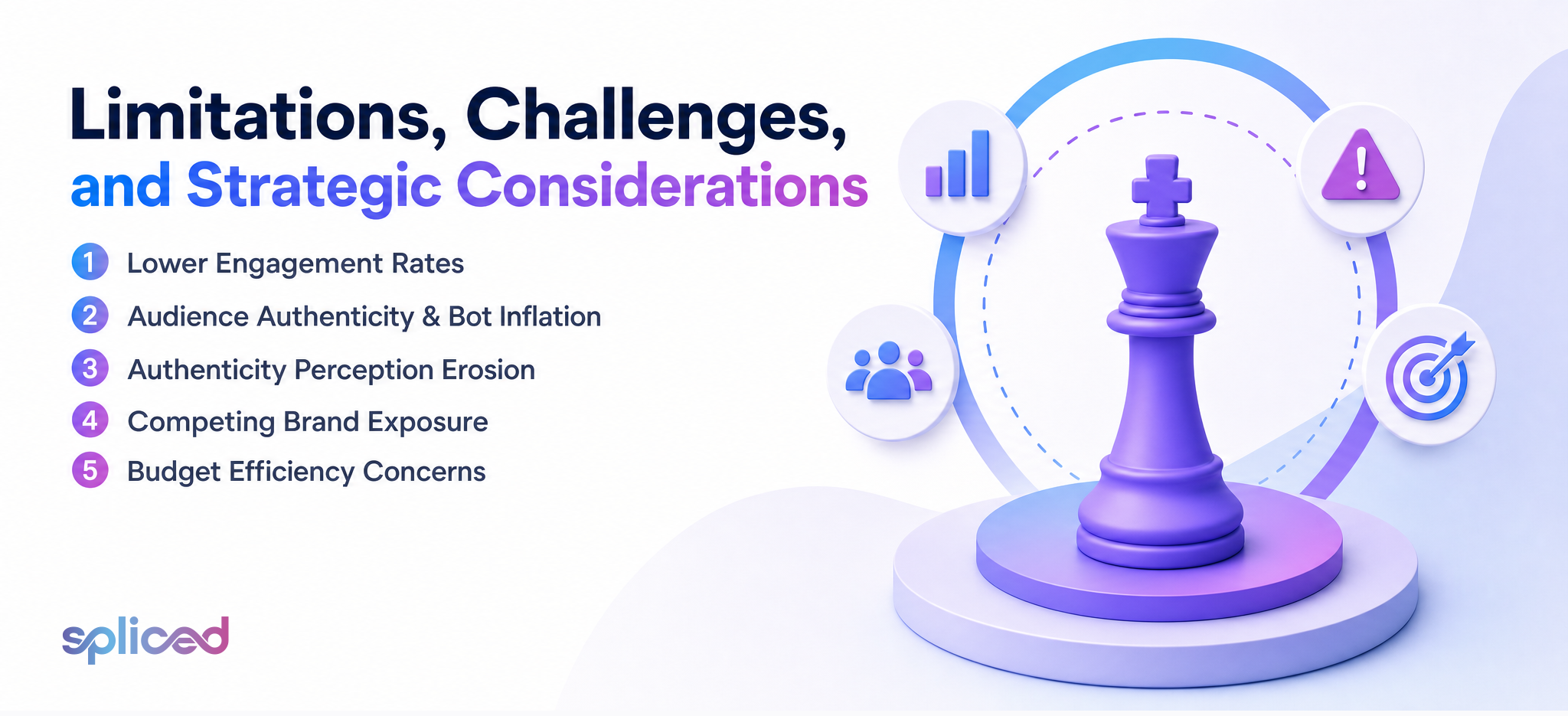
Lower engagement rates as percentage of follower base represent macro-influencers’ primary limitation. A 500,000-follower macro-influencer generating 2% engagement rate creates 10,000 interactions. Aggregated micro-influencers often achieve higher combined engagement percentages because smaller audiences maintain higher participation rates. For conversion-focused campaigns where engagement quality directly drives sales, lower macro-influencer engagement rates may result in poor cost-per-conversion metrics despite massive reach.
Audience authenticity and bot inflation threaten macro-influencer ROI. Some creators artificially inflate follower counts through purchased bot networks, inflating apparent reach while delivering minimal actual exposure to real users. Thorough vetting through third-party analytics tools and engagement pattern analysis is essential before committing budget. Historically low engagement rates relative to follower size signal potential artificial inflation.
Authenticity perception erosion occurs when macro-influencers promote excessive brand partnerships or products misaligned with audience expectations. Audiences perceive macro-influencers promoting disparate categories as prioritizing income over authentic recommendation, reducing recommendation trust and conversion likelihood. Strategic selectivity in partnership acceptance preserves credibility, but brands cannot control influencer choices outside their contracts.
Competing brand exposure creates message dilution when macro-influencers promote multiple products within similar categories or timeframes. A macro-influencer posting about five different skincare brands simultaneously confuses audiences about recommendations and creates competitor exposure. Negotiating exclusivity periods or staggered posting timelines prevents this dilution but requires anticipation during partnership structuring.
Budget efficiency concerns emerge when brands with limited budgets prioritize macro-influencer partnerships over broader influencer mix strategies. A $30,000 budget deployed as a single macro-influencer partnership might deliver superior reach but inferior conversion rate compared to $30,000 distributed across fifteen micro-influencers. Campaign objectives determine the optimal allocation strategy.
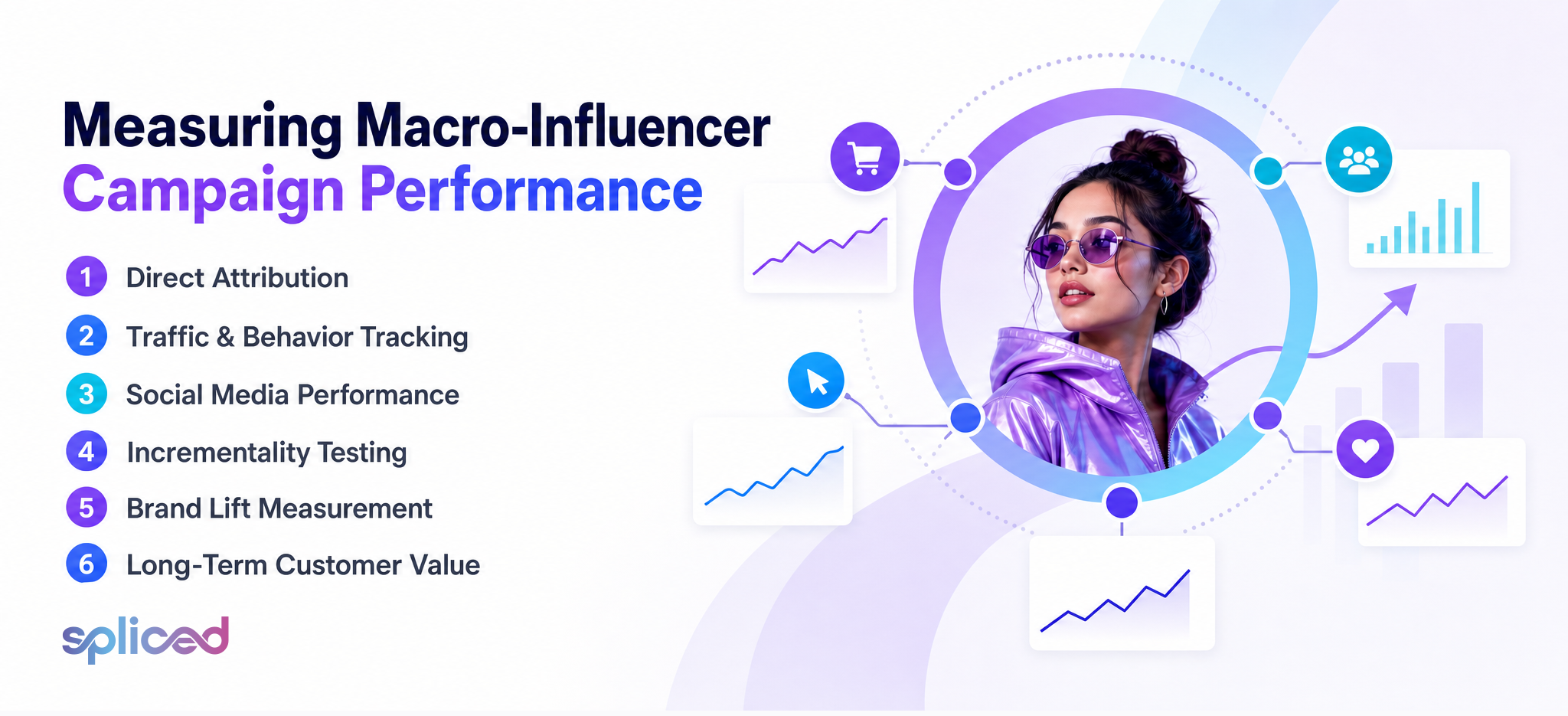
Measuring Macro-Influencer Campaign Performance
Attribution and measurement distinguish successful macro-influencer campaigns from expensive brand awareness experiments delivering unclear ROI. Comprehensive tracking requires multi-layer measurement combining direct attribution, incrementality analysis, and brand lift assessment.
Unique promo codes and affiliate links enable direct attribution of sales to specific influencers. Providing each macro-influencer with unique discount codes or Amazon affiliate links tracks customer behavior directly attributable to influencer promotion. This approach works exceptionally well for affiliate partnerships where tracking is automated, but less effectively for awareness-focused campaigns where direct conversion attribution is secondary.
UTM parameters and custom URLs track website traffic and behavior from influencer links. Brands directing influencer audiences to campaign landing pages can measure traffic volume, user behavior flow, conversion rates, and customer acquisition cost attributed to specific influencers. This methodology provides richer behavioral data than promo codes alone.
Social media metrics including reach, impressions, engagement counts, and click-through rates provide real-time campaign performance indicators. Comparing metrics across influencer partnerships identifies which creators drive disproportionate engagement and conversion. These metrics should be tracked through influencer platforms or direct platform analytics rather than relying solely on influencer self-reporting.
Incrementality testing measures sales increases beyond natural baseline levels. Brands comparing sales during influencer campaign periods versus control periods estimate incremental revenue attributable to influencer activity. When influencers run paid amplification alongside organic posts, isolating organic contribution requires statistical analysis distinguishing organic reach effects from paid reach effects.
Brand lift studies measure changes in brand awareness, perception, and purchase intent among audiences exposed to macro-influencer campaigns. Surveying post-campaign audience sentiment reveals whether partnership generated positive brand perception changes or minimal awareness shifts. For awareness-focused campaigns, brand lift serves as more appropriate measurement than direct conversion attribution.
Long-term customer value assessment examines whether customers acquired through macro-influencer campaigns exhibit higher lifetime value than customers from other channels. Some influencer-sourced customers may have lower repeat purchase rates despite higher initial conversion, affecting long-term campaign profitability. Tracking cohort performance over months reveals these dynamics.
Macro-Influencers Versus Other Marketing Channels: Strategic Comparison
Positioning macro-influencer spending within broader marketing budgets requires understanding how this channel compares to alternatives. Influencer Marketing vs. Affiliate Marketing: Key Differences and 2026 Strategy Guide explores comparative dynamics between these channels, and macro-influencers occupy distinct positions relative to other paid and organic strategies.
Paid social advertising (Facebook, Instagram, TikTok ads) provides predictable reach and audience targeting but lacks credibility transfer of influencer endorsement. A macro-influencer post reaches similar audiences as equivalent paid ad spend but carries third-party credibility boosting perceived authenticity. Brands often combine macro-influencer partnerships with paid amplification, using influencer content as ad creative while leveraging influencer organic reach simultaneously.
Performance marketing and affiliate partnerships can be more cost-efficient than fixed-fee macro-influencer partnerships when commission structures align with brand margins. Affiliate partnerships guarantee payments correlate with results, while macro-influencer flat fees carry performance risk. However, lower-tier influencers represent the primary affiliate channel, with macro-influencers commanding premium rates even under affiliate structures.
Owned content and SEO strategies build long-term brand equity but require months to generate meaningful traffic. Macro-influencer campaigns deliver immediate reach but lack sustained SEO benefits. Optimal strategies layer short-term macro-influencer reach with long-term owned content and SEO investment, using influencer awareness to drive initial traffic accelerating organic growth.
Public relations and earned media generate credibility comparable to macro-influencers but operate on longer timelines and require newsworthy angles. Macro-influencers function as earned-media accelerators, with influencer partnerships generating journalist interest and secondary press coverage amplifying initial investment.
Macro-Influencers Across Platforms: Platform-Specific Strategies
Macro-influencer effectiveness varies significantly by platform based on content format preferences, audience demographics, and algorithm priorities. TikTok, Instagram, YouTube, and Amazon each create distinct macro-influencer opportunities.
TikTok macro-influencers command exceptional engagement due to platform algorithm favoring discovery content over follower-based distribution. A TikTok macro-influencer’s reach often exceeds Instagram equivalents despite smaller follower bases, as algorithm-driven content distribution bypasses follower bottlenecks. TikTok Shop integration enables direct conversion pathways, making TikTok macro-influencer partnerships particularly valuable for e-commerce brands. Short-form video format advantages macro-influencers with strong trending audio and editing expertise.
Instagram macro-influencers maintain consistent audience reach through follower feed distribution and Stories features. Instagram’s younger demographic skews toward lifestyle, fashion, and beauty categories where macro-influencers concentrate. Feed posts maintain visibility longer than TikTok content, providing extended conversion windows. Instagram’s shopping features enable direct product tagging, streamlining purchase pathways.
YouTube macro-influencers leverage long-form content enabling product demonstrations, reviews, and detailed brand storytelling. YouTube’s extended viewing patterns create deeper audience engagement than short-form platforms, with audiences investing substantial time in creator content. YouTube’s AdSense and channel monetization incentivize quality production, attracting established macro-influencers invested in production professionalism. For categories requiring detailed explanation or demonstration, YouTube macro-influencers often drive conversion efficiency exceeding short-form alternatives.
Amazon-focused macro-influencers combine product review authority with direct sales pathways. Amazon’s affiliate program and storefront features enable direct conversion attribution, while product review content naturally integrates brand recommendations. Macro-influencers with established review authority in specific categories (fitness equipment, skincare, home goods) drive exceptional conversion rates due to audience expectations for product recommendations.

Building Long-Term Macro-Influencer Relationships and Ambassador Programs
Beyond one-off sponsored posts, forward-thinking brands develop ongoing macro-influencer relationships and ambassador programs creating sustained partnership value. 14 Ways Influencers Earn Money in 2026 details income diversification, and ambassador programs represent one significant income stream attracting macro-influencers.
Brand ambassador programs position macro-influencers as long-term partners rather than transactional vendors. Ambassador structures typically provide monthly retainers ($2,000–$10,000+) guaranteeing minimum monthly content deliverables, exclusive partnership status, and priority access to new products. In exchange, brands benefit from consistent brand presence, authentic product integration within ongoing content, and reduced per-content cost compared to one-off sponsorships.
Exclusive product access and early launch participation incentivize macro-influencer loyalty. Providing new products before public release, inviting influencers to product development feedback sessions, and featuring their suggestions in product marketing create investment in brand success. Macro-influencers with perceived influence over product decisions generate more authentic promotion and audience trust.
Co-creation opportunities align macro-influencer creative direction with brand objectives. Rather than dictating content requirements, collaborative approaches enable influencers to develop campaigns leveraging their creative strengths. This autonomy increases output quality and perceived authenticity, as audiences recognize genuine influencer voice rather than corporate messaging.
Performance incentive layers within ambassador programs scale compensation with results, aligning interests across extended partnerships. Base retainers provide income stability while performance bonuses tied to affiliate commissions or conversion metrics reward exceptional results. This hybrid approach maintains profitability predictability while incentivizing effort proportional to results.
Emerging Trends in Macro-Influencer Marketing 2026
The macro-influencer landscape continues evolving as platforms, audience expectations, and creator business models mature. Several trends shape strategic deployment in 2026.
Authenticity screening and audience verification intensify as brands recognize bot inflation risks and audience skepticism around sponsored content. Brands increasingly demand third-party audience verification, engagement audits, and historical performance documentation before committing budget. Macro-influencers with transparent, verified audiences command premium rates as trust verification becomes competitive advantage.
Niche specialization gains prominence as macro-influencers discover that narrow vertical authority drives higher conversion rates than generalist appeal. Fitness macro-influencers focusing exclusively on strength training, fashion influencers specializing in sustainable clothing, and beauty creators emphasizing skincare science attract highly engaged target audiences over broad lifestyle creators. This specialization trend favors mid-tier influencers over pure macro-tier generalists.
Performance-based compensation models expand as brands demand outcome accountability. While flat-fee partnerships remain common, affiliate commissions and sales-based compensation increasingly complement fixed fees. Macro-influencers with data-driven understanding of conversion attribution and ability to prove ROI command premium rates even under performance-based models.
Live shopping and real-time conversion events position macro-influencers as direct sales channels. TikTok Shop live events, Instagram Live shopping, and Amazon Live broadcasts enable macro-influencers to drive conversions during contained time windows with visible performance metrics. This format suits macro-influencers’ ability to generate audience attendance while converting engagement into quantified sales.
Key Takeaways and Strategic Implementation Framework
Macro-influencers represent a distinct tier within influencer marketing strategies, delivering unmatched reach and professional production quality in exchange for premium partnership costs. Their primary value resides in brand awareness acceleration, credibility transfer, and content production rather than conversion optimization, distinguishing their role from smaller influencer tiers optimized for conversion efficiency.
Successful macro-influencer deployment requires matching partnership objectives to influencer strengths. Awareness campaigns, product launches, and brand credibility initiatives naturally suit macro-influencer partnerships. Conversion-focused campaigns often achieve better ROI through broader micro-influencer deployment. Optimal strategies frequently combine macro-influencers for awareness with smaller creators for conversion, layering tiers into comprehensive campaigns.
Rigorous vetting prevents wasted budget on inauthentic creators or ineffective partnerships. Verifying audience authenticity, examining engagement quality, reviewing historical brand partnerships, and assessing audience alignment protects campaign investments. Professional influencer platforms streamline vetting processes through consolidated data and verification mechanisms.
Clear contract structures and measurable performance frameworks prevent disputes and enable objective partnership evaluation. Specifying deliverables, posting timelines, approval processes, and compensation triggers establishes professional expectations. Performance measurement through unique codes, UTM parameters, and affiliate tracking quantifies results enabling data-driven future optimization.
Platform-specific strategy recognizes that macro-influencer effectiveness varies by social channel. TikTok’s algorithm-driven distribution, Instagram’s follower feed, YouTube’s long-form authority, and Amazon’s direct sales pathways each create distinct influencer opportunities. Allocating macro-influencer budgets across relevant platforms maximizes reach and conversion efficiency.
Ambassador programs and long-term relationships create sustained value exceeding one-off partnerships. Retainer-based programs with performance incentive layers maintain influencer motivation while reducing per-content costs through scaled commitment. This approach particularly benefits brands with continuous product launches and year-round promotional calendars.
For Amazon and TikTok Shop brands specifically, macro-influencer partnerships should emphasize direct conversion pathways through affiliate links, Amazon storefronts, and TikTok Shop integration. Combining reach benefits of macro-influencers with direct attribution mechanisms quantifies performance and justifies premium partnership costs through demonstrable sales contribution.
As the creator economy matures and influencer marketing evolves, macro-influencer value increasingly depends on differentiation through authentic niche authority, verified audience engagement, and demonstrated conversion capability. Brands selecting macro-influencers based purely on follower counts risk paying premium rates for inefficient reach. Strategic macro-influencer partnerships require the same analytical rigor applied to other marketing channels, selecting partners whose audience alignment, engagement quality, and content style generate measurable results justifying investment.