An Amazon influencer is a content creator with a sizable following on social media platforms such as Instagram, YouTube, TikTok, and Twitter who promotes and endorses products sold on Amazon. Amazon influencers produce informative content for their audience, including product reviews, unboxings, hauls, and shopping guides. They frequently create customized online shops called “Amazon storefronts,” where they showcase their favorite goods for their fans to browse and purchase directly.
Multiple methods exist to find Amazon influencers and their storefronts in 2026. Amazon Live Creators, social listening tools, Amazon’s Best-Seller list, social media searches, and influencer marketing platforms all surface active creators. Amazon’s Influencer Program works directly with content creators to produce curated storefronts that connect customers with reliable product recommendations. Referral networks and word-of-mouth recommendations also reveal trusted influencers within specific niches.
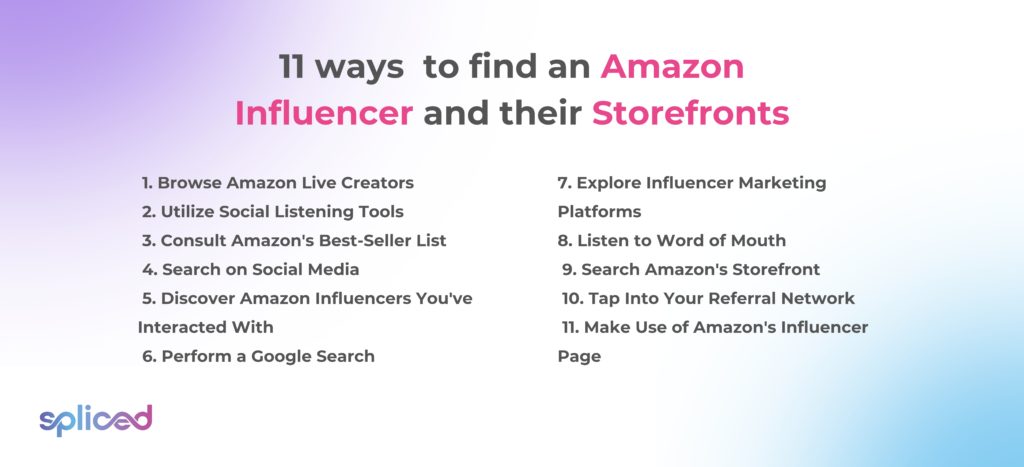
The following 11 proven methods help brands and shoppers discover Amazon influencers and their storefronts in 2026.
- Browse Amazon Live Creators: Amazon Live streams feature influencers and content producers showcasing products in real time. Users discover influencers by searching through available streams filtered by product category or interest.
- Utilize Social Listening Tools: Platforms such as Brandwatch, Mention, and Awario monitor mentions and discussions about Amazon influencers across social channels. These tools identify creators who consistently discuss Amazon products and track their engagement metrics.
- Consult Amazon’s Best-Seller List: Amazon’s Best-Seller lists across product categories frequently surface influencer endorsements and recommendations. Browsing category-specific best sellers reveals which creators promote trending products.
- Search on Social Media: Instagram, TikTok, YouTube, and Twitter searches using hashtags such as #AmazonInfluencer, #AmazonFavorites, and #AmazonHaul surface creator content and storefront links in bio sections. Platform-specific algorithms show Amazon-focused creators in discovery feeds.
- Discover Amazon Influencers You’ve Interacted With: Reviewing saved posts, bookmarks, and followed accounts on social media reveals creators whose content users have already engaged with. This method surfaces influencers whose recommendations align with existing interests.
- Perform a Google Search: Search queries such as “Amazon influencer recommendations,” “best Amazon storefronts,” or “Amazon product hauls 2026” return creator blogs, YouTube channels, and social profiles. Google’s search results highlight creators with strong SEO authority in Amazon niches.
- Explore Influencer Marketing Platforms: Tools such as Spliced, AspireIQ, and Influencity provide searchable directories of Amazon influencers filtered by niche, engagement rate, follower count, and audience demographics. These platforms streamline partner vetting and collaboration management.
- Listen to Word of Mouth: Recommendations from friends, family, and online communities reveal trusted influencers. Reddit threads, Facebook groups, and Discord servers dedicated to Amazon shopping frequently feature influencer recommendations and direct referrals.
- Search Amazon’s Storefront Directory: Amazon’s platform contains a curated directory of influencer storefronts organized by category and trending topics. Direct searches on Amazon.com connect users to official influencer shops verified by the platform.
- Tap Into Your Referral Network: Asking customers, colleagues, and network contacts for influencer recommendations generates personalized suggestions aligned with specific interests. Referral networks often surface micro-influencers with highly engaged audiences.
- Make Use of Amazon’s Influencer Page: Amazon’s dedicated Influencer Program page showcases partnered creators across niches. The platform organizes creators by category, allowing shoppers to browse storefronts and view creator profiles directly.
1. Browse Amazon Live Creators
Amazon Live is a real-time streaming feature where influencers and content creators demonstrate products, provide live reviews, and answer audience questions. These broadcasts showcase multiple Amazon products across categories from electronics to home goods, fashion, and beauty, allowing viewers to discover creators and their recommended items simultaneously.
Access Amazon Live through the website or mobile app by navigating to the dedicated Live section. Filter available streams by product category, time, or creator name. Join active streams to engage directly with influencers through comments and questions, then review their profiles and prior broadcasts to assess content quality and product alignment with your interests.
After identifying an influencer, click their profile to access their Amazon storefront, previous live recordings, and complete product collection. Follow creators whose recommendations resonate with your preferences to receive notifications about upcoming broadcasts and new product additions to their storefront.
Amazon Live provides real-time product demonstrations that help viewers evaluate items before purchase. This method surfaces active influencers regularly publishing new content rather than inactive creators. The direct interaction model builds trust between creators and audiences, making recommendations feel personal and authentic compared to static product pages.
Amazon Live Creators and the Influencer Program are primary discovery channels on the platform itself. For creators promoting Amazon products across external platforms such as Instagram, YouTube, and TikTok, combine Amazon Live browsing with social media searches and influencer platforms. This multi-channel approach reveals both Amazon-native creators and cross-platform influencers, expanding access to diverse product recommendations and niche specialists.
2. Utilize Social Listening Tools
Social listening tools monitor mentions, discussions, and trends about keywords, subjects, or brands across social media platforms and online channels. These tools track conversations to identify people who frequently discuss and recommend Amazon products to their audiences.
Select a platform such as Brandwatch, Mention, Awario, or Hootsuite Insights to begin finding Amazon influencers. Set up Amazon-related keywords, including “Amazon influencer,” specific product categories, or niche terms. Configure the tool to monitor Facebook, TikTok, Instagram, YouTube, and Twitter, where influencers actively promote Amazon products in 2026.
The tool gathers data, analyzes conversations about Amazon, and identifies creators who provide consistent product commentary and recommendations. Focus on profiles with substantial engagement and follower counts, as these indicate influential Amazon voices. Engage directly with their content by following accounts, liking posts, and commenting on recommendations to build potential partnership relationships.
Social listening tools deliver measurable results for Amazon influencer discovery. Real-time tracking ensures you find active, currently relevant influencers rather than inactive accounts. The platform’s filtering and data analysis capabilities help identify specific creators who regularly promote Amazon products within your category. Effectiveness depends on keyword precision and engagement metric analysis. Refining keywords and monitoring response rates helps identify the most influential Amazon creators in your niche.
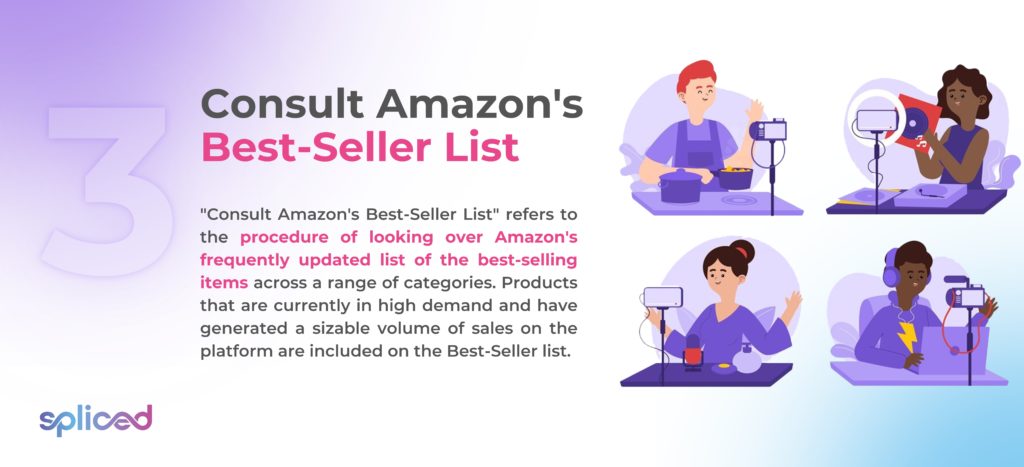
3. Consult Amazon’s Best-Seller List
Amazon’s Best-Seller List displays the most frequently purchased items across product categories. This regularly updated ranking shows products with high demand and sales volume on the platform, often with influencer endorsements visible on product pages.
Visit Amazon’s homepage and browse categories matching your product focus, from electronics to fashion, home goods, and beyond. Locate the “Best Sellers” or “Amazon Best Sellers” section, which includes subsections such as “Top 100” and “Movers and Shakers.” Review best-selling items within your category and examine product detail pages for influencer recommendations, reviews, or featured creator content. Many product listings include links to the influencers who recommended them or feature them in their storefronts.
The Best-Seller List works best for discovering influencers in popular, frequently updated product categories. This method proves less effective for niche or specialized products where influencer associations are less common. Combine this approach with social media searches, influencer platforms, or Google searches to expand your discovery across multiple niches and increase the likelihood of finding influencers who match your brand.
4. Search on Social Media
Social media search functions across Instagram, TikTok, Facebook, YouTube, and Twitter help locate content, profiles, and discussions about specific topics. These platforms host communities where creators share Amazon product recommendations, hauls, and reviews.
On Instagram, use hashtags such as #AmazonInfluencer, #AmazonFavorites, and #AmazonHaul in the search bar, then browse the Explore tab for relevant creator profiles. On TikTok, search terms like “Amazon haul,” “Amazon recommendations,” and “Amazon favorites” to find trending creator videos. Join Facebook groups dedicated to Amazon shopping and influencer partnerships. These communities regularly feature creator recommendations and storefront links shared by members.
YouTube search yields results for creators who frequently include storefront links in video descriptions. Enter terms such as “Amazon product reviews,” “Amazon hauls,” and “Amazon recommendations” to find relevant channels. On Twitter, use hashtags such as #AmazonInfluencer and #AmazonFinds, then follow creators directly and enable notifications for their posts. This multi-platform approach exposes you to diverse creator content styles and audience types.
Social media search effectively reveals Amazon influencers and storefronts by connecting you to active creator networks and shopping communities. Platforms aggregate real-time discussions about Amazon products and curated recommendations. Hashtag use, keyword searches, and community participation increase discovery rates and help identify trustworthy creators. Effectiveness varies by platform and your specific niche. Testing multiple social networks ensures comprehensive coverage of creator content in your product category.
5. Discover Amazon Influencers You’ve Interacted With
Discovering Amazon influencers that one has interacted with means reviewing past engagement on social media platforms or online communities where one engaged with Amazon product content. This method locates influencers already encountered through prior interactions and engagement patterns.
Start by auditing social media activity on Instagram, Twitter, YouTube, and TikTok where one commented on or expressed interest in Amazon product content. Review saved content on Instagram or YouTube, including bookmarked posts and favorited videos, to surface influencer content saved for reference. Examine one’s follower and following lists to identify profiles heavily focused on Amazon products or regularly sharing product suggestions and recommendations.
Check social media direct messages for past conversations about Amazon products or influencer outreach. Use search terms such as “Amazon haul,” “Amazon favorites,” or product category names to filter results. Amazon influencer interactions often scatter across multiple posts and comments, so thorough historical review yields better results. The method’s effectiveness depends on the frequency of prior Amazon-related engagement and the clarity of interaction records.
Discovering influencers through past interactions succeeds when one actively engages with Amazon content and maintains clear interaction records. The approach works best for identifying creators whose recommendations already resonated with past experience and whose advice aligns with established preferences. The strategy relies on interaction frequency and memory accuracy, making it most valuable for those with substantial prior engagement with influencer-generated Amazon content.
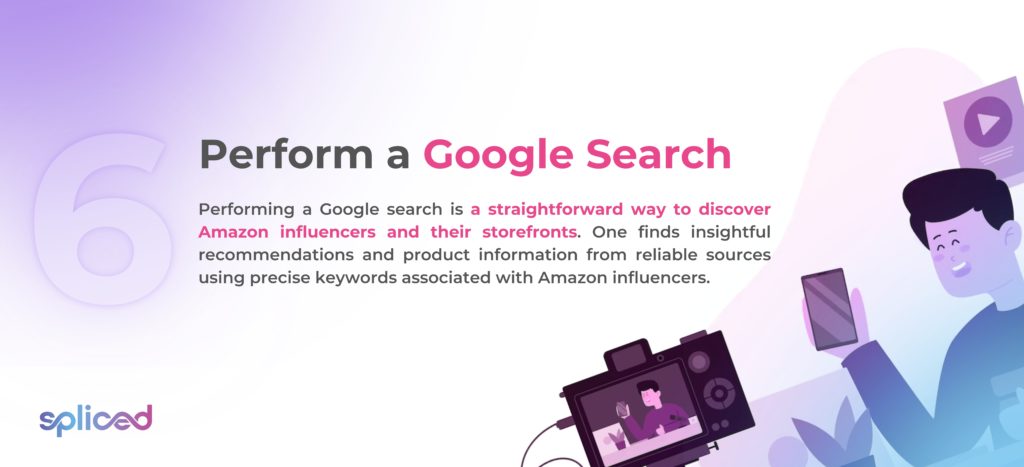
6. Perform a Google Search
Performing a Google search identifies Amazon influencers and their storefronts through keyword-based discovery. Google indexing captures influencer blogs, storefronts, social media profiles, and product recommendation content across the web.
Start with foundational search terms such as “Amazon influencer,” “Amazon recommendations,” or “Amazon storefronts” in Google’s search box. Refine results by adding niche or category terms such as “Amazon beauty influencer,” “Amazon tech recommendations,” or “Amazon home essentials creator” to target specific product categories. Results surface influencer blogs, YouTube channels, TikTok profiles, Instagram accounts, and direct Amazon storefront links.
Evaluate search results by examining influencer quality, review depth, content recency, and audience engagement patterns. Verify influencer credibility through customer feedback, engagement metrics, and storefront product selection. Cross-reference top results across multiple niches to identify consistent creators with sustained audience trust and product expertise.
Google search discovery succeeds through keyword specificity and result evaluation. The method surfaces influencers across multiple niches and platforms simultaneously, providing broad coverage across creator categories. Success depends on keyword precision, result filtering, and content quality assessment. Combining Google search with direct Amazon platform searches yields higher-quality influencer identification than single-method approaches.
7. Explore Influencer Marketing Platforms
Influencer marketing platforms are software tools that connect brands with creators through searchable databases, campaign management, and performance tracking. Platforms accelerate influencer identification, partnership negotiation, and ROI measurement for coordinated commerce campaigns.
Select a platform matching campaign scope, such as Spliced for Amazon seller and TikTok Shop focus, AspireIQ for enterprise programs, or Influencity for discovery at scale. Input campaign objectives, target audience demographics, budget, and product categories to filter platform databases. Use advanced filters to rank influencers by engagement rate, follower authenticity, Amazon partnership history, and content category relevance. Review creator profiles for audience alignment, past Amazon promotions, storefront quality, and commission structure compatibility.
Verify creator legitimacy through documented Amazon partnerships, customer reviews of promoted products, and engagement quality analysis. Use platform messaging to discuss campaign scope, product selection, commission rates, and content approval workflows. Finalize agreements defining deliverables, posting schedules, link placement requirements, and performance tracking metrics. Platform contracts establish clear expectations and enable ROI attribution through direct commerce data integration.
Influencer marketing platforms accelerate Amazon influencer discovery through verified creator databases and built-in commerce attribution. Platforms excel when businesses require campaign management, performance transparency, and audience demographic matching beyond simple discovery. Platform effectiveness depends on database quality, creator participation rates, and native Amazon integration. Brands tracking storefront sales and affiliate conversions gain the most value from platforms offering direct commerce data connection and commission reconciliation.
8. Listen to Word of Mouth
Word of mouth recommendations come from friends, family, coworkers, and online communities sharing personal experiences and opinions about Amazon influencers. This approach leverages collective expertise and trusted insights to identify reliable influencers and their storefronts for product discovery and brand partnerships.
To use word of mouth effectively, actively participate in Amazon product discussions on social media platforms, forums, or within personal networks. Ask friends, family, and community members for recommendations about Amazon influencers known for helpful reviews and product guidance. Specify your product interests or categories to receive more personalized suggestions that align with your needs.
Join online communities focused on Amazon products and influencer recommendations, including subreddits like r/Amazon_Influencer, Facebook groups, and specialized forums. Post specific questions and use hashtags like #AmazonInfluencer or #AmazonFavorites to expand your reach. After receiving suggestions, evaluate each influencer’s content quality, audience engagement, and product alignment with your interests before following them.
Word of mouth recommendations work best when your network actively engages with Amazon influencers. Personal referrals often include firsthand experience and trust factors that algorithm-based search cannot replicate. Effectiveness depends on your network size, diversity, and recommendation quality. Combining word of mouth with social media searches or platform-native discovery tools broadens your access to influencers across multiple niches and follower sizes.
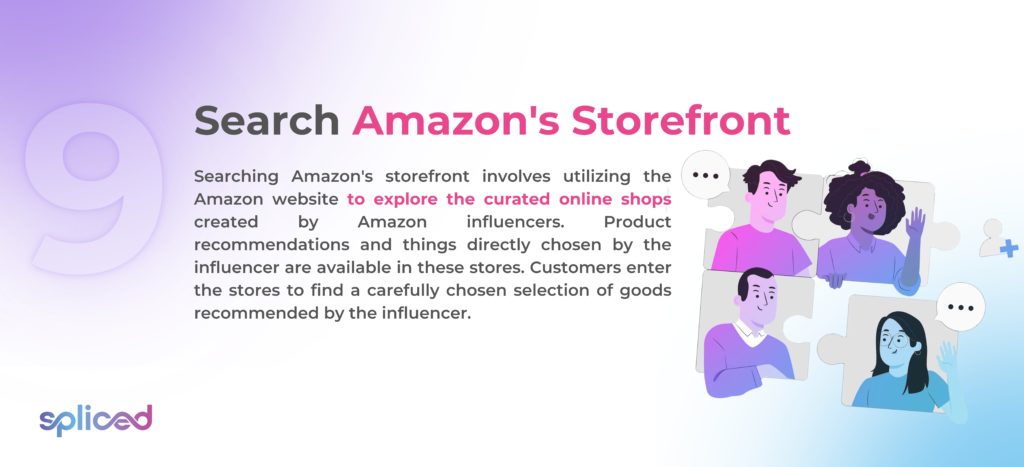
9. Search Amazon’s Storefront Directory
Amazon’s Storefront Directory displays curated collections created by Amazon influencers within the official Amazon platform. These storefronts showcase hand-picked product recommendations organized by category, theme, and influencer expertise. Accessing this directory provides direct access to Amazon-verified influencers and their product collections in one centralized location.
Navigate to Amazon.com and search for “Amazon Influencer Program” or “Creator Storefronts” to access the directory. Browse the list of featured influencers organized by category, niche, and interest. Click on an influencer’s profile to view their complete storefront, including product descriptions, customer reviews, curated collections by theme, and direct purchase links. Follow influencers whose recommendations match your interests to receive updates on new product additions and seasonal collections.
Amazon’s Storefront Directory offers verified, platform-vetted influencers, which reduces the risk of encountering fake or low-quality accounts. This method works especially well for discovering influencers in specific categories like fitness, kitchen, fashion, or technology. Some influencers curate broad product selections across multiple categories, while others specialize deeply in single niches. The directory structure makes it easy to compare influencers’ curation styles and product focus areas before engaging with their content.
10. Tap Into Your Referral Network
Your referral network consists of trusted connections, online communities, friends, and family members who can recommend Amazon influencers based on their direct experience. Using this network accelerates discovery by connecting you with pre-vetted influencers whose content has already resonated with people you know.
Identify which networks to tap, including close contacts, professional groups, online communities, and niche forums where Amazon influencer discussions occur. Ask your network directly if they follow Amazon influencers, request profile links or storefront URLs, and ask for recommendations specific to product categories you care about. Offer reciprocal recommendations to strengthen relationships and encourage more specific suggestions tailored to your preferences.
Engage actively in relevant online forums and communities where members discuss Amazon products and influencer partnerships. Request introductions to influencers your network members recommend, and verify recommendations by reviewing the influencer’s recent content, storefront organization, audience size, and engagement metrics. Cross-reference recommendations across your network to identify influencers who consistently receive positive feedback from multiple sources.
Referral networks work best when your connections actively follow Amazon influencers and share recommendations openly. This method reduces discovery time and adds social proof through trusted relationships. Network size and diversity determine the breadth of influencer suggestions you receive; small networks may yield limited options, while diverse networks expose you to influencers across multiple niches and follower ranges. Combine referral network strategies with platform-based discovery tools to access the widest possible influencer pool.
11. Make Use of Amazon’s Influencer Page
Amazon’s Influencer Page is an official directory within Amazon’s platform where social media creators build curated storefronts to showcase and recommend products to their followers. Creators compile their favorite Amazon items in one location, enabling their audience to browse and purchase curated selections. The page provides a seamless shopping experience that connects creators with their communities.
Access Amazon’s Influencer Page by searching “Amazon Influencer Program” on Amazon’s website. After landing on the page, a directory of influencer storefronts organized by category and interest appears. Browse available creators to find those whose content aligns with your preferences. Each creator’s storefront includes curated product recommendations, detailed product descriptions, verified customer reviews, and direct Amazon purchase links.
Follow creators whose recommendations match your interests to receive updates about their latest product discoveries. Click through a creator’s storefront to view their complete selections. When purchasing through their storefront, the creator receives proper attribution and commission credit for the sale. This method provides direct discovery of verified Amazon influencers and their reliable product recommendations.
Amazon’s Influencer Page offers advantages over independent discovery methods. Amazon vets all creators on the platform, ensuring legitimacy and brand alignment. Creators typically curate storefronts with products they genuinely endorse, simplifying the search for credible advice. The platform works best for users seeking tailored product recommendations from established creators in specific niches, categories like home goods, fashion, technology, or lifestyle content.
What is an Amazon Influencer?
An Amazon Influencer is a content creator with established authority on social media platforms including Instagram, YouTube, TikTok, and Twitter who produces educational and promotional content focused on Amazon products. Amazon Influencers leverage their credibility and niche expertise to create product reviews, recommendations, unboxing videos, and shopping guides that resonate with their engaged followers.
Amazon’s Influencer Program provides these creators with tools to build personalized Amazon storefronts where they feature favorite products and earn affiliate commissions on resulting sales. These storefronts serve as centralized hubs where followers access curated product recommendations, detailed descriptions, and verified reviews. The program creates a mutual benefit model where creators monetize their platform and audiences gain trusted product guidance.
The Amazon Influencer Program represents a partnership between content creators and Amazon’s marketplace. Creators access Amazon’s extensive product catalog for promotion and earn performance-based commissions, while Amazon gains increased product visibility, user-generated content, and sales lift. Amazon Influencers function as trusted authorities whose recommendations guide purchasing decisions across specific product categories and niches on Amazon’s platform.
What is Amazon Influencer Storefront?
An Amazon Influencer Storefront is a branded retail space on Amazon’s platform managed by a creator enrolled in Amazon’s Influencer Program. The storefront displays curated product collections that the influencer personally endorses and recommends. Storefronts provide followers with a dedicated destination to discover products aligned with the creator’s expertise and values.
Storefronts feature organized product collections with category structures, product images, descriptions, and customer reviews. Followers browse, compare, and purchase items directly through the storefront while the creator receives affiliate commissions on resulting transactions. Unlike Amazon’s general Associates affiliate program, storefronts provide creators with branded spaces that build direct audience relationships and establish them as trusted product curators. Amazon Influencer Storefronts function as creator-curated marketplaces that strengthen the connection between influencers and their communities while enabling measurable sales attribution for creators in 2026.
Who are the Top Amazon Influencers to follow?
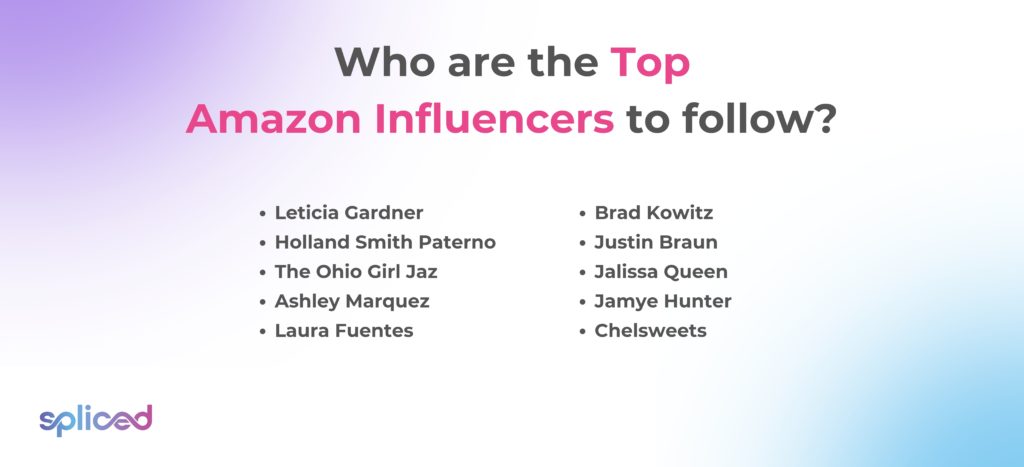
Leading Amazon Influencers in 2026 across fashion, lifestyle, technology, and wellness niches include established creators with verified storefronts and consistent engagement rates. Top performers demonstrate authentic product expertise, high-quality content production, and loyal community engagement. Below are notable creators currently driving significant Amazon storefront traffic and sales attribution.
- Leticia Gardner: Mega-influencer Leticia Gardner commands 18K YouTube subscribers, 487K Instagram followers, and 2.1M TikTok followers as of 2026. Leticia creates content across family, fashion, lifestyle, and fitness niches. She partners with former NFL player Rod Gardner and operates Totalbody21, a fitness lifestyle brand offering training programs and wellness resources.
- Holland Smith Paterno: Fashion and lifestyle micro-influencer Holland Smith Paterno reaches 22.8K Instagram followers and 71K TikTok followers in 2026. Holland publishes style guides, recipes, and Amazon fashion curations with a recognizable aesthetic that balances sophistication with approachability. Her content focuses on accessible fashion and home essentials.
- The Ohio Girl Jaz: Fashion and beauty micro-influencer Jaz maintains 45.2K Instagram followers with growing presence on YouTube and TikTok. Jaz curates affordable, bohemian-inspired fashion and has collaborated with indie brands and major retailers including Walmart. Jaz regularly shares video reviews and Amazon haul content on Instagram with polished, styled photography.
- Ashley Marquez: Ashley Marquez ranks among Amazon’s leading influencers, combining teaching credentials with lifestyle expertise. Ashley maintains 324K Instagram followers, 62K Facebook followers, and 48.3K Pinterest followers. Content focuses on fashion, children’s products, and educational inspiration. Ashley’s aesthetic emphasizes clean, accessible styling paired with uplifting teaching methodology.
- Laura Fuentes: Author, blogger, and wellness-focused influencer Laura Fuentes operates @momables with 58.4K Instagram followers in 2026. Laura specializes in low-carb recipes, intermittent fasting content, and meal planning for health-conscious families. She actively promotes Amazon products, ingredients, and kitchen tools featured in her recipe content and lifestyle recommendations.
- Brad Kowitz: Brad Kowitz transitioned from Amazon Affiliate to prominent creator with 521K YouTube subscribers, 168K Instagram followers, and 52K Facebook followers. Brad produces content on off-roading, fitness, camping, photography, and technology. His YouTube channel drives significant affiliate traffic through product demonstrations and gear reviews.
- Justin Braun: YouTuber Justin Braun reaches 19.2K subscribers, 8.1K Facebook followers, and 4.3K Instagram followers with energetic content on off-road vehicles, automotive modifications, shop equipment, and tech gear. Justin integrates Amazon product links in video descriptions and regularly features items from his storefront in project builds.
- Jalissa Queen: Product review specialist Jalissa Queen attracts 1.65K YouTube subscribers and 18.9K Instagram followers with photography-quality content. Jalissa delivers detailed reviews of technology, fashion, and cosmetic products, leveraging professional photography expertise to evaluate product quality and design.
- Jamye Hunter: Fitness, fashion, and beauty influencer Jamye Hunter connects with 56.3K TikTok followers and 12.1K Instagram followers. Jamye brings credibility through US Army National Guard service and formal education in human development and family sciences. Content combines wellness guidance, fashion styling, and military community perspectives.
- Chelsweets: Baking and cake decorating influencer Chelsey reaches 2.3M TikTok followers, 1.4M Instagram followers, 821K Facebook followers, 312K YouTube subscribers, and 79.1K Pinterest followers. Chelsweets represents a major FMCG influencer with substantial Amazon integration. Chelsey features baking tools, cookware, and specialty ingredients in video content, driving notable affiliate sales through storefront links.
How to Follow Amazon Influencers in the Amazon App
Following Amazon influencers within the Amazon app requires first signing into the mobile app to access all features. Navigate to the Influencers section after login; this area displays available influencers across various categories and niches. Click the follow button next to an influencer’s profile to add them to your followed list. This action routes you to their Amazon storefront, where curated product collections are organized by theme or product category.
Browse their recommended products, review detailed product descriptions, and read customer feedback within the storefront. Purchase recommended items directly through the storefront to credit the influencer with an affiliate commission automatically. This streamlined process connects you with followed influencers, delivers their latest product recommendations through app notifications, and enables direct purchasing from their curated selections without additional steps.
Can Anyone Become an Amazon Influencer?
Yes, any creator can become an Amazon Influencer. Qualification requires a significant social media presence, typically on YouTube, Instagram, Twitter, or TikTok, with an active, engaged following. Amazon assesses content quality, proven traffic generation capability, and sales impact. Creators with larger, more engaged audiences have higher approval probability, though Amazon does not publish specific follower count minimums. Amazon evaluates content authenticity and brand alignment before program acceptance.
The approval process focuses on audience engagement quality rather than follower count alone. Niche expertise in product categories that complement Amazon’s marketplace improves acceptance likelihood. Creators with demonstrated authority in specific categories such as tech, beauty, fitness, or home goods receive priority consideration for partnerships.

How can businesses use Spliced to find Amazon influencers?
Businesses discover Amazon influencers through Spliced by leveraging its creator discovery and commerce attribution tools. Spliced connects influencer performance data to Amazon sales outcomes, allowing brands to identify creators whose audiences convert on Amazon storefronts and affiliate links.
Spliced filters influencers by niche, audience size, engagement rate, and historical Amazon conversion performance. The platform tracks which creators drive measurable sales through Amazon’s storefront ecosystem and affiliate program, showing businesses exactly which influencer partnerships deliver ROI. This data-driven approach replaces guesswork with verified performance metrics across social media channels including Instagram, TikTok, YouTube, and Twitter.
Businesses use Spliced’s attribution workflow to connect creator content to downstream Amazon sales. When an influencer promotes a product, Spliced tracks clicks, impressions, and resulting purchases. The platform provides demographic breakdowns of each influencer’s audience, showing whether their followers align with a brand’s target customer profile and whether they have demonstrated Amazon purchasing intent.
Spliced enables brands to manage influencer campaigns from discovery through performance analysis. Businesses compare creator options side by side using engagement quality, audience overlap, and sales lift metrics. The platform tracks commission structures, negotiates partnership terms, and measures KPIs such as conversion rate, average order value, and customer acquisition cost for each influencer partnership. This workflow is especially valuable for Amazon sellers and brands running creator-led commerce programs where sales attribution is critical to campaign success.
Is it possible to find Amazon influencers by name?
Yes. Amazon influencer names and social media handles are publicly displayed on their accounts and storefronts. Use Amazon’s search bar, Google, or social media platforms to locate specific influencers by entering their names or handles. Amazon’s Influencer Directory provides search functionality by name and niche, though not all creators participate in the Amazon Influencer Program directly. Some influencers use stage names, pseudonyms, or brand aliases rather than legal names, so exact name matching may require cross-referencing their social media profiles.
Why do businesses work with Amazon influencers?
Businesses partner with Amazon influencers to reach engaged audiences through trusted recommendations. Influencers have built credibility within specific niches; their followers value their product endorsements and are primed to purchase. When an Amazon influencer recommends a product, their audience converts at higher rates than traditional advertising because the recommendation carries personal authority and authenticity.
Amazon influencer partnerships operate on performance-based compensation models, typically commission structures ranging from 1 percent to 20 percent or higher per sale, depending on product category, influencer reach, and negotiated terms. Influencers earn only when their recommendations drive measurable sales, aligning their incentives with business outcomes. This structure attracts serious creators who actively promote products and allows brands to scale marketing spend based on verified results. High-engagement micro-influencers and niche specialists often command premium commission rates because their audiences demonstrate stronger purchase intent. Businesses view influencer partnerships as cost-effective channels to increase product visibility, boost Amazon storefront traffic, and drive sales without upfront advertising spend.
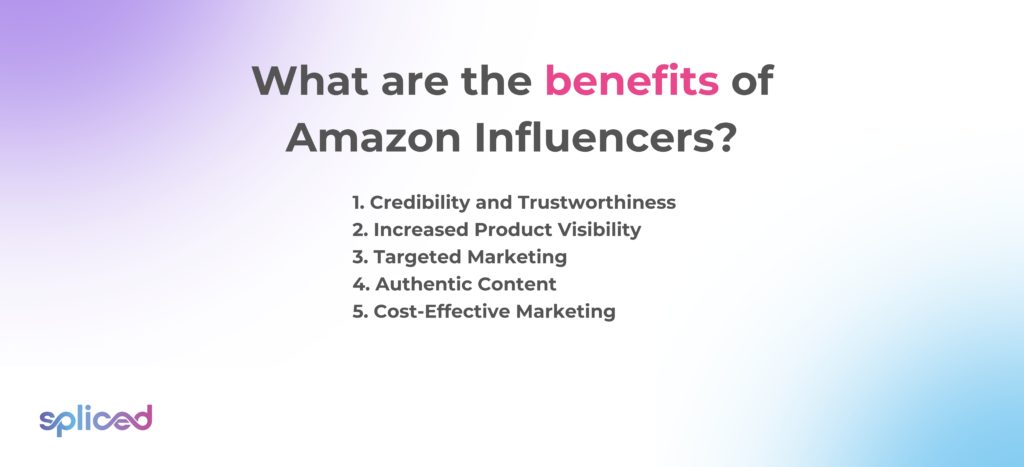
What are the benefits of Amazon influencers?
The benefits of Amazon influencers include the following.
- Credibility and Trust: Amazon influencers maintain devoted audiences who value their judgment. Endorsements from established creators transfer credibility to new products, building consumer confidence in brand purchases.
- Audience Reach: Influencers amplify product visibility to their followers across Instagram, TikTok, YouTube, and Twitter. Increased exposure drives traffic to Amazon storefronts and product pages, improving brand awareness and sales volume.
- Targeted Audience Access: Influencers operate in specific niches such as fitness, beauty, home goods, or technology. This specialization ensures promotional content reaches audiences already interested in relevant product categories, improving campaign efficiency and conversion rates.
- Authentic Content Production: Influencers create natural, relatable content such as unboxings, reviews, and hauls that feel genuine compared to traditional advertising. Audiences respond better to authentic creator content, resulting in higher engagement and purchase intent.
- Performance-Based ROI: Commission-based partnerships eliminate upfront advertising risk. Brands pay only when sales occur, making influencer marketing more cost-efficient than paid ads. This structure enables smaller brands to access large audiences without prohibitive budgets.
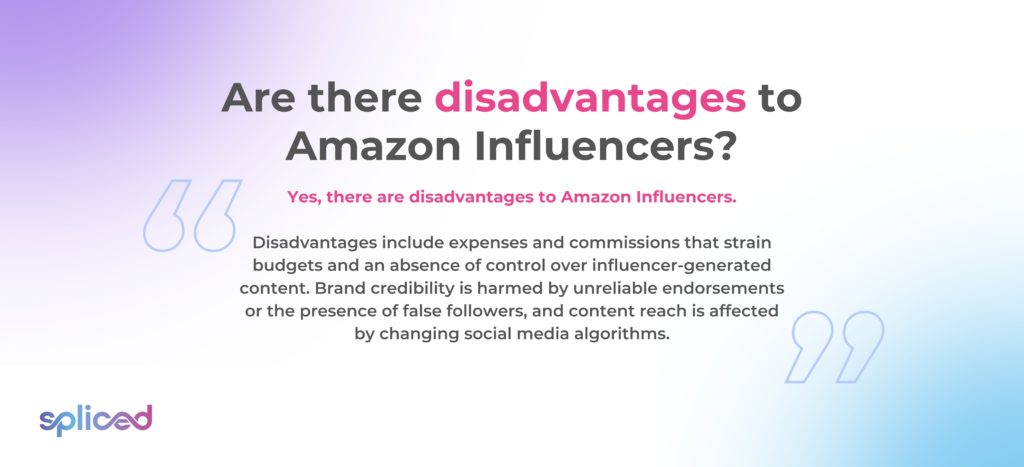
Are there disadvantages to Amazon influencers?
Yes. Key disadvantages include high commission costs that impact profit margins, limited control over influencer messaging and brand representation, and dependence on algorithm changes that reduce content visibility. Fake followers, low engagement rates, or misaligned audience demographics can waste marketing budget on ineffective partnerships. Algorithm shifts on TikTok, Instagram, and YouTube reduce organic reach unpredictably. Influencer oversaturation in competitive categories makes differentiation difficult. Legal and regulatory risks arise from undisclosed sponsorships, false claims, or noncompliance with FTC guidelines. Brands must vet influencers carefully, establish clear performance expectations, verify audience authenticity, and ensure brand alignment to mitigate these risks. Measuring true attribution remains challenging when multiple marketing channels influence purchase decisions.