Micro-influencers are content creators with 10,000 to 100,000 followers who deliver 60% higher engagement rates than macro-influencers through authentic, niche-focused partnerships. These creators have built loyal, engaged communities within specific industries and topics rather than pursuing broad appeal. Micro-influencers provide personalized content that resonates deeply with their audiences, making them valuable partners for brands seeking targeted reach. The strategy has fundamentally shifted how companies approach influencer marketing in 2026, prioritizing engagement quality and audience authenticity over follower count alone.
Micro-influencers function as content creators and community authorities within their chosen niches. They cultivate genuine relationships with their followers by sharing specialized insights, recommendations, and expertise. This authentic positioning differentiates them from larger influencers, creating stronger audience trust and more meaningful interactions within their communities.
Brands collaborate with micro-influencers through sponsored posts, product reviews, affiliate partnerships, and community engagement initiatives. These collaborations leverage the creator’s established credibility, allowing brands to access audiences that already value the influencer’s perspective. Micro-influencers integrate brand messaging naturally into their regular content, maintaining authenticity while delivering measurable campaign results.
Micro-influencers drive measurable business outcomes because they build trust within their niche communities. Research from Influencer Marketing Hub (2026) shows that 78% of marketers now prefer micro-influencers over larger creators. Their followers engage more deeply with content, resulting in higher conversion rates and stronger brand loyalty compared to celebrity endorsements or macro-influencer partnerships.
Brands selecting micro-influencer partners should evaluate niche alignment, engagement rates, audience demographics, and content quality. Clear communication regarding deliverables, posting timelines, compensation terms, and disclosure requirements ensures successful collaboration. Contracts must address content ownership, exclusivity, performance metrics, and legal compliance standards.
Working with micro-influencers delivers multiple competitive advantages. Engagement rates typically exceed 5-15% on platforms like TikTok, compared to 1-3% for macro-influencers. Cost efficiency improves significantly because micro-influencers charge $10-$20 per 1,000 followers rather than premium rates. Authentic audience connections drive higher conversion rates and measurable ROI. Challenges include managing multiple partnerships simultaneously, ensuring consistent content quality, and scaling reach across larger campaigns. Strategic selection and clear performance benchmarks address these concerns effectively.
Micro-influencers have transformed influencer marketing by delivering measurable engagement, authentic community connections, and cost-effective campaign performance. Their specialized expertise and niche authority create meaningful brand connections that drive business results in 2026. This strategic shift from follower-count metrics to engagement-driven measurement reflects how modern brands evaluate and deploy influencer partnerships for maximum impact.
What is a Micro-Influencer?
A micro-influencer is a content creator with 10,000 to 100,000 followers who maintains high engagement rates and deep authority within a specific niche. The defining characteristic is engagement quality and audience authenticity, not follower count alone. Micro-influencers command 60% higher engagement rates than macro-influencers according to 2026 research, making them increasingly valuable for brands prioritizing measurable results.
Micro-influencers build genuine relationships with their audiences through consistent, specialized content. Their smaller but devoted follower base creates opportunities for personal interaction that larger creators cannot replicate. This authenticity translates into higher trust levels, more meaningful audience engagement, and stronger conversion performance compared to macro-influencer partnerships.
Micro-influencers concentrate on defined niches including fitness, beauty, fashion, gaming, parenting, technology, and professional services. Their specialized focus enables precise audience targeting. Followers who discover their content typically have genuine interest in both the creator and the subject matter, resulting in higher engagement across comments, shares, saves, and click-throughs.
Micro-influencers deliver outsized impact within their specialist communities. Brands increasingly recognize that niche expertise and engaged audiences drive better ROI than broad reach. The capacity to deliver personalized recommendations to highly receptive audiences improves conversion rates and strengthens brand credibility within target demographics.
A micro-influencer combines modest but devoted follower counts with specialized niche authority and authentic audience engagement. They create genuine connections with their communities through consistent, valuable content. For brands seeking targeted reach, measurable engagement, and authentic partnerships, micro-influencers represent the most cost-effective and results-driven influencer segment in 2026.
How do Micro-Influencers work?
Micro-influencers operate by leveraging authenticity and niche expertise to build strong relationships with engaged audiences. They create specialized content through a niche-focused strategy that resonates with people genuinely interested in their chosen topic. Content takes multiple formats: posts, videos, reels, and reviews. They foster community by establishing rapport and relatability through active participation in conversations and consistent engagement with audience comments.
Brands partner with micro-influencers because they understand the value of highly engaged audiences. Sponsored content integrates naturally into the influencer’s regular posts with transparent disclosure. Micro-influencers use affiliate marketing, host events, and run contests to increase interaction and expand their reach. They bridge targeted marketing and authentic audience connection by consistently offering genuine recommendations, maintaining brand relationships, and preserving their niche authority.
How many followers do Micro-Influencers have?
Micro-influencers typically have between 10,000 and 100,000 followers across platforms including Instagram, TikTok, YouTube, Twitter, and LinkedIn. Exact follower counts vary by platform, industry, and engagement levels. Micro-influencers prioritize engagement quality and authenticity within their niche rather than raw follower count. In 2026, platform algorithms reward genuine interaction over follower size, making engagement rates a more valuable metric than total follower count.
What is the role of Micro-Influencers in Influencer Marketing?
Micro-influencers are essential to influencer marketing because they combine authenticity with specialized expertise to create deep connections in specific communities. They provide accessible information and genuine endorsements to engaged followers. Micro-influencers function as bridges between niche audiences and brands, integrating brand messaging seamlessly while maintaining credibility. To explore proven tactics for maximizing their impact, consider reviewing the comprehensive guide to influencer marketing strategies for 2026.
According to 2026 research, micro-influencers deliver 60% higher engagement rates than macro-influencers. This engagement advantage translates to stronger endorsements and meaningful audience interactions. Brands benefit from micro-influencers’ ability to target specific customer segments with precision. Their specialized knowledge builds trust, and their lower costs make them accessible to organizations with budget constraints. Micro-influencers generate devoted followings that value their insights and expertise.
Micro-influencers contribute diverse perspectives, community connections, and trustworthy recommendations to influencer marketing campaigns. They enhance authenticity and establish meaningful relationships between brands and responsive target audiences. In 2026, 78% of marketers prefer micro-influencers over larger creators, reflecting the documented shift toward engagement-driven measurement over follower counts.
Why do businesses work with Micro-Influencers?
Businesses partner with micro-influencers for measurable marketing advantages. Authenticity, targeted reach, and cost-effectiveness are primary drivers. Micro-influencers maintain genuine, personal relationships with followers, making endorsements feel credible and trustworthy. This authenticity generates higher engagement than traditional advertising.
Specialized niche audiences allow precise targeting. Micro-influencers reach people genuinely interested in their topic, increasing connection with receptive audiences and improving conversion likelihood. Working with micro-influencers costs significantly less than macro-influencers while often delivering superior ROI. Brands achieve measurable marketing impact without large budget commitments.
How do Micro-Influencers promote brands?
Micro-influencers employ multiple strategies to effectively promote brands. They leverage their presence on social platforms, including TikTok, Instagram, Twitter, and Facebook, by creating visually compelling posts and videos that naturally integrate brand products into their regular content. Posts feature authentic customer feedback, product reviews, lifestyle imagery, and real testimonials.
Video content serves as a primary engagement tool. Micro-influencers produce diverse video formats on TikTok and YouTube, including tutorials, unboxing videos, vlogs, and challenge videos that showcase brands in entertaining, authentic ways. TikTok creators with 100,000 to 500,000 followers average 5-15% engagement rates in 2026, reflecting platform strength for micro-influencer campaigns.
Many micro-influencers maintain personal blogs or websites featuring in-depth reviews, essays, and articles about brands they collaborate with. This written content communicates deeper product understanding through detailed insights, personal storytelling, and comprehensive assessments. Micro-influencers combine social media engagement, video content, and written content while customizing their approach to their specialized audience preferences.
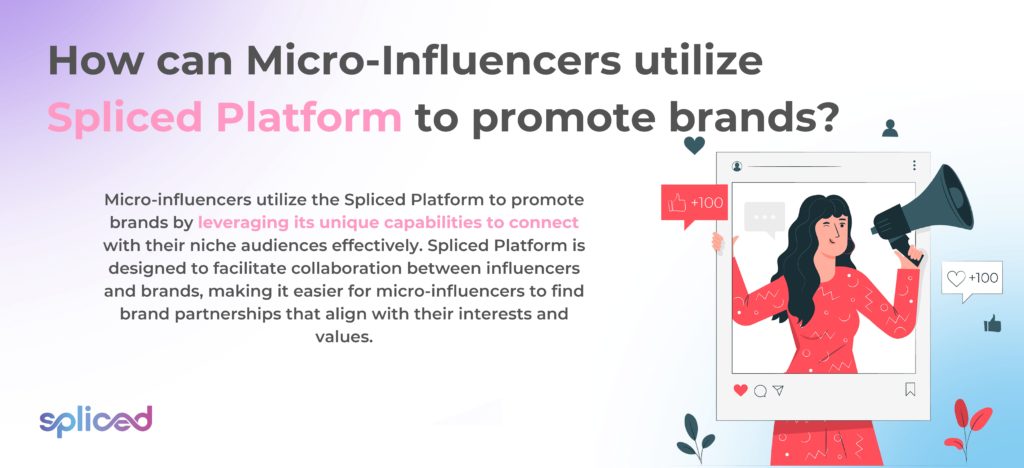
How can Micro-Influencers utilize Spliced Platform to promote brands?
Micro-influencers use Spliced to connect with brands seeking authentic, niche-focused partnerships. Spliced helps creators discover brand opportunities aligned with their values and audience, streamlining collaboration discovery. The platform enables micro-influencers to maintain credibility with followers while accessing high-intent brand partnerships. Spliced provides content planning tools and performance tracking, allowing creators to produce high-quality content that resonates with audiences while meeting brand campaign requirements. By using Spliced, micro-influencers measure campaign performance through commerce attribution, verifying which content drives measurable audience engagement and sales outcomes. This data helps micro-influencers optimize future campaigns and demonstrate clear ROI to brands, creating mutually beneficial partnerships.
What type of content do Micro-influencers post?
Micro-influencers produce diverse content formats to engage followers and deliver brand messaging within their specialized communities. Product reviews and recommendations rank among the most common content types. Micro-influencers offer detailed evaluations of products or services they have tested, sharing written posts, videos, or comparison imagery that communicate features, benefits, and personal experiences. This content helps their audience make informed purchasing decisions.
Tutorials and how-to guides constitute another significant content category. Micro-influencers demonstrate their expertise through step-by-step instructions covering DIY projects, fitness routines, cooking methods, and specialized techniques. Their followers gain practical knowledge and actionable guidance directly applicable to their own interests.
Personal storytelling drives authenticity across micro-influencer channels. Sharing behind-the-scenes moments, travel experiences, challenges, and life milestones creates relatable connections with audiences. Micro-influencers blend educational content, relatable narratives, and visually appealing media to deliver brand messages tailored to their niche communities while maintaining the authentic voice their followers value.
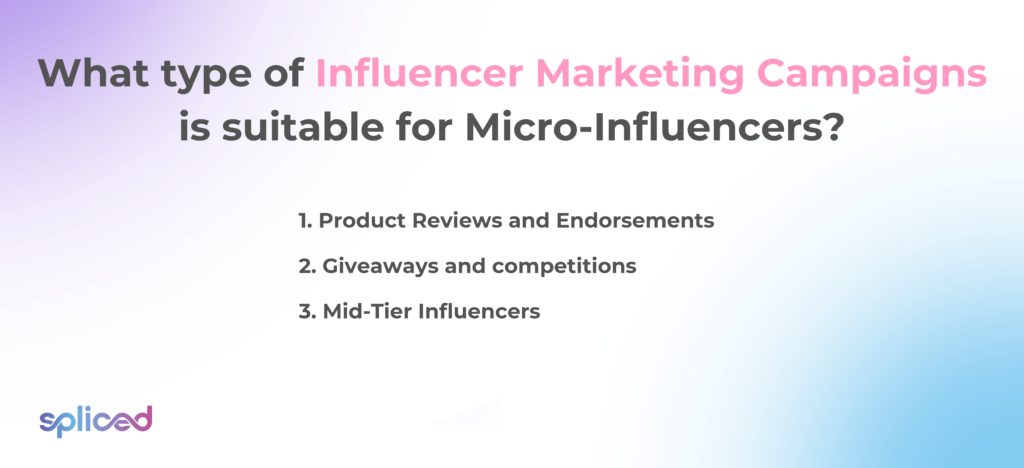
What type of Influencer Marketing Campaigns is suitable for Micro-Influencers?
Micro-influencers excel in three primary campaign types that align with their audience engagement strength and niche authority.
- Product Reviews and Endorsements: Micro-influencers deliver authentic product reviews when brands provide early access to goods or services. Their specialized knowledge in specific categories allows them to offer credible guidance that resonates with engaged followers. This approach works best when product category matches the influencer’s established niche, ensuring seamless content integration.
- Giveaways and Competitions: Micro-influencers amplify audience participation through giveaway campaigns and contests. These initiatives increase follower engagement, elevate brand visibility, and strengthen community connection. Influencer marketing campaigns centered on giveaways allow brands to showcase products while leveraging the influencer’s ability to build genuine relationships with their audience.
- Affiliate Marketing and Promo Codes: Micro-influencers generate sales through affiliate links and exclusive discount codes shared with their followers. Compensation flows from actual purchases made using these codes, aligning incentives with measurable results. These campaigns succeed when product offerings match audience interests, combining trust and conversion potential into trackable revenue.
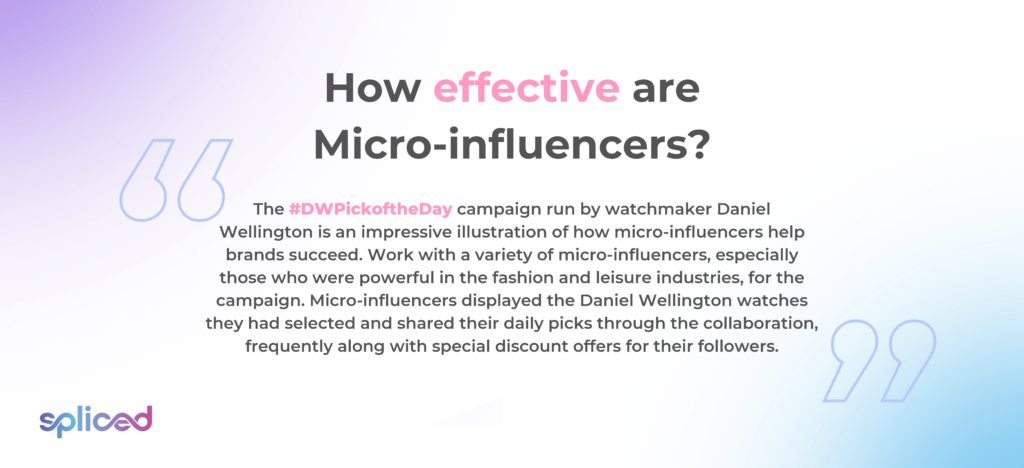
How effective are Micro-influencers?
Micro-influencer effectiveness appears clearly in real brand campaigns. Fashion and lifestyle brands collaborate with multiple micro-influencers to reach engaged audiences. In 2026, brands report that micro-influencer campaigns generate 60% higher engagement rates than macro-influencer partnerships, and deliver $5.50 return per $1 spent on average. Authentic product integration drives measurable results across multiple channels.
Measurable outcomes include increased website traffic, higher engagement rates measured through likes, comments, and shares, and direct sales from affiliate links and promo codes. Micro-influencers build trust through consistent niche content and direct audience interaction. Their followers perceive recommendations as genuine rather than purely transactional. This authenticity translates into conversion behavior across product categories from fashion to technology to health and wellness.
Micro-influencer effectiveness compounds when brands coordinate multiple partnerships. A coordinated campaign across five to ten micro-influencers reaches broader audiences while maintaining the high engagement rates that make this channel valuable. Brands measure success through attribution tracking, engagement metrics, and sales lift. When micro-influencers align with brand values and audience interests, campaign results consistently outperform expectations relative to cost and campaign scope.
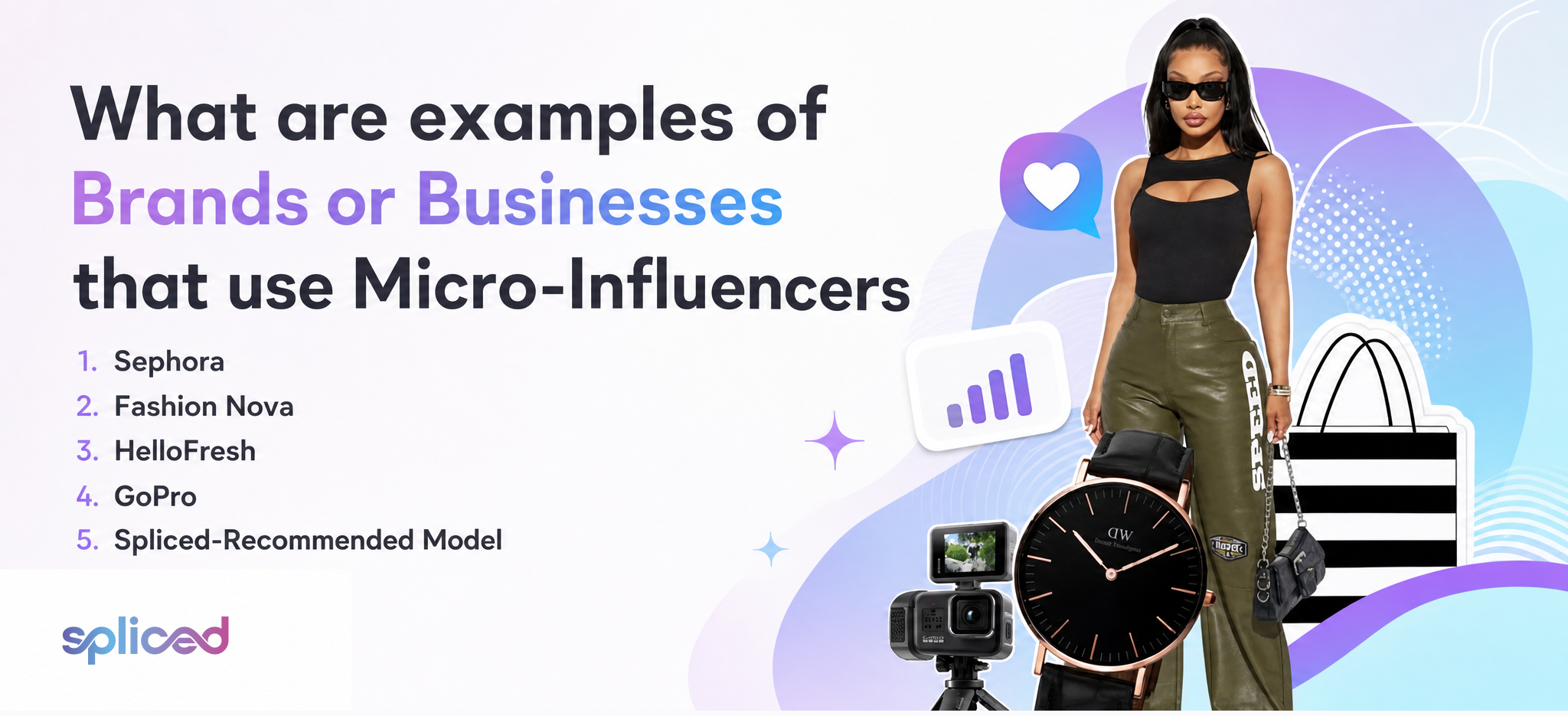
What are examples of Brands or Businesses that use Micro-Influencers
Listed below are examples of brands and businesses leveraging micro-influencers for 2026 campaigns across multiple verticals.
- Sephora: Sephora partners with micro-influencers in the beauty sector to demonstrate products through makeup tutorials, application reviews, and live product demonstrations. These creators deliver authentic recommendations that resonate with followers, strengthening brand trust and driving measurable conversion rates.
- Fashion Nova: Fashion Nova collaborates with fashion and lifestyle micro-influencers who showcase clothing through styled flat-lays, outfit-of-the-day posts, and lookbook content. These partnerships connect the brand with younger audiences and establish visibility in trending fashion categories.
- HelloFresh: HelloFresh engages with food and nutrition micro-influencers to create meal preparation tutorials, recipe adaptations, and unboxing content featuring their meal kits. These collaborations highlight convenience and ingredient quality to health-conscious audiences.
- GoPro: GoPro works with adventure, travel, and sports micro-influencers who document action sequences and outdoor experiences using GoPro cameras. User-generated content from these partnerships demonstrates camera durability and creative versatility across extreme conditions.
- Spliced-Recommended Model: B2B SaaS companies, fintech platforms, and consulting firms now collaborate with micro-influencers in professional niches. Spliced enables brands to identify creators with specialized expertise and track which creator partnerships drive qualified leads and measurable business outcomes, especially for Amazon and TikTok Shop sellers seeking attribution clarity.
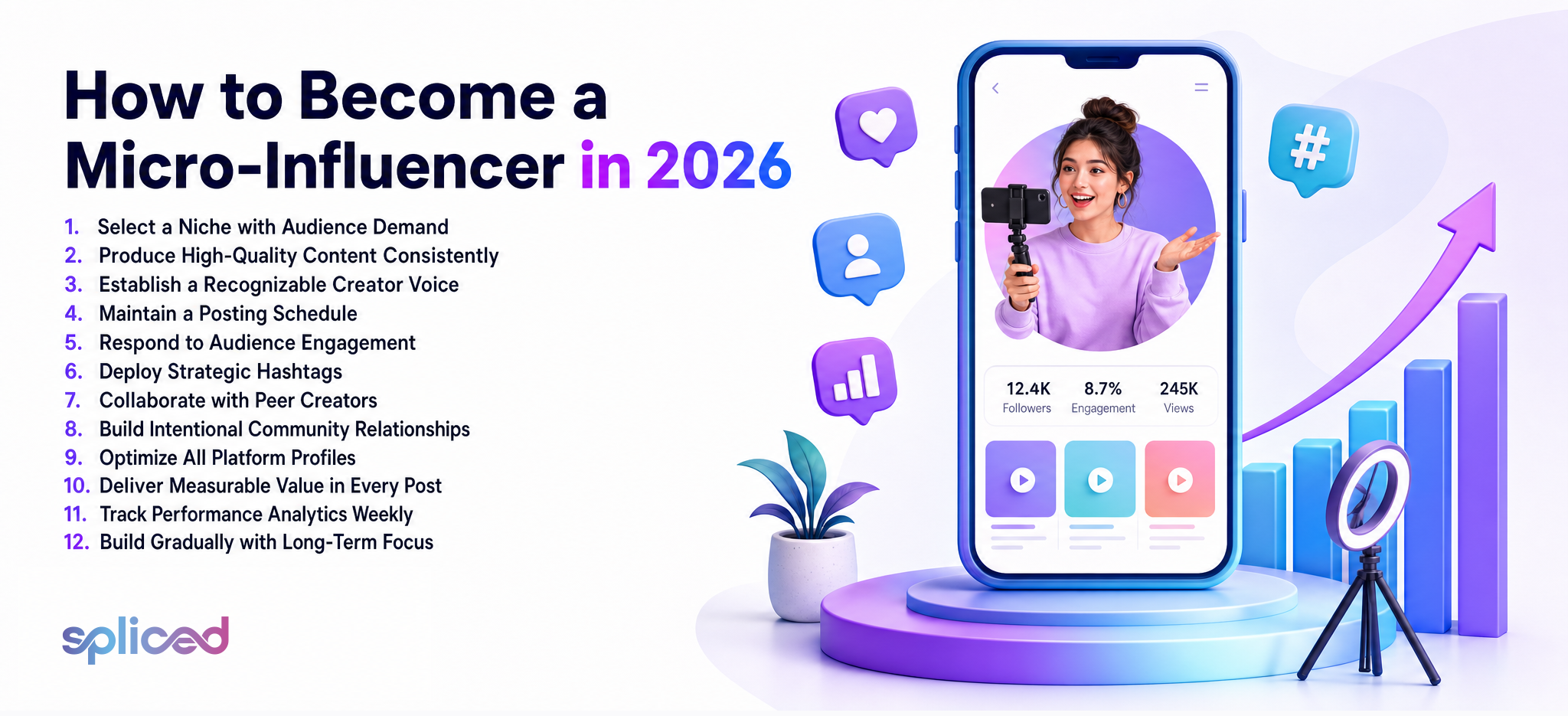
How to Become a Micro-Influencer in 2026
Listed below are the steps to building a micro-influencer presence across multiple platforms in 2026.
- Select a Niche with Audience Demand: Choose a specific topic or field where you possess genuine expertise and sustained interest. Verify that your chosen niche has active communities and measurable audience demand on primary platforms.
- Produce High-Quality Content Consistently: Create visually polished, informative content in multiple formats: photos, videos, written posts, and short-form clips. Ensure all content demonstrates value to your target audience through actionable insights or entertainment.
- Establish a Recognizable Creator Voice: Develop distinct messaging, visual style, and communication tone that differentiate you from competitors. Consistency in voice builds audience recognition and trust over time.
- Maintain a Posting Schedule: Publish content on fixed intervals aligned with platform algorithms and audience behavior. Consistent posting increases visibility and signal to algorithms that you are an active, reliable creator.
- Respond to Audience Engagement: Reply to comments, answer direct messages, and participate in community discussions. Direct interaction strengthens follower relationships and improves algorithmic ranking through engagement signals.
- Deploy Strategic Hashtags: Research both broad and niche-specific hashtags relevant to your content. Tag selection expands discoverability among users actively searching in your field.
- Collaborate with Peer Creators: Partner with other micro-influencers, emerging creators, and established figures for cross-promotions, duets, and joint projects. Collaborations expose your content to adjacent audiences.
- Build Intentional Community Relationships: Engage authentically with other creators in your niche by liking, commenting, and sharing their content. Community presence builds reciprocal visibility and strengthens niche authority.
- Optimize All Platform Profiles: Maintain clear, consistent bios, profile images, and branding across Instagram, TikTok, YouTube, LinkedIn, and Pinterest. Profile optimization communicates your niche expertise immediately to potential followers.
- Deliver Measurable Value in Every Post: Each piece of content should offer educational insights, entertainment, inspiration, or practical application. Value-driven content attracts followers who trust your recommendations for brand partnerships.
- Track Performance Analytics Weekly: Monitor engagement rates, reach, impressions, follower growth, and audience demographics using native platform tools. Data-driven adjustments improve content relevance and algorithm performance.
- Build Gradually with Long-Term Focus: Sustainable growth requires months to years of consistent effort. Prioritize authentic audience building over rapid follower acquisition through artificial means.

Is it hard to become a Micro-Influencer?
Yes, becoming a micro-influencer requires sustained effort across multiple dimensions. Building credibility in your chosen niche demands deep subject knowledge, consistent content production, and active audience engagement over months. Niche-specific competition intensified in 2026 as more creators recognized micro-influencer opportunity; standing out requires originality, strategic differentiation, and unwavering authenticity. Success depends on consistent posting schedules, meaningful follower interactions, and adaptation to platform algorithm changes.
However, difficulty varies by niche maturity and your existing audience foundation. Building genuine relationships with followers takes time and deliberate community engagement. The advantage of specializing in a specific niche is that engaged audiences reward consistent value more readily than generalist creators attract broad followings. Micro-influencers demonstrate measurably higher engagement rates and stronger conversion performance than macro-influencers despite smaller audience size, making the effort strategically sound for brands and creators alike.
Authenticity compounds advantage when your content aligns with personal expertise and genuine interests. Niche communities actively support creators who provide substantive insights and consistent value. Growth accelerates once you establish authority; micro-influencers with proven expertise achieve measurably faster follower increases and stronger engagement patterns compared to macro-influencers entering new niches. The initial phase is challenging, but niche-focused strategy yields compounding returns.
Does it take a long time to become a Micro-Influencer?
Yes, becoming a micro-influencer takes considerable time. Growth timelines vary based on niche saturation, content quality, engagement strategy effectiveness, and network depth. Reaching the 10,000 follower threshold typically requires 6 to 24 months of consistent publishing, depending on platform, niche, and audience targeting accuracy.
Building loyal, engaged followers and establishing niche authority requires sustained effort. Many successful micro-influencers invest 12 to 36 months of consistent content creation before achieving meaningful influence and brand partnership opportunities. Timeline compression depends on your existing platform experience, audience familiarity with your niche, and ability to produce differentiated content. Slow, steady growth yields more sustainable engagement metrics and authentic follower bases than rapid follower acquisition. Consistency in posting frequency, content quality, and community interaction accelerates growth more effectively than sporadic high-effort campaigns.
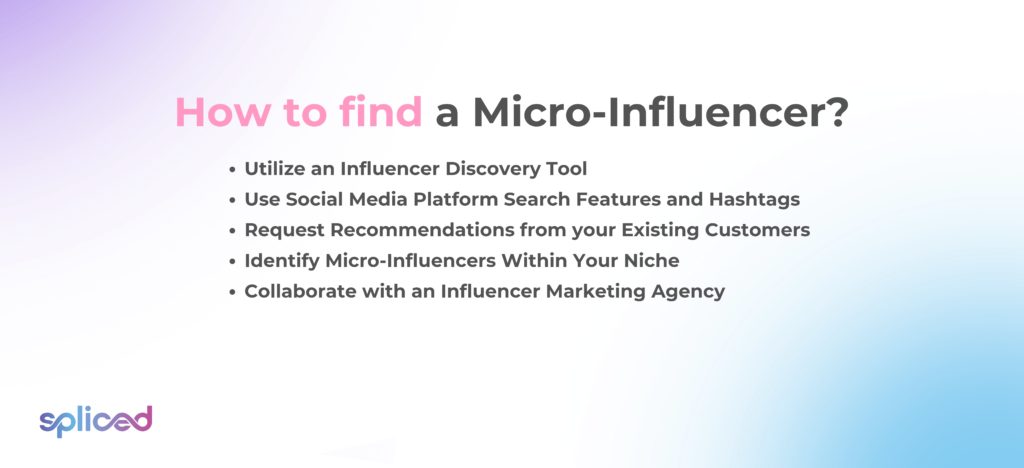
How to find a Micro-Influencer in 2026
Finding micro-influencers requires systematic research across discovery tools, social platforms, customer networks, and niche communities. The process has evolved in 2026 to prioritize engagement metrics and audience authenticity over follower counts alone. Listed below are the five primary methods to find influencers effectively aligned with your brand.
- Utilize an Influencer Discovery Tool: Influencer discovery platforms filter micro-influencers by niche, engagement rate, follower range, location, and audience demographics. Tools like Spliced.io, AspireIQ, HypeAudience, and Influee provide data-driven recommendations that verify audience quality and content authenticity. Brands using these tools reduce manual search time by 70 percent and identify creators whose metrics match campaign objectives.
- Use Social Media Platform Search Features and Hashtags: Search Instagram, TikTok, LinkedIn, YouTube, and Pinterest using niche-specific hashtags and keywords. TikTok creators with 10,000 to 500,000 followers generate 5 to 15 percent engagement rates in 2026, making direct platform search an effective discovery method. Filter by engagement rather than follower count to find authentic creators.
- Request Recommendations from Existing Customers: Survey current customers about micro-influencers they follow and trust. Customer recommendations identify creators already aligned with your brand values and audience interests, improving partnership fit and campaign authenticity.
- Identify Micro-Influencers Within Your Niche: Research industry leaders, thought leaders, and content creators actively producing niche-specific material. Evaluate their audience composition, engagement patterns, and content quality to ensure alignment with brand positioning.
- Collaborate with an Influencer Marketing Agency: Influencer marketing agencies maintain networks of vetted micro-influencers and handle outreach, contract negotiation, and campaign management. Agencies streamline partnership logistics and provide performance tracking through integrated platforms like Spliced, which connects creator activity to measurable sales outcomes on Amazon and TikTok Shop.
1. Utilize an influencer discovery tool
An influencer discovery tool is software that automates the process of finding micro-influencers based on specific criteria. These platforms search across Instagram, TikTok, YouTube, LinkedIn, and Pinterest to identify creators matching niche, engagement rate, follower range, location, and audience demographics.
Discovery tools use algorithms to evaluate audience authenticity, content quality, and engagement patterns. Users input parameters such as niche, follower count range (typically 10,000 to 100,000 for micro-influencers), engagement rate threshold, and target audience demographics. The tool then compiles profiles of creators meeting these specifications, ranked by relevance and engagement quality.
Influencer discovery tools save marketing teams 60 to 80 hours per quarter by eliminating manual research. These platforms provide verified metrics, including engagement rate, audience composition, content authenticity scores, and recent posting activity. Brands can evaluate creators quickly and confidently before outreach.
The best discovery tools integrate with campaign management systems, allowing brands to track influencer performance from partnership launch through post-campaign analysis. Tools provide niche targeting capabilities, ensuring creators specialize in relevant topics and maintain engaged, high-quality audiences aligned with brand objectives.
AspireIQ stands out as a widely used discovery platform in 2026. The tool filters micro-influencers by engagement metrics, audience demographics, and content authenticity. AspireIQ provides detailed insights into follower composition, posting frequency, and audience sentiment, enabling informed collaboration decisions. Brands using AspireIQ report 40 percent faster influencer identification and improved partnership fit compared to manual discovery.
For brands focused on commerce attribution, Spliced integrates influencer discovery with performance tracking. Spliced helps brands identify micro-influencers on TikTok and Amazon, then measure which creator content drives measurable sales outcomes. This approach combines discovery efficiency with attribution accuracy, essential for data-driven influencer marketing in 2026.
2. Use social media platform search features and hashtags
Direct platform search identifies micro-influencers actively creating niche-specific content. Using built-in search tools and hashtags on Instagram, TikTok, YouTube, LinkedIn, and Pinterest surfaces creators genuinely engaged with your industry or topic.
Enter niche keywords into platform search bars and review content tagged with relevant hashtags. On TikTok, creators with 10,000 to 500,000 followers show 5 to 15 percent engagement rates in 2026, making them discoverable through hashtag research. Filter results by engagement metrics such as comment count, share rate, and save rate rather than follower count alone. This approach identifies authentic creators with receptive, quality audiences.
Platform search offers real-time visibility into engagement levels, audience comments, and content resonance. Review recent posts from discovered creators to assess content quality, posting frequency, audience interaction patterns, and alignment with your brand positioning. This direct evaluation reduces discovery bias and confirms creator authenticity.
The method is particularly effective for identifying micro-influencers with strong niche authority but limited visibility on broader discovery platforms. Creators focused on B2B SaaS, fintech, professional services, and consulting categories often gain prominence through platform search and hashtag research before appearing on aggregated discovery tools.
Example: A fitness apparel brand searches Instagram for hashtags including #FitnessJourney, #WorkoutMotivation, and #HealthyLifestyle. The brand discovers micro-influencers sharing workout routines, nutrition content, and transformation stories. By reviewing engagement metrics on recent posts (comments, saves, shares), the brand identifies creators with 15,000 to 75,000 followers and 8 to 12 percent engagement rates. These metrics indicate an engaged, authentic audience aligned with the brand’s target customer base. The brand then reaches out with collaboration proposals tailored to each creator’s content style and audience interests.
3. Request recommendations from your existing customers
Requesting recommendations from existing customers means contacting people who have purchased products or services and asking them to recommend micro-influencers they follow whose content aligns with your brand’s niche.
Contact current customers through surveys, email campaigns, or social media posts. Ask which micro-influencers they find most credible in your industry. Customers identify creators whose audiences match your target demographic and whose values reflect your brand positioning.
Existing customers understand your brand and its positioning. Their recommendations surface micro-influencers with proven appeal to your intended audience and whose content naturally complements your product or service category.
Customer recommendations provide an authentic discovery method for micro-influencers. This approach leverages your customer base’s knowledge of influencers who genuinely resonate with similar audiences. Micro-influencers recommended by customers align with brand values and appeal to your target demographic more reliably than cold outreach.
Collaborating with customer-recommended micro-influencers strengthens campaign authenticity. Their endorsements carry credibility built from your existing customer relationships. Involving customers in influencer discovery increases brand loyalty and reinforces community connection.
For example, an eco-conscious skincare brand surveys customers asking which skincare micro-influencers they trust and follow. Responses reveal creators who emphasize sustainable beauty practices and environmental responsibility. The brand then partners with these suggested micro-influencers, knowing the collaboration resonates with current customers while advancing brand values.
4. Identify micro-influencers within your niche
Identify micro-influencers active in your specific industry or topic by researching content creators with established expertise and audience trust. Research social media platforms and online communities to find creators who regularly produce niche-relevant content, engage authentically with followers, and demonstrate genuine passion for their field.
Niche-specific identification ensures your partners possess industry knowledge and deliver credible recommendations your target audience accepts. This strategic approach leverages their subject matter expertise to establish authentic connections with relevant audiences.
Micro-influencers embedded deeply in your niche create authentic endorsements through genuine expertise and passion. Their established authority makes recommendations impactful for followers. Content integration appears organic because their niche focus naturally aligns with brand messaging, creating seamless collaborations that resonate with receptive audiences.
A fitness supplement company identifies micro-influencers actively sharing workout routines, nutritional guidance, and fitness milestones across TikTok and Instagram. These creators command strong engagement from health-conscious followers. The brand partners with them, leveraging their established credibility to demonstrate product benefits to an audience already invested in fitness results.
5. Collaborate with an influencer marketing agency
Collaborate with an influencer marketing agency. Partner with a specialized firm that identifies, connects, and manages collaborations between brands and micro-influencers across multiple platforms.
Brands define marketing objectives and selection criteria to the agency. The agency leverages its networks, data, and experience to identify suitable micro-influencers, negotiate partnership terms, establish campaigns, and track performance metrics throughout execution.
Agency partnerships accelerate influencer identification and management while reducing internal resource allocation. Brands access specialized industry knowledge and focus resources on strategy and execution elsewhere.
Influencer marketing agencies streamline partnership workflows and deliver measurable advantages. Their industry expertise ensures brand alignment with suitable micro-influencers. Agencies manage time-intensive activities including discovery, outreach, and contract negotiation, optimizing resource efficiency.
Agencies develop campaign strategies aligned with brand objectives and values. They maintain ongoing influencer relationships, ensuring smooth collaboration execution and sustained partnership impact. Agencies provide comprehensive performance data and analytics, enabling data-driven optimization and informed future campaign decisions.
A fashion retailer launching a 2026 micro-influencer campaign partners with an influencer marketing agency. The agency identifies fashion creators whose aesthetic matches brand positioning, manages communications, establishes content requirements including TikTok Shop and Amazon affiliate integration, and monitors campaign results. The agency’s expertise delivers successful outcomes reaching relevant audiences and achieving measurable sales impact.
How much do Micro-Influencers charge?
Micro-influencers with 10,000 to 100,000 followers charge $10 to $20 per 1,000 followers in 2026, adjusting upward for higher engagement and specialized niches. On Instagram, rates typically range from $100 to $1,000 per post depending on audience quality and follower count. TikTok creators with 100,000 to 500,000 followers average 5 percent to 15 percent engagement rates and charge $500 to $2,000 per video. Twitter micro-influencers charge $200 to $800 per tweet based on niche authority. B2B SaaS and fintech micro-influencers command higher rates due to audience value. Rates vary significantly by platform, engagement quality, niche specialization, and content type.
Monthly earnings for active micro-influencers range from $500 to $5,000 depending on collaboration frequency, follower count, and engagement rates. Many supplement sponsorship income through affiliate marketing, TikTok Shop commissions, Amazon affiliate links, merchandise sales, and consulting services. Accurate 2026 rates require direct outreach to creators in your niche, as pricing reflects platform algorithm changes and audience demographics rather than follower count alone.
Are there Micro-Influencers that work for free?
Yes, some micro-influencers accept product exchanges, affiliate commissions, or portfolio credit instead of upfront payment. Emerging creators building initial audiences often partner with brands for free products or services. As follower counts and engagement metrics grow, most micro-influencers transition to paid partnerships. Established creators with 50,000 or more followers rarely accept unpaid collaborations. Negotiating barter arrangements or performance-based compensation structures remains viable for early-stage partnerships or long-term brand relationships in 2026.
Are Micro-Influencers more cost-effective compared to Macro-influencers?
Yes, micro-influencers deliver 2 to 3 times better return on investment than macro-influencers in 2026. Micro-influencers charge $500 to $2,000 per post, while macro-influencers with 1 million or more followers charge $5,000 to $50,000 or higher. Micro-influencers reach highly engaged, niche audiences where endorsements convert to sales more reliably than broad reach to disengaged followers. A $1,000 investment with a micro-influencer generates approximately $5.50 in measurable sales outcomes compared to $1 spent, according to 2026 attribution studies. Authenticity and community trust amplify conversion rates, making micro-influencer partnerships a superior investment for brands with limited budgets or specific customer segments.
Where to find Micro-Influencers?
Multiple discovery methods connect brands with micro-influencers aligned to specific niches. Influencer discovery platforms including HypeAudience, Upfluence, and AspireIQ use advanced filters for follower count, engagement rates, audience demographics, and niche focus. Instagram, TikTok, YouTube, LinkedIn, and Pinterest native search tools with relevant hashtags surface active creators in your category. Industry forums, Facebook groups, and Reddit communities host engaged micro-influencers discussing niche topics. Competitor analysis reveals which micro-influencers partner with similar brands. Customer recommendations identify trusted voices in your audience. Industry events and conferences provide direct networking with micro-influencers. Evaluate engagement rates, content quality, authenticity, audience alignment, and platform growth trajectory before outreach to ensure partnership fit.
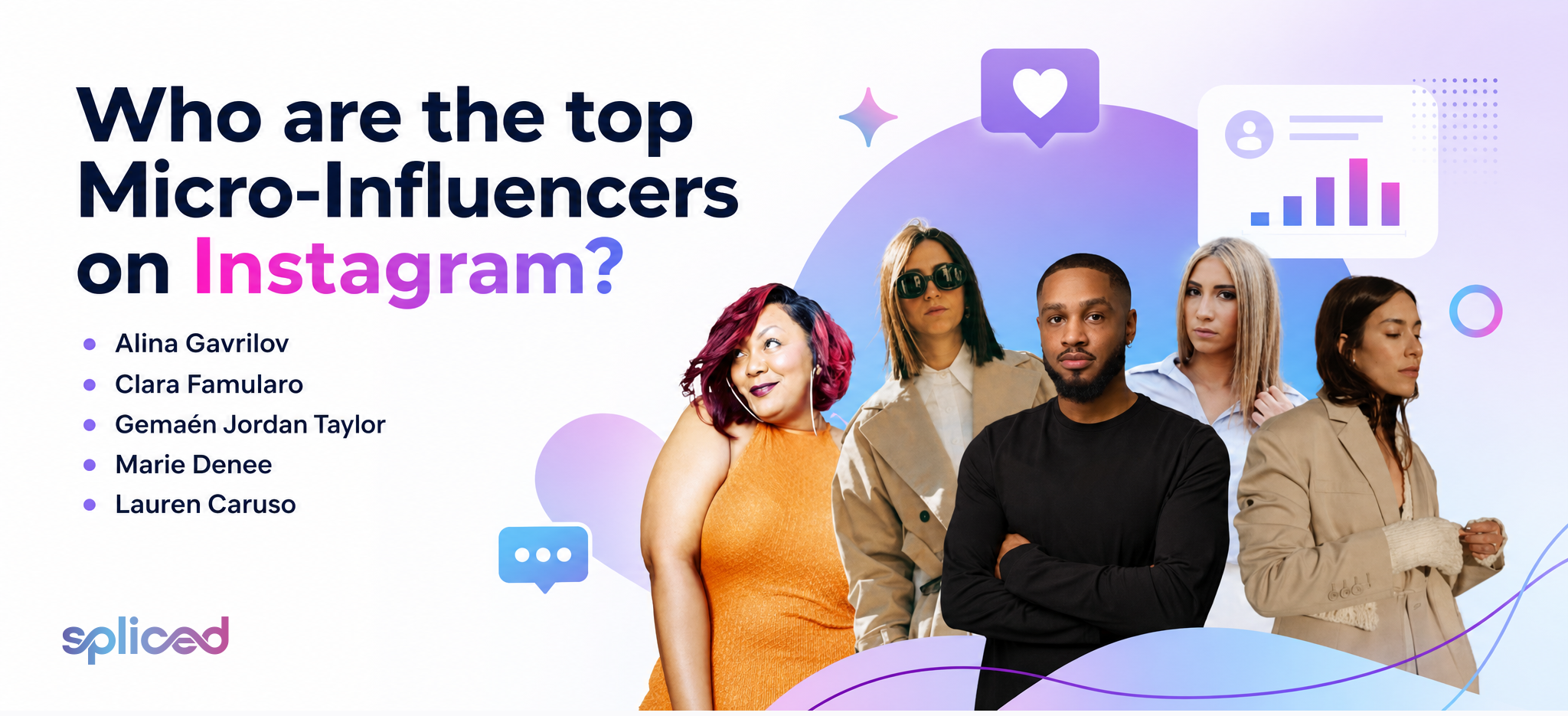
Who are the top Micro-Influencers on Instagram?
Top Instagram micro-influencers in 2026 span fashion, beauty, wellness, fitness, and lifestyle verticals with follower counts between 10,000 and 100,000. Fashion-focused creators maintain strong engagement through outfit styling, trend analysis, and seasonal collections. Beauty experts provide makeup tutorials, skincare reviews, and product recommendations. Wellness and fitness micro-influencers build communities around nutrition, workouts, and mental health. Verify current follower counts, engagement rates, and recent activity before outreach, as influencer status and audience size shift throughout 2026. Authentic micro-influencers with consistent posting schedules, high comment-to-follower ratios (3 percent or above), and audience alignment deliver measurable campaign results. Use platform search with niche hashtags like #MicroInfluencer, #InfluencerMarketing, or vertical-specific tags to identify current creators matching brand values and target demographics. Direct DM outreach after reviewing recent content ensures partnership relevance and authentic endorsement potential.
Five prominent micro-influencers on Facebook in 2026 include Molly Burke, Liz Williams, Jeremy Foster, Ben Uyeda, and Brianne Manz. These creators maintain engaged audiences through lifestyle, travel, DIY, and family content with follower bases in the 10,000 to 50,000 range.
Molly Burke is an author, model, and accessibility advocate with 47,000 Facebook followers. Burke, who is blind, uses her platform to inspire audiences through personal stories and experiences. Burke has partnered with major brands including Dove, Samsung, and Audible while maintaining advocacy work with the United Nations Foundation. Coverage by People, Allure, Variety, The New York Times, and The Washington Post demonstrates her influence in the accessibility and lifestyle space.
Liz Williams, known as LizLizLive on social platforms, is a UK-based beauty and fashion micro-influencer with 31,000 Facebook followers in 2026. Williams creates content focused on makeup, hair care, fitness, and product reviews with particular emphasis on beauty for women of color.
Jeremy Foster is a travel blogger and photographer based in Washington, D.C. with 22,000 Facebook followers. Foster’s travel photography and destination guides have earned coverage in National Geographic, Vanity Fair, and The New York Times. His website provides travel product reviews, destination articles, and practical travel advice.
Ben Uyeda, founder of HomeMade Modern, maintains 19,000 Facebook followers interested in DIY furniture and design projects. Uyeda’s company develops sustainable, affordable modern furniture plans. His work with MINI and focus on eco-friendly design resonates with audiences seeking budget-conscious, functional home solutions.
Brianne Manz, a parenting and lifestyle blogger, has 18,000 Facebook followers who engage with her New York City family content. Manz shares posts about local attractions, family wellness, and fashion while maintaining sponsored partnerships with real estate and lifestyle brands. She previously owned a fashion retail business and continues creating content on fashion and travel.
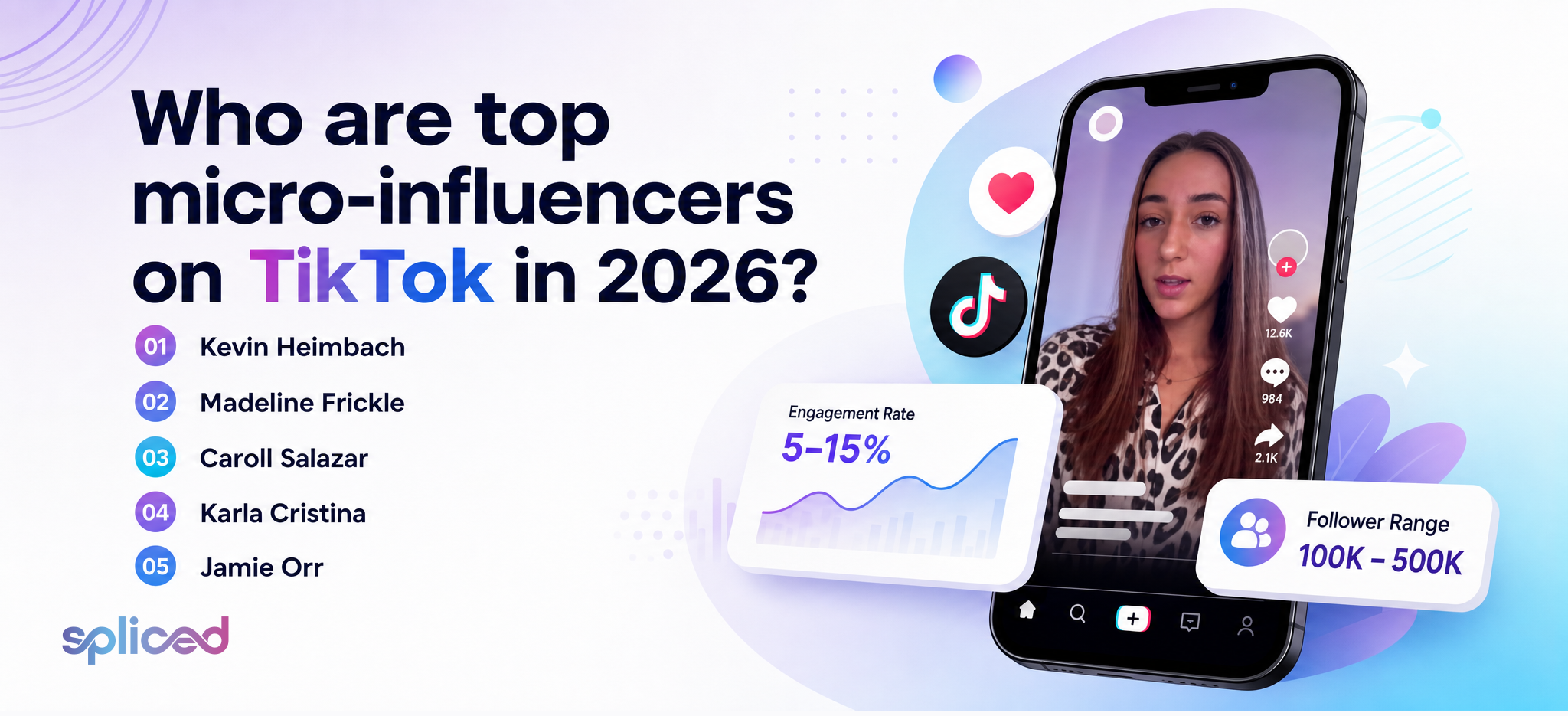
Who are top micro-influencers on TikTok in 2026?
Five active micro-influencers on TikTok in 2026 include Kevin Heimbach, Madeline Frickle, Caroll Salazar, Karla Cristina, and Jamie Orr. These creators span lifestyle, fashion, home design, and entertainment niches with 5-15% engagement rates typical for the 100,000 to 500,000 follower range on TikTok.
Kevin Heimbach is a theme park and entertainment micro-influencer with 48,000 TikTok followers. Heimbach creates content reviewing and recapping major theme parks including Universal Studios and Busch Gardens. His coverage of rides, dining experiences, and seasonal festivals such as Wurstfest provides entertainment-focused audiences with detailed park guides and event coverage.
Madeline Frickle, a TikTok creator from Texas, shares college lifestyle and daily routine content with 41,000 followers in 2026. Frickle’s videos document her food, fashion, and product preferences while highlighting shopping recommendations and personal care routines relevant to her peer audience.
Caroll Salazar, known as MakeupHuney, maintains 38,000 followers across platforms. While recognized for beauty tutorials and product recommendations, Salazar creates diverse content spanning fashion, motherhood, marriage, and travel experiences that build community beyond beauty verticals.
Karla Cristina is a fashion and lifestyle micro-influencer with 33,000 TikTok followers who engage with try-on hauls, skincare reviews, and beauty tutorials. Cristina shares behind-the-scenes modeling content and shopping haul updates that resonate with fashion-conscious audiences.
Jamie Orr manages the Dear Home Pinterest and TikTok presence with 16,000 followers focused on home design and DIY projects. Orr’s content spans entertaining ideas, recipe development, and bathroom renovations that appeal to DIY audiences seeking actionable home improvement guidance.
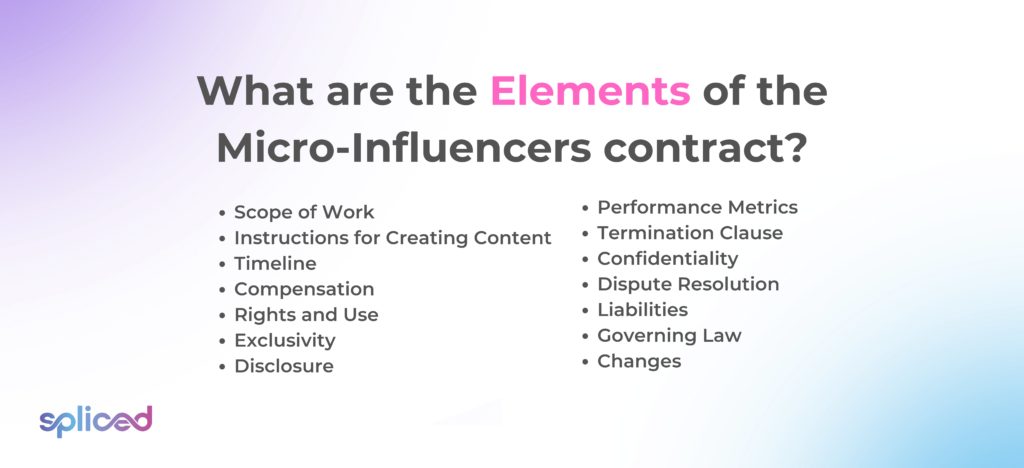
What are the elements of the Micro-Influencers contract?
A micro-influencer contract formalizes the partnership between a brand and creator. The agreement must specify deliverables, compensation, timelines, content rights, and compliance obligations to protect both parties and ensure campaign success.
- Scope of Work: Define the exact deliverables. This includes the number of posts, video length, platform placement (TikTok, Instagram Reels, feed posts, stories), and any Amazon affiliate or TikTok Shop integration requirements.
- Content Guidelines: Provide clear direction on brand messaging, required hashtags, product mentions, visual style, and FTC compliance such as #ad or #sponsored disclosure placement.
- Timeline and Milestones: Establish content submission dates, review periods, revision rounds, and posting dates. Clear deadlines reduce delays and communication gaps.
- Compensation and Payment Terms: State the total fee, whether paid in cash, products, services, or a combination. Include payment schedule, method, and due dates.
- Usage Rights: Clarify how each party can use the created content. Specify whether the brand can repost on their channels, in ads, or on their website, and for how long.
- Exclusivity Clause: Define whether the influencer can work with competing brands during the campaign period and for a set time after.
- Disclosure Requirements: Mandate clear, compliant disclosure of the partnership using FTC-approved language and hashtags in every post.
- Performance Metrics and Reporting: Define key performance indicators such as engagement rate, click-through rate, reach, and conversions. Include how and when performance data will be shared.
- Termination and Breach Clause: Set conditions for early contract termination, such as failure to deliver on schedule or violation of content guidelines.
- Confidentiality: Protect proprietary information shared during the partnership, including unreleased products, pricing, or campaign strategy.
- Dispute Resolution: Specify how disagreements are resolved, whether through negotiation, mediation, or arbitration.
- Liability and Indemnification: Clarify responsibility for claims arising from the content, such as false advertising, copyright infringement, or defamation.
- Governing Law: Specify the jurisdiction and applicable law in case of legal dispute.
- Amendments: Explain how contract changes are made and require written approval from both parties.
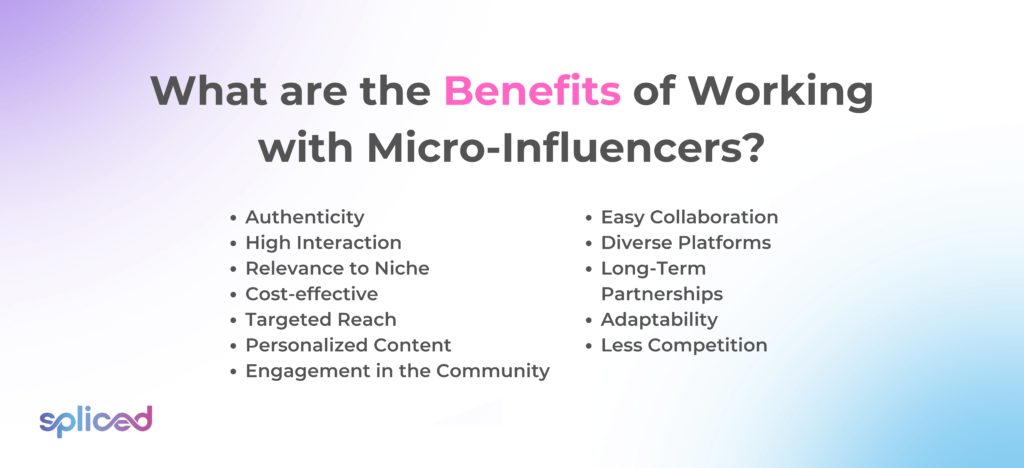
What are the Benefits of Working with Micro-Influencers?
Micro-influencers deliver measurable advantages for brands across cost, engagement, and ROI metrics. According to 2026 data, 89% of marketers prefer micro-influencers over macro-influencers, and campaigns generate 60% higher engagement rates and $5.50 return per $1 spent.
- Authenticity and Trust: Micro-influencers maintain genuine relationships with their followers. Their endorsements feel credible because they actively engage with their audience and share personal experiences with products.
- Higher Engagement Rates: Micro-influencers achieve 60% higher engagement than macro-influencers. Smaller follower counts foster deeper interactions, including comments, saves, and shares that signal genuine interest.
- Niche Authority: Micro-influencers specialize in specific verticals such as fitness, beauty, B2B SaaS, fintech, or wellness. This expertise makes their recommendations relevant to highly targeted audiences.
- Cost Efficiency: Micro-influencers charge significantly less than macro-influencers. Rates range from $10 to $20 per 1,000 followers on most platforms, making campaigns accessible to brands with limited budgets.
- Targeted Audience Reach: Followers of micro-influencers share specific interests aligned with the niche. This targeted reach increases conversion likelihood compared to broader campaigns targeting generic audiences.
- Customized Content: Micro-influencers adapt content to match their audience’s preferences and communication style. This personalization drives higher response rates and brand recall.
- Community Building: Micro-influencers cultivate tight-knit communities where followers actively participate. Brands gain access to engaged groups that are predisposed to try recommended products.
- Straightforward Collaboration: Micro-influencers typically handle negotiations directly without agents or managers. Communication is clearer and faster, reducing friction in campaign setup and execution.
- Multi-Platform Presence: Most micro-influencers maintain active profiles across TikTok, Instagram, YouTube, LinkedIn, and Pinterest. Brands can amplify reach across multiple channels with a single partnership.
- Sustained Partnerships: Long-term relationships with micro-influencers create recurring exposure and sustained brand visibility without renegotiating repeatedly.
- Content Flexibility: Micro-influencers willingly adjust messaging, format, and creative direction to align with brand values and campaign objectives.
- Lower Competition for Partnerships: Fewer brands pursue micro-influencers compared to macro-influencers. This reduces booking time and increases the likelihood of securing preferred creators.
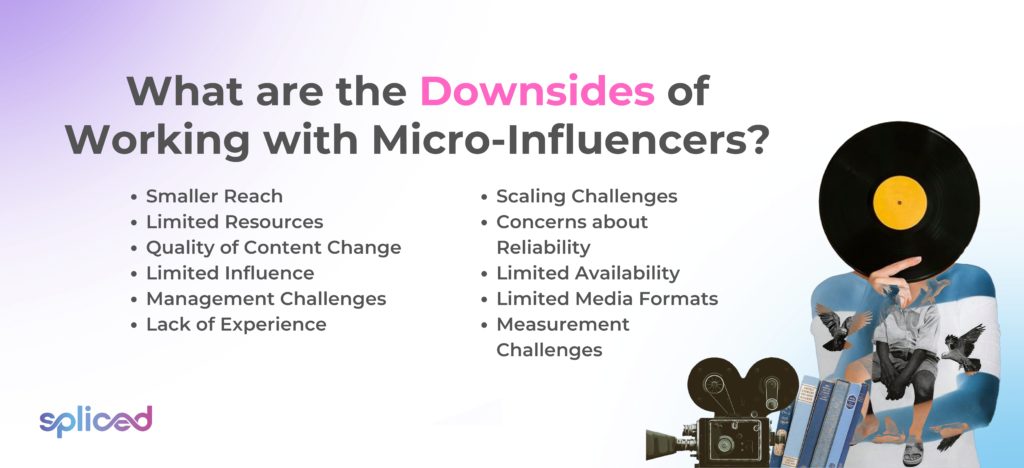
What are the Downsides of Working with Micro-Influencers?
While micro-influencers offer benefits, brands should evaluate practical limitations before committing. Common challenges include limited reach, management complexity, and measurement inconsistency across multiple creators.
- Limited Audience Scale: Micro-influencers reach smaller audiences than macro-influencers. Brands requiring broad awareness may need to coordinate with multiple creators to achieve campaign reach targets.
- Resource Constraints: Most micro-influencers work independently without professional production teams. Equipment, editing, and turnaround times may not match the standards of larger agencies.
- Inconsistent Content Quality: Quality varies significantly between micro-influencers. Some produce highly polished content; others do not. This inconsistency can dilute brand perception across a multi-creator campaign.
- Niche-Specific Impact: Influence remains concentrated within their niche. Breaking beyond that niche requires working with multiple creators across different verticals, increasing complexity.
- Campaign Management Overhead: Managing 10 to 50 micro-influencers requires significantly more coordination than managing 1 to 3 macro-influencers. This creates administrative burden and communication delays.
- Limited Campaign Experience: Many micro-influencers lack formal experience with brand contracts, legal compliance, and campaign performance reporting. This can lead to missed deliverables or compliance violations.
- Scaling Complexity: Duplicating campaign results across multiple micro-influencers is unpredictable. High performers do not guarantee consistent results when models are replicated with other creators.
- Reliability Concerns: Some micro-influencers miss deadlines or produce lower-quality content than promised. Without formal agencies handling account management, accountability is harder to enforce.
- Scheduling Constraints: Many micro-influencers maintain day jobs or other commitments. Coordinating posting schedules around their availability can limit campaign timing flexibility.
- Format Limitations: Some micro-influencers specialize in specific content types such as short-form video or blog posts. Their format constraints may not align with brands requiring diverse content types.
- Attribution and Measurement Difficulties: Tracking which micro-influencers drive sales or conversions is challenging without proper tracking infrastructure. Spliced helps brands measure attribution accurately across multiple creators.
Do Micro-Influencers typically focus on specific niche markets?
Yes, micro-influencers concentrate on specific niche markets. Micro-influencers achieve measurable impact within defined niches or industries. Unlike macro-influencers or celebrities with broad audiences, micro-influencers build authority in focused verticals. This specialization enables deeper connections with followers who share specific interests, making endorsements and content more relevant and authentic. In 2026, niche focus has become the primary differentiator as algorithmic reach rewards specialized expertise over broad appeal.
Brands targeting specific groups benefit significantly from micro-influencer partnerships. These creators function as niche experts whose content directly aligns with follower interests. Engagement rates increase measurably when audiences encounter content tailored to their passions. B2B SaaS, fintech, consulting, and professional services sectors particularly value this niche authority. The focused positioning builds credibility faster than generalist approaches and attracts qualified audiences more likely to convert.
Can Micro-Influencers provide a higher level of authenticity in their content?
Yes, micro-influencers deliver authenticity at levels that exceed larger creators and celebrities. Smaller follower bases enable direct audience interaction and genuine relationship development. The 2026 data confirms that 78% of marketers now prefer micro-influencers specifically for authenticity advantages over macro-influencers.
Micro-influencers create content rooted in personal experience and genuine passion for their niche. Their recommendations carry weight because followers perceive them as sincere rather than commercially motivated. Direct engagement through comment responses and message replies strengthens this authentic positioning. Trust develops when audiences see the influencer as a peer rather than a distant celebrity.
Authenticity drives measurable campaign outcomes. Engaged audiences demonstrate higher conversion rates, longer attention spans, and greater likelihood to recommend products within their networks. In 2026, algorithmic systems reward authentic engagement patterns, meaning micro-influencer content receives better organic distribution than polished but inauthentic alternatives. This authenticity premium translates directly to ROI advantages.
Are Micro-Influencers worth it?
Yes, micro-influencers deliver measurable value for most brand campaigns. ROI depends on campaign goals, target audience alignment, and budget structure. In 2026, brands report $5.50 return per $1 spent on micro-influencer marketing, a 2-3 times improvement over macro-influencer ROI. Higher engagement rates (60% above macro-influencers), specialized expertise, authentic positioning, and lower costs create measurable competitive advantage. Micro-influencers provide targeted reach, trusted endorsements, and personalized audience connection that drive conversion. Success requires selecting creators with genuine niche alignment, establishing clear performance metrics, and maintaining transparent communication throughout campaigns.
What is the difference between Micro-Influencers and Nano-Influencers?
Micro-influencers and nano-influencers occupy distinct tiers within influencer marketing, each suited to different campaign objectives. Micro-influencers maintain follower counts between 10,000 and 100,000 across platforms. This range delivers higher engagement rates through specialized audience focus. They provide niche expertise, drive measurable conversions, and maintain cost efficiency. Nano-influencers operate at smaller scale: 1,000 to 10,000 followers typically. To understand how these creators fit within the broader influencer landscape, explore the comprehensive breakdown of types of influencers and their strategic applications.
Nano-influencers excel in hyper-local reach and exceptionally high engagement relative to follower count. Their audiences remain exceptionally loyal despite limited total reach. They demonstrate unmatched authenticity within tight community circles. Micro-influencers offer broader reach while preserving strong engagement, making them better for campaigns requiring measurable scale. Nano-influencers suit hyper-niche, community-focused initiatives. The choice depends on campaign scope: micro-influencers reach targeted audiences at scale; nano-influencers build deep community relationships within smaller footprints.